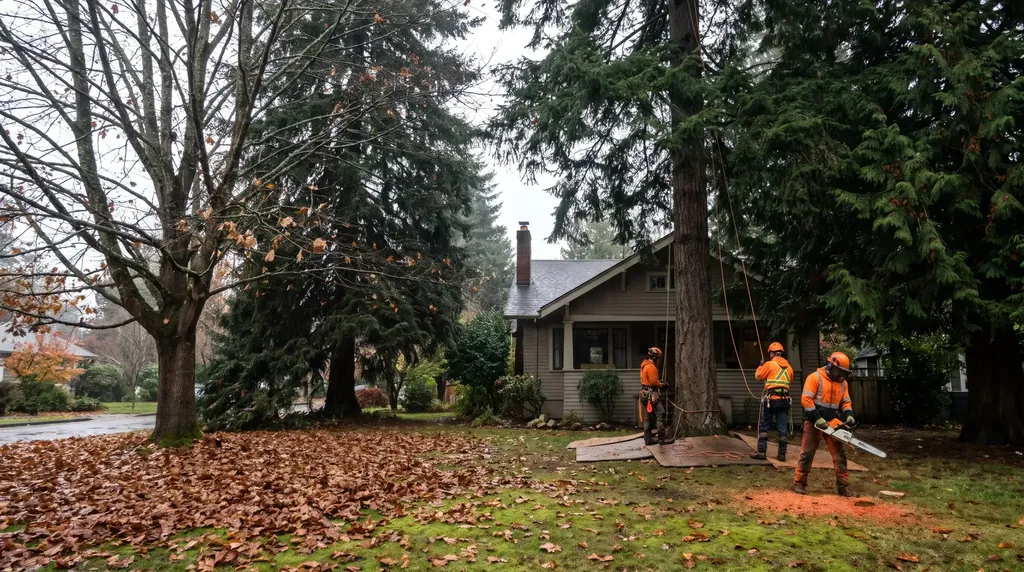
The Best Time of Year for Tree Removal in the Pacific Northwest
- Free on-site estimates
- Sectional takedowns where there is no room to drop
- Full cleanup, or the wood left where you want it
- Storm calls taken outside regular hours
For planned work in Whatcom County, late fall and winter are usually the best time to take a tree down, and often the easiest to schedule. Deciduous trees have dropped their leaves, most birds are not nesting, and crews have more open days between storms. The catch is that winter is also storm season, so the smartest move is to book in early fall, before the first big blow. And none of this applies to a tree that is already failing. That one comes down now.
Is there a cheaper time of year to have a tree removed?
Often, yes, though not because of a seasonal discount. What makes a job cheaper is a crew with time to plan it, ground that will take the equipment, and no emergency premium. Those line up best in the dormant months between storms, and in the quieter weeks of late winter once the storm backlog has cleared. The most expensive time to remove a tree is the night after it has come through your roof.
Is it better to cut down trees in summer or winter?
For most removals, winter has the edge.
Why winter works
Big-leaf maple, red alder and the other deciduous trees are bare, so they are lighter and the crew can see every limb, crack and dead section clearly. With no leaves on, there is also much less to chip and rake up. Most birds are not nesting, though a few, like hummingbirds and owls, start in late winter, so we still look before we cut. And if the tree is close to garden beds, the plants under it are dormant too and less likely to be harmed by the work.
What summer has going for it
Long days, dry ground and settled weather. On a lot where the only access is across a lawn or a soft field, dry August ground can be easier on the yard than wet January ground. Summer also suits trimming, view work and jobs where the leaves help show what the tree is doing.
Conifers do not care much
Douglas fir and western red cedar keep their needles all year, so the season makes less difference to the tree itself. For conifers, timing is about ground conditions, weather and booking ahead of storm season.
Ground conditions matter more than the calendar
A tree crew brings heavy equipment: a chipper, a truck, sometimes a lift or a crane. Firm or frozen ground carries that weight with little trace. Saturated ground does not. After a few weeks of November rain, a lawn on Ferndale or Everson clay can rut badly under a loaded chipper, and a soft drive can bog a truck.
We plan around it with ground mats, by carrying wood out by hand, or by waiting for a dry spell or a cold snap when the ground firms up. If you have a choice, tell us about the access when you book so we can pick the right days.
What months can you not cut down trees?
On a typical residential lot there is no month when tree removal is banned outright. The season to be careful in is spring and early summer, when birds are nesting. Many birds and active nests are protected under federal and state wildlife law, and some permits and critical area approvals set their own timing windows.
We are confirming which seasonal limits apply to residential tree work in Whatcom County before publishing dates. If a tree has an active nest in it, we will talk through the options with you before any cutting starts.
Storm season in Whatcom County
From roughly November to February, Whatcom County gets its windstorms. Southerly gales come in off the water, and cold outflow winds pour out of the Fraser Valley across Lynden, Ferndale and Bellingham. Add soil that has been soaking since October, and shallow-rooted trees tip over whole, root plate and all.
When a big storm hits, every crew in the county is suddenly booked with trees on roofs, cars and driveways. Planned work waits behind emergencies. That is why early fall is the best time to book: the ground is still firm, the crew has time, and the tree is gone before it can be part of the backlog.
Never wait on a hazard tree
All of the timing advice above is for healthy or merely unwanted trees. A tree that is leaning more than it used to, has a fresh crack in the trunk or a split between two tops, has soil heaving up on one side, or has big dead limbs over the house is a hazard tree, and the right time to deal with it is now. Waiting for a cheaper month to remove a tree that might fall in the next windstorm is a bad trade.
Timing questions
What is the cheapest time of year for tree removal?
Usually the dormant months, booked ahead, when the ground is firm and nothing is an emergency. Late fall before the storms and late winter after the storm backlog clears are often the easiest times to get a planned removal done well.
Can you negotiate tree removal cost?
You can usually lower the cost more by changing the job than by haggling. Flexible timing, keeping the wood, grouping several trees into one visit, or leaving the stump all reduce the work.
How to reduce the cost of tree removal?
Book planned work outside storm season, combine trees, keep the firewood or chips, clear the work area before the crew arrives, and deal with a doubtful tree before it becomes an emergency.
Get on the calendar before the storms
Send a photo of the tree and what is around it, and tell us when you would like it done. We will tell you if the timing works, or if it should not wait.
- Call(360) 555-0119
- Emailoffice@bellinghamtreeremovalpros.com
- HoursMon to Sat, 7am to 6pm. Storm damage calls taken outside those hours.
Thanks, we have your request
We will call or text to set a time to look at the tree. If it is urgent, call (360) 555-0119.
Online requests are not switched on yet
Nothing was sent. Please call (360) 555-0119 and we will set up a time to look at the tree.