Deadwood removal in big conifers
Dead and dying limbs taken out of Douglas fir, cedar and hemlock before the next windstorm brings them down on the roof, the car or the deck.
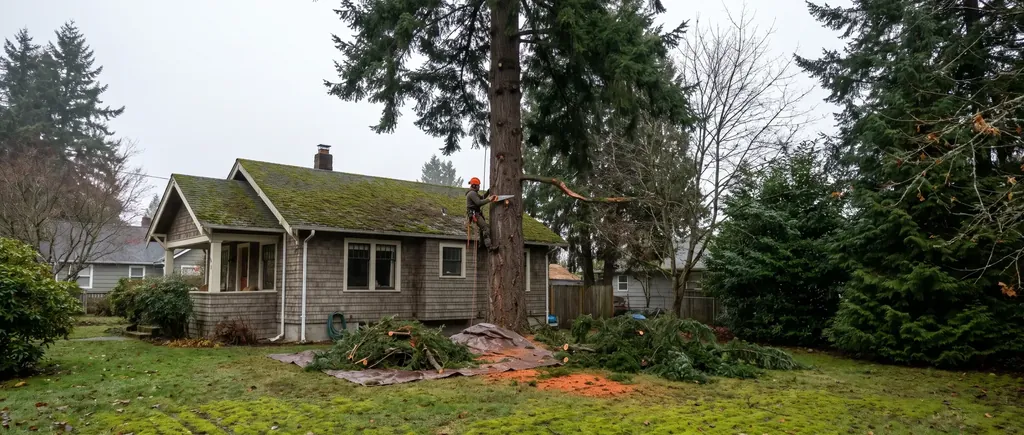
Deadwood out, roofs cleared, weight taken off the limbs that worry you. Pruning done for the health of the tree, so you keep the tree and lose the problem.
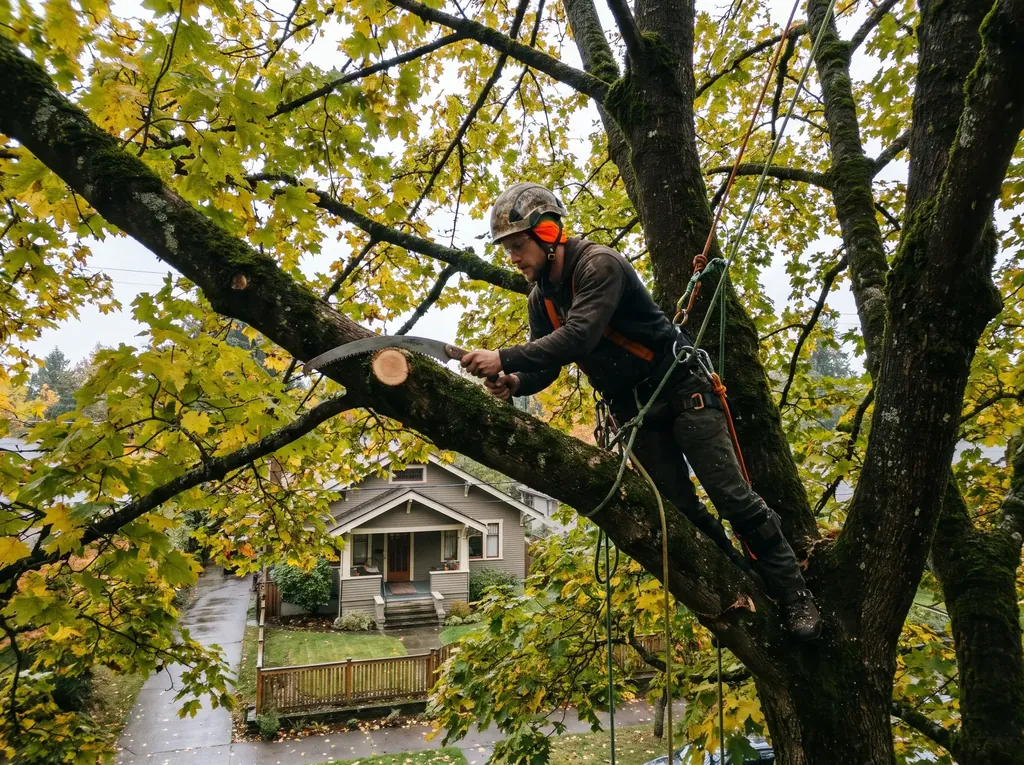
A lot of the calls we get start with "I think it has to go" and end with a trim. A mature Douglas fir carrying dead limbs over the driveway, a cedar brushing the roof, a big-leaf maple that has grown out over the street: in most cases the tree is fine and the problem is a handful of branches.
Good pruning in the Pacific Northwest is mostly about three things. First, deadwood. Big conifers shed lower and interior limbs as they shade out, and in a winter storm those dead limbs come down on whatever is underneath. Second, clearance. Branches resting on a roof hold moisture and shade, which is one of the main reasons Bellingham roofs grow so much moss, and they add needles and debris to the gutters. Third, weight. Long, heavy limbs on maple and alder, and end-heavy branches on conifers, are the ones that break in the wind.
What we will not do is top a tree or strip the inside of a conifer bare. Topping leaves big wounds that rot and a crown of weakly attached new shoots that break off within a few years. Stripping out the interior, sometimes called lion-tailing, pushes all the weight to the ends of the limbs and makes the tree more likely to fail in wind, not less.
The goal is a tree that looks like nobody touched it, only lighter, cleaner and further from your roof.
Dead and dying limbs taken out of Douglas fir, cedar and hemlock before the next windstorm brings them down on the roof, the car or the deck.
Branches pulled back from the roofline and chimney so the roof gets light and air and less debris lands in the gutters.
Selective cuts on maple, alder, birch and fruit trees to lighten heavy limbs, open the crown to light, and reduce the spread over the house or the street.
Before we start, we agree which limbs come out and why, so you know what the tree will look like afterward. No surprises when you walk outside.
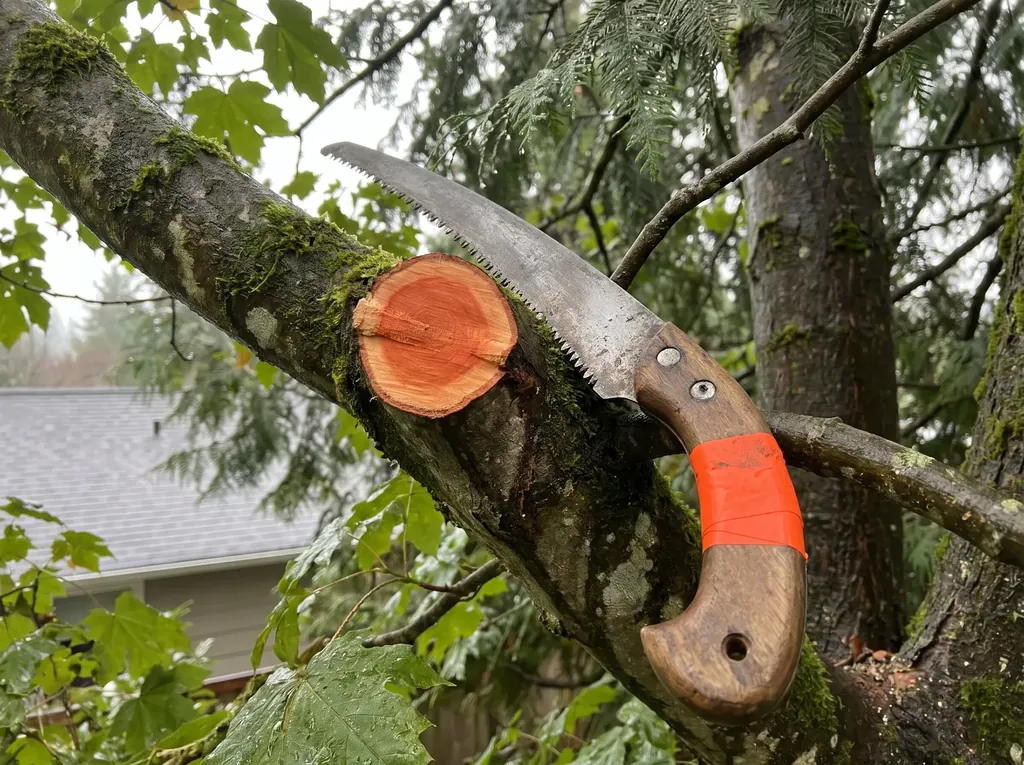
Cuts made just outside the branch collar, the slightly swollen ring where a limb joins the trunk, so the tree can seal the wound instead of rotting behind it.
Branches over a roof, a greenhouse or a garden are tied off and lowered on a rope rather than dropped through whatever is below.
Brush chipped and hauled or left as mulch, needles blown off the roof and out of the gutters we dirtied, and the lawn raked.
The limb over the bedroom, the moss on the roof, the branch that scraped the car. Photos help, and so does knowing whether you want the tree kept as is or reduced.
We look at each tree with you, point out deadwood and weak limbs you might not have noticed, and agree what is worth doing now and what can wait.
Each tree listed with the work agreed and a price for it, so you can choose to do everything at once or spread it out.
The climber works from ropes, without spikes, moving through the tree and making each cut at the right place.
Limbs over structures lowered on ropes, everything else chipped as we go so the yard does not disappear under brush.
Roof and gutters cleared of anything we dropped, yard cleaned, and a final look at each tree from the ground with you.
We prune for the tree, not for the invoice. Taking out more wood takes more time, and a crew paid by the hour has every reason to cut too much. We take out what needs to come out and leave the rest.
We do not use climbing spikes on trees we are keeping. Spikes punch holes through the bark all the way up the trunk, and each one is a wound the tree has to wall off and a possible way in for decay. They belong on removals only.
We think about wind. Every trim on a big conifer in this county is partly a storm-prep job, and we prune with the northeast outflow and the winter southwesterlies in mind, taking out the limbs most likely to break instead of the ones most visible from the street.
We will tell you when trimming is not enough. If a tree has a root problem or a major defect, a nice-looking trim is money wasted, and you should hear that from us before we start.
Book a trim before the fall storms and the next round of needles in the gutters. Send a photo and we will come out and price it.
A common rule of thumb is to remove no more than about a quarter of the live crown in one season, and less on old or stressed trees. Big mature firs and cedars tolerate heavy cutting poorly. Dead branches do not count toward that limit, since removing them takes nothing from the tree.
Small branches you can reach from the ground, yes, as long as you cut just outside the branch collar and do not leave a stub or tear the bark. Anything that needs a ladder, a chainsaw at height, or a limb over a roof or line is a job for a crew with ropes. Ladders and chainsaws are a bad combination.
Do not cut into the branch collar, the swollen ring where a limb meets the trunk, because that is where the tree seals the wound. Do not cut the main leader off the top of a conifer, and avoid wounding the trunk or the large roots near the base. Damage there invites decay into the part of the tree that holds it up.
Some broadleaf trees, including big-leaf maple, alder and willow, will push out a mass of new shoots, but they are weakly attached and tend to break off as they get heavy. Most conifers, including Douglas fir and cedar, do not recover from losing all their live branches and will usually die. Either way the tree ends up worse than before.
A single trim is usually cheaper than a removal of the same tree, but trims repeat and removals do not. A healthy tree you want to keep is worth trimming. A tree that needs heavy work every couple of years to stay off the house may cost less over time to take down. We will give you a price for both when it is a close call.
For most apple and pear trees west of the Cascades, late winter while the tree is dormant, before the buds break. Cherries and plums are usually better pruned in a dry spell in summer, because our wet winters spread the diseases that enter through fresh cuts on stone fruit.
We prune trees across Bellingham, Ferndale, Lynden, Blaine, Everson, Sudden Valley, Birch Bay, Sumas, Deming and Custer, from city street trees to farmhouse windbreaks.
Every area we cover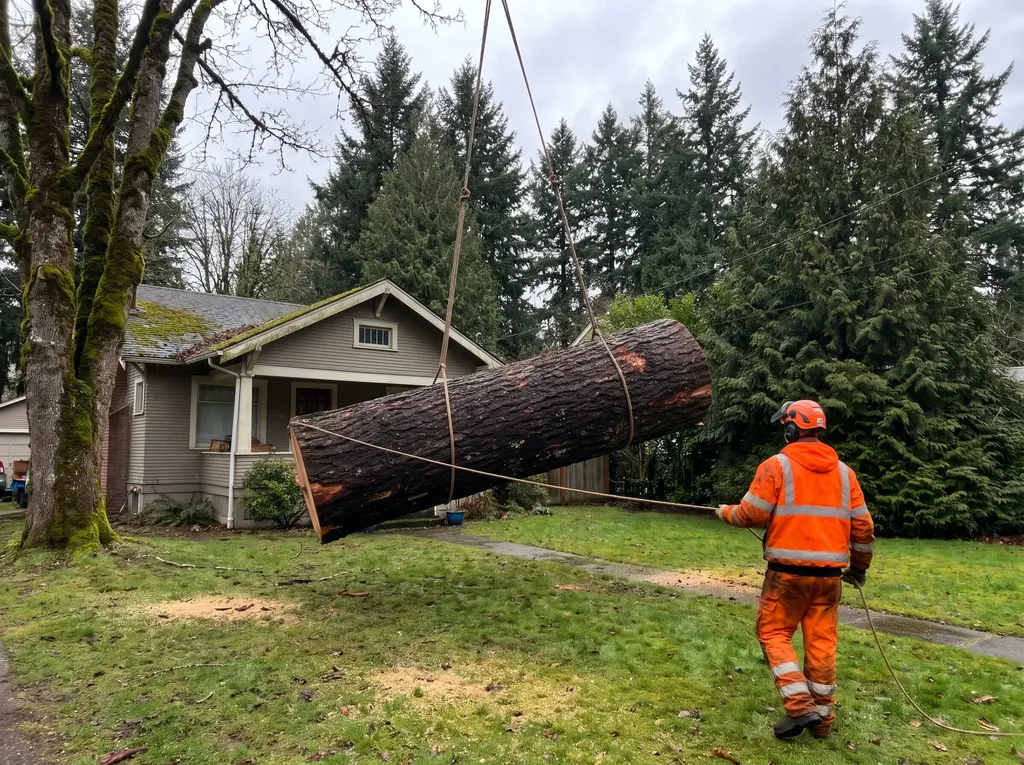
Full removal of trees of any size, including large conifers close to houses, taken down in pieces where there is no room to drop them.
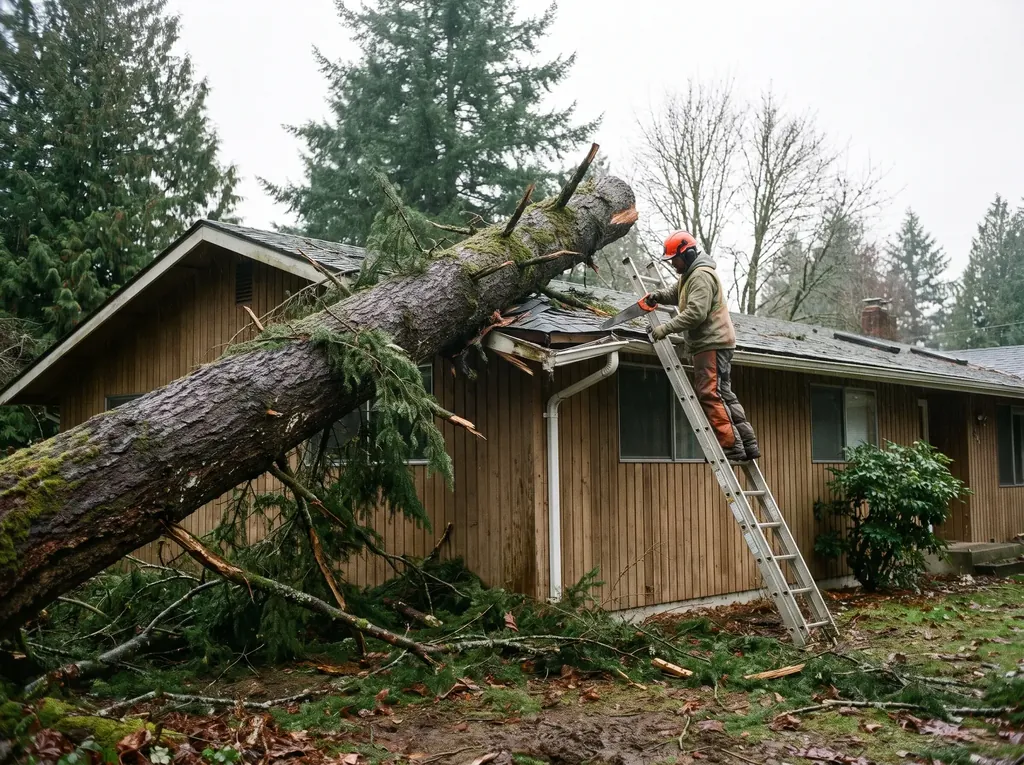
Trees on roofs, cars, driveways and fences after a windstorm, made safe first and cleared after.
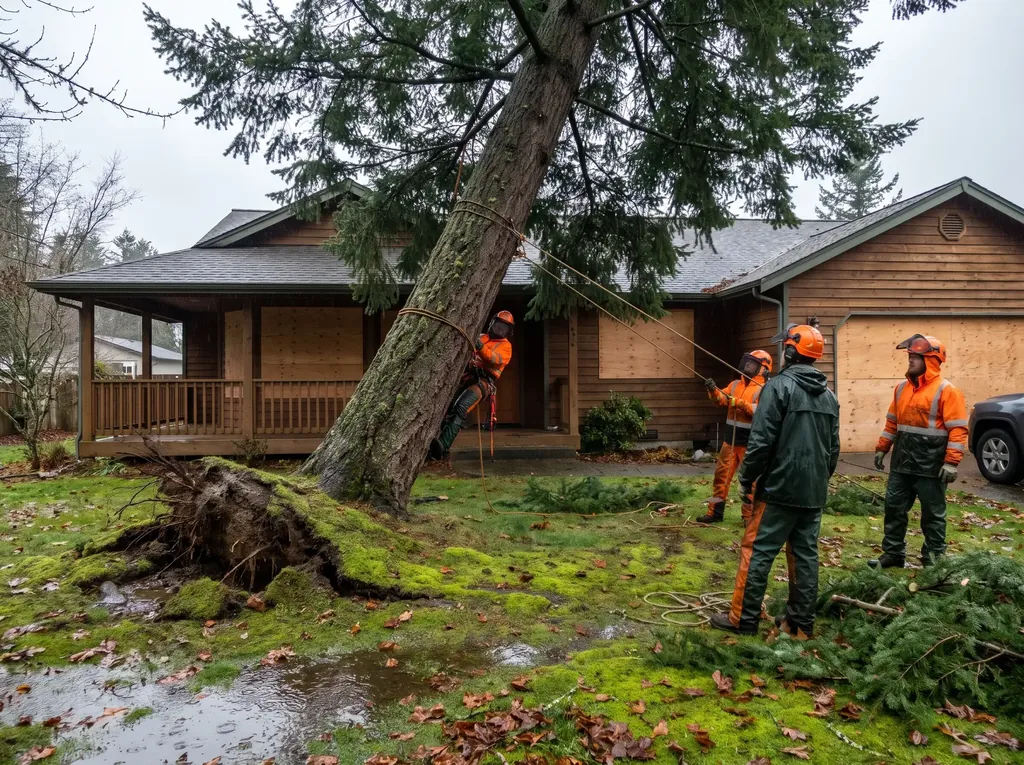
Leaning, cracked, rotting or root-lifted trees taken down before the next storm decides for you.
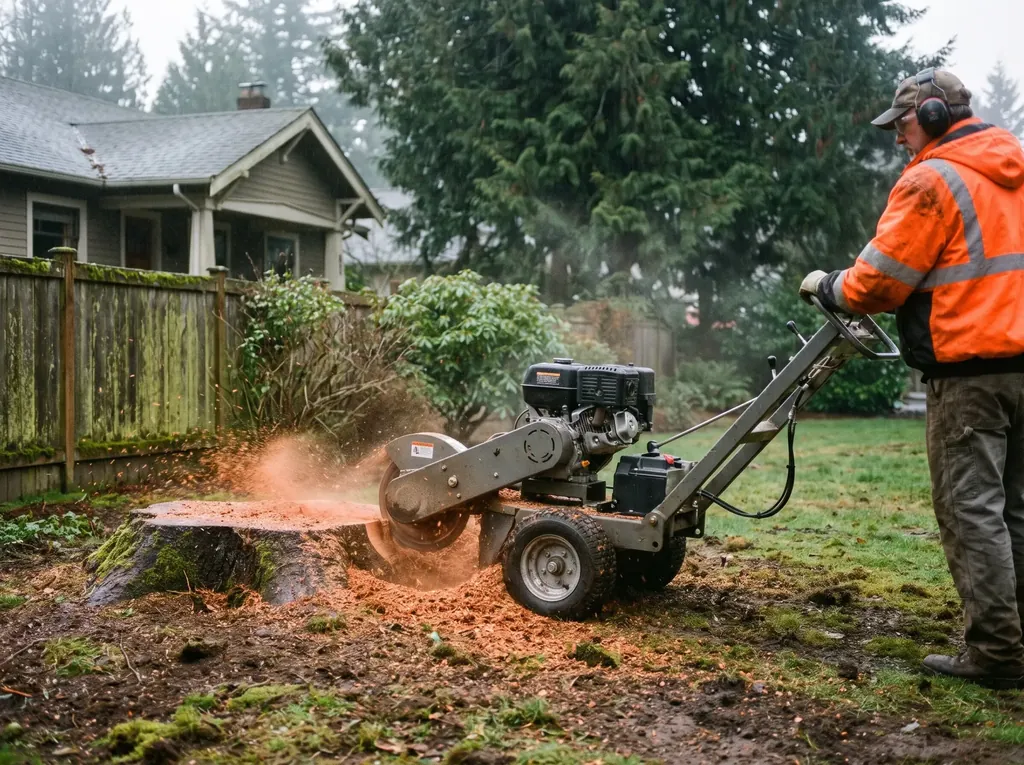
Stumps ground below grade with the chips cleaned up or left as mulch, or pulled out entirely where you are building.
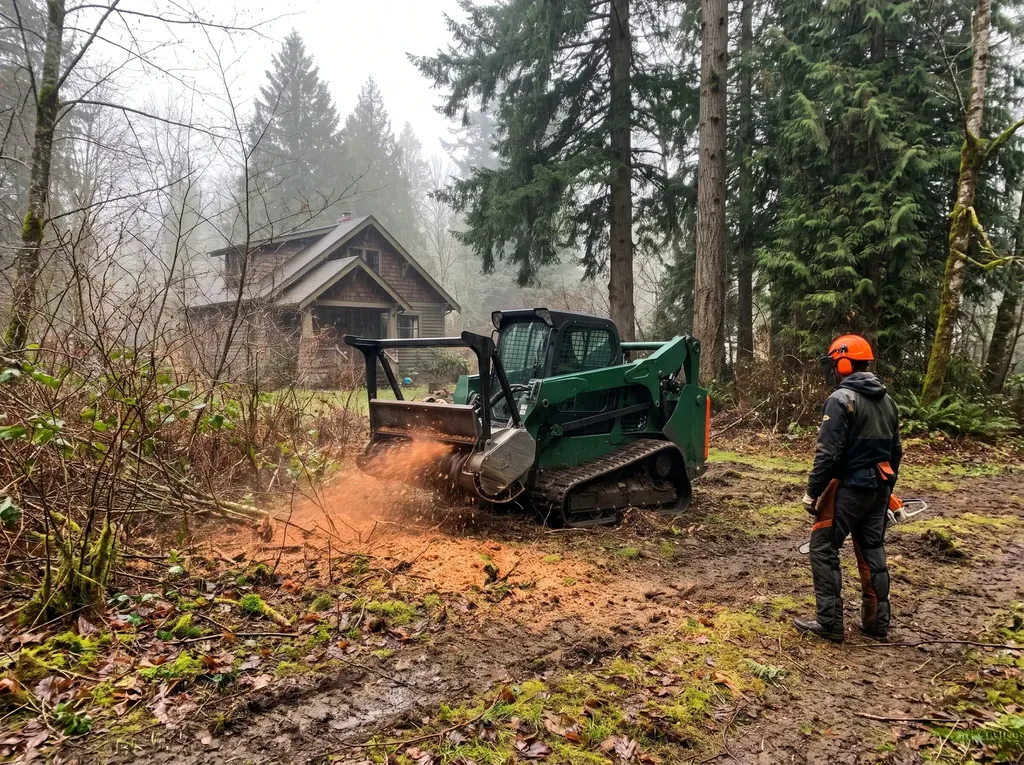
Overgrown lots and acreage cleared for building, views, fire safety or pasture, including forestry mulching and brush clearing.
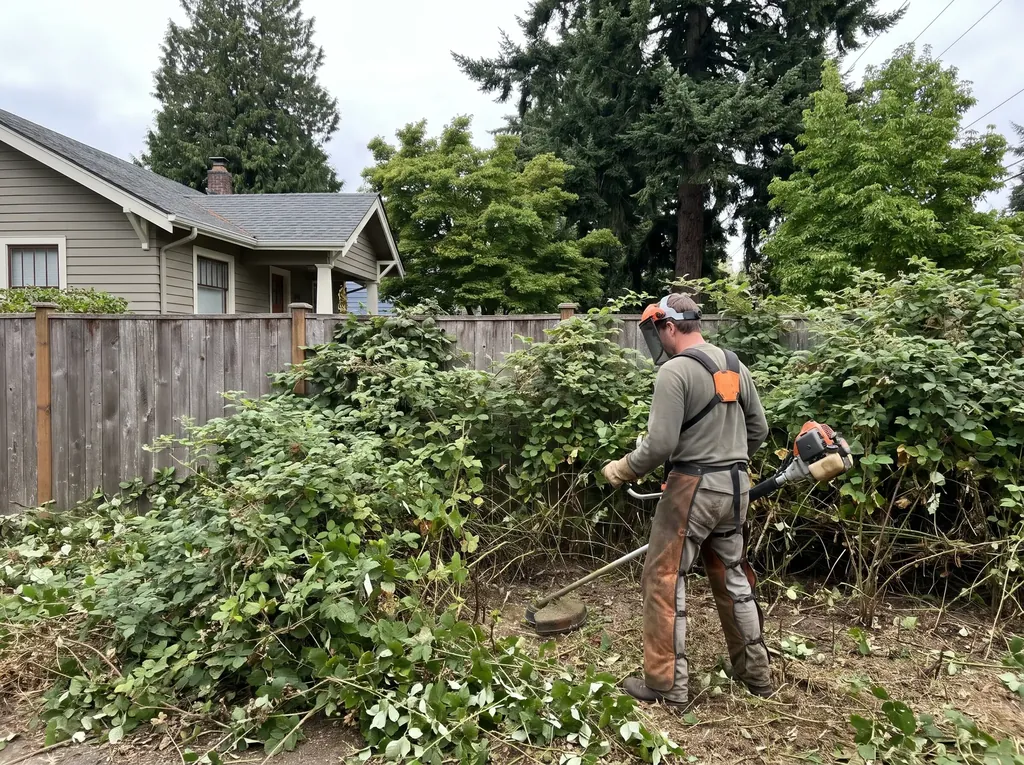
Himalayan blackberry, Scotch broom and invasive brush cut back, cleared and dealt with at the root.
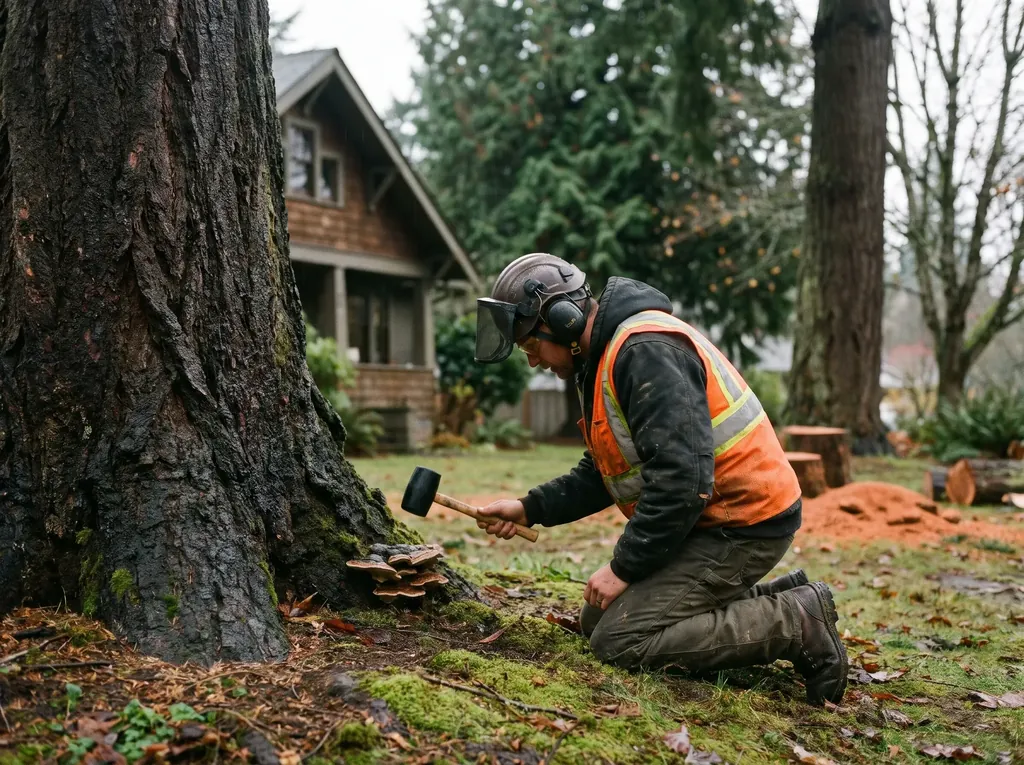
A straight answer on whether a tree is sound, needs work or needs to come down, before you spend money on it.
Tell us which trees, what they are hanging over, and what you would like to change. A photo from the ground is plenty to get started.
We will call or text to set a time to look at the tree. If it is urgent, call (360) 555-0119.
Nothing was sent. Please call (360) 555-0119 and we will set up a time to look at the tree.