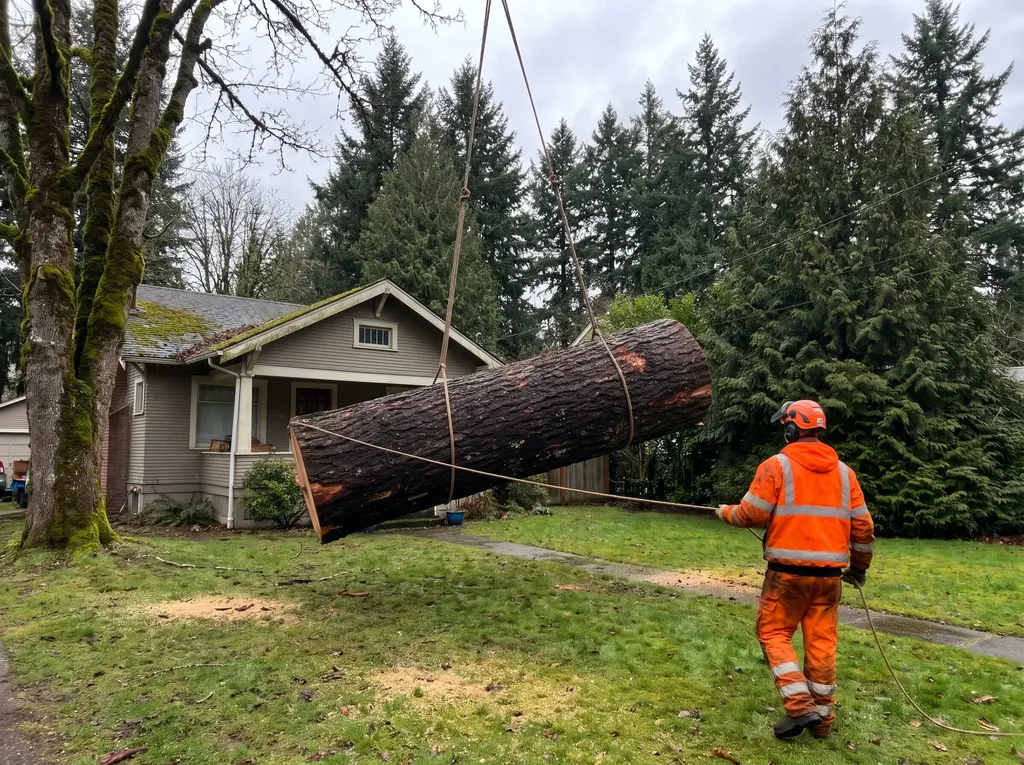
Tree removal
of big yard conifers near farmhouses, shops and outbuildings.
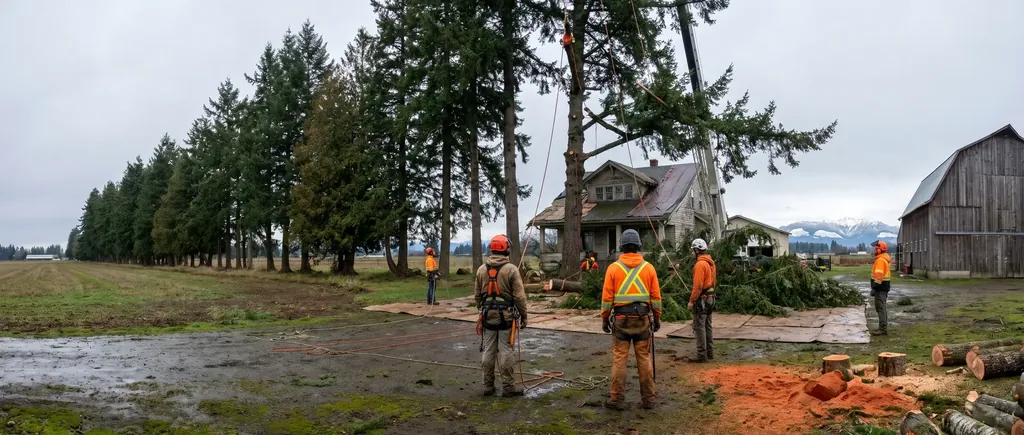
Windbreak rows, big yard conifers and tired orchard trees, taken down or cut back before the winter outflow does it for you.
Lynden is farm country right up against the Canadian border, and that shapes almost every tree job here. Around town the land opens into berry fields and dairy ground, flat for miles, with the Nooksack running along the south side. A farmhouse out here usually has a few big trees close to the house and a windbreak row along one edge of the yard, planted decades ago to take the edge off exactly the weather that now threatens them.
That weather is the Fraser Valley outflow. In winter, cold air builds up in the interior of British Columbia and pours out through the Fraser Valley toward the coast. It comes from the northeast, it is often bitterly cold, and the north county farmland around Lynden takes it hard. There is not much between the border and a Lynden yard to slow it down. Tall conifers that grew up in a sheltered row lose a neighbour, and the rest of the row is suddenly carrying wind it never had to before.
Add saturated winter ground on the low fields and you get the typical Lynden failure: a tall fir or a windbreak tree tipping at the root during an outflow event, across a fence line, a barn roof or the road. In town, the older streets have mature yard trees, and the big conifers in places like Berthusen Park are a reminder of how tall the native timber here gets when it is left alone.
of big yard conifers near farmhouses, shops and outbuildings.
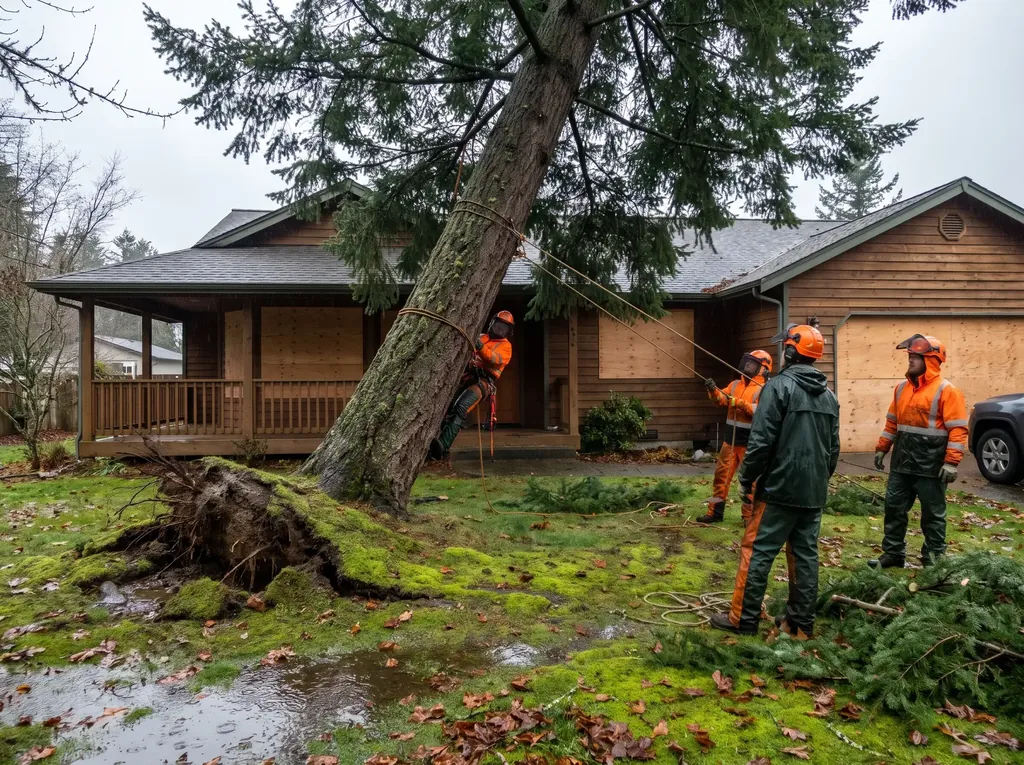
for windbreak trees that have started to lean, split or lift at the root.
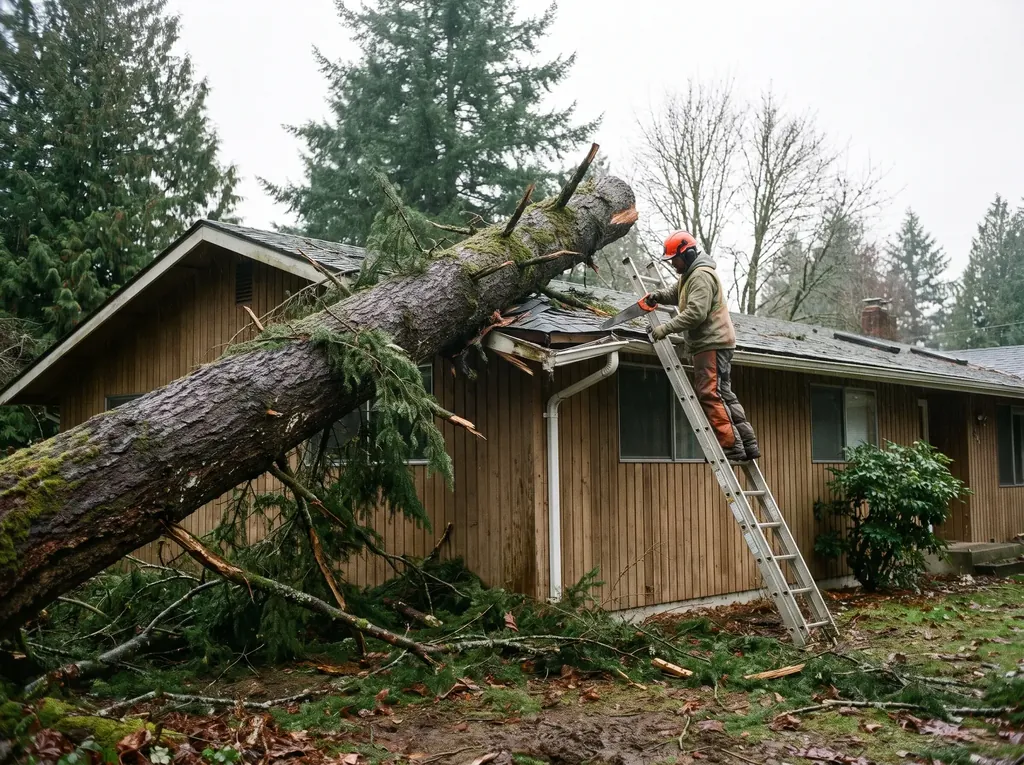
after outflow wind events, including trees across fences, drives and roofs.
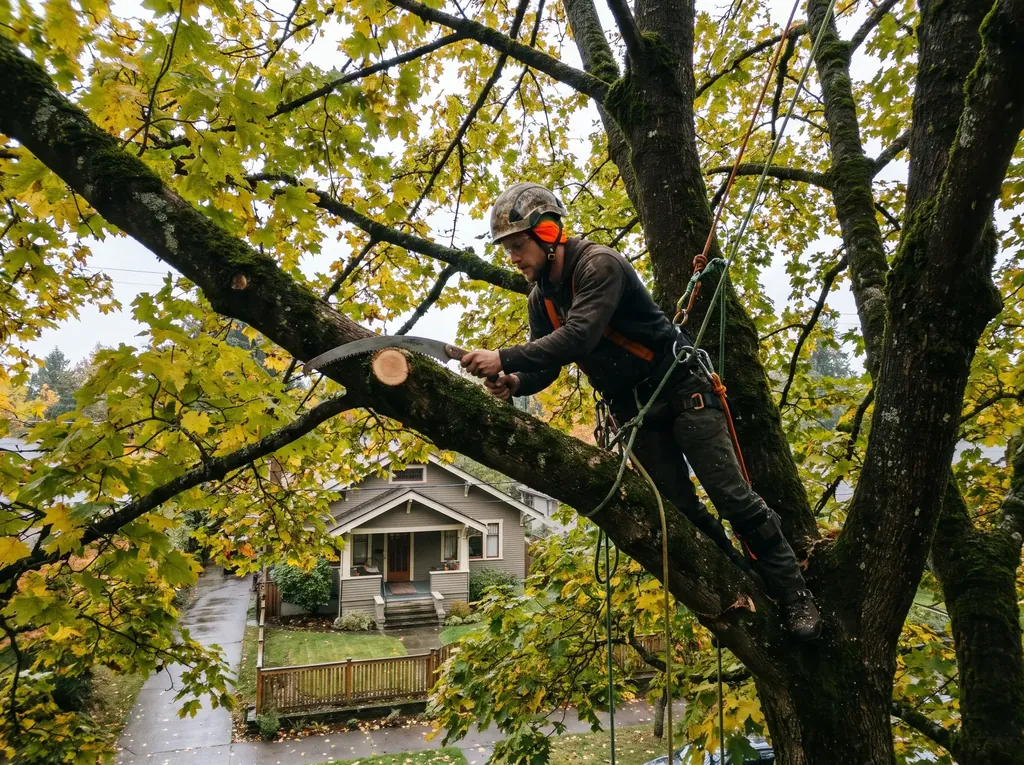
to thin crowns, take out dead limbs and cut back old orchard trees.
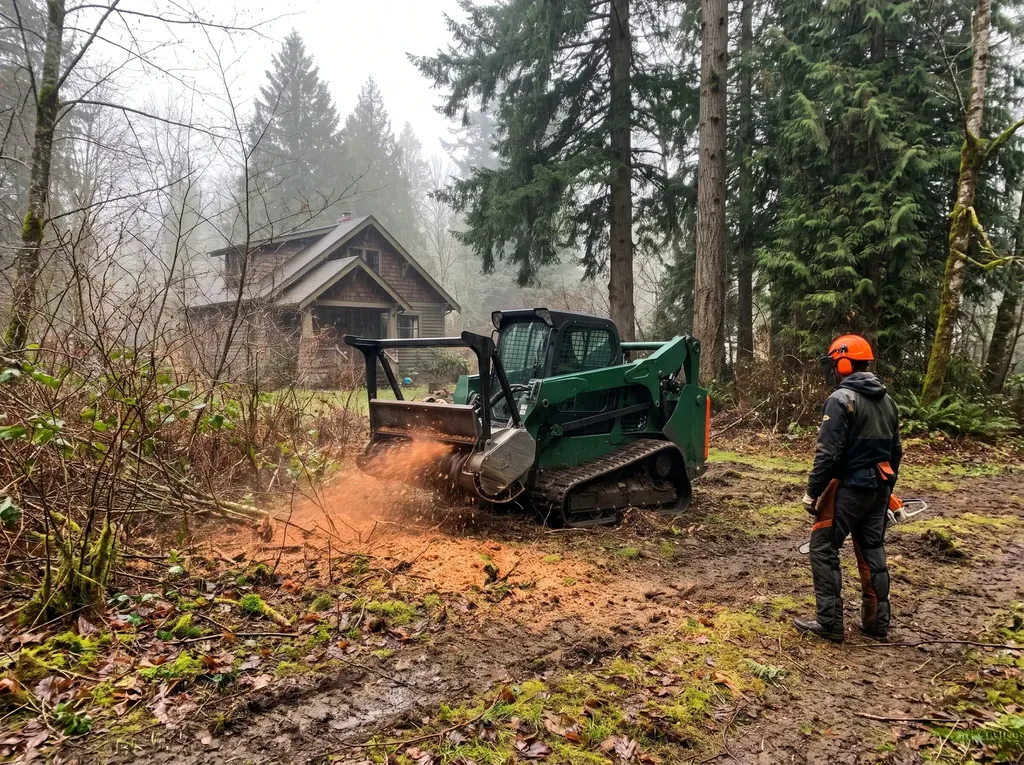
for overgrown field edges, fence lines and acreage.
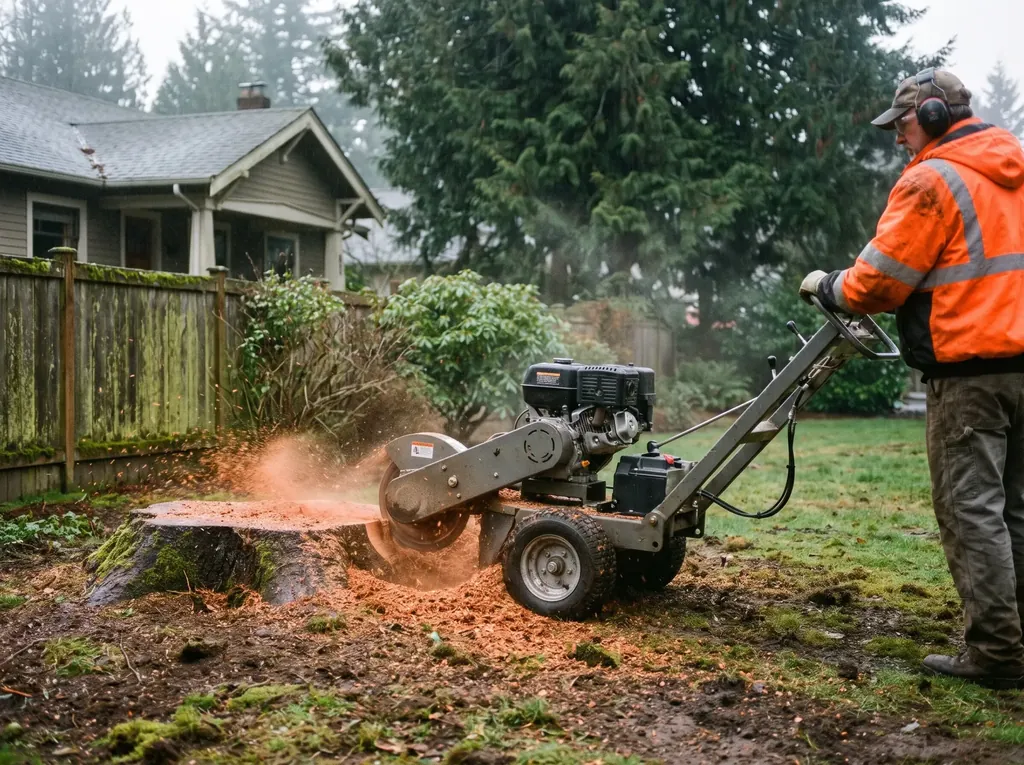
where a removed tree leaves a stump in a lawn, a pasture or a field edge.
When one tree in an old windbreak comes out or falls, the trees on either side take more wind. We look at the whole row, not just the tree that worries you, and tell you which others are likely to follow.
Many Lynden properties have open ground where a tree can be dropped instead of climbed and rigged, which is faster and costs less. We check the lean, the wind and what is downhill before we commit to it.
In winter, a loaded truck in a pasture leaves ruts that last all season. We plan access along drives and firm ground, and pick the time of year with you when the job allows it.
A neglected apple tree can usually be brought back with a few seasons of careful pruning. When it cannot, we tell you that too.
Douglas fir, western red cedar and western hemlock are the big native conifers. Red alder and big-leaf maple are the most common native broadleaf trees, with black cottonwood along rivers and on wet ground. Around Lynden you will also see planted windbreak conifers, fruit trees and ornamentals in town yards.
On an open Lynden lot with room to fell it, a thirty foot tree is one of the simpler jobs we do. If it stands against a house, a barn or a power line and has to be taken down in pieces, it takes longer and costs more. The stump and the wood are the other two things that move the price.
As a rule of thumb, no more than about a quarter of the living crown in one season. Old fruit trees are the exception people get wrong most often: cutting a neglected apple tree hard in one go tends to trigger a mass of upright water sprouts. Spread the work over two or three seasons and the tree responds far better.
It depends on the tree, the access and how much cleanup you want, so get a written estimate that lists the method, the stump and the wood handling.
We also work in Bellingham, Ferndale and Blaine, plus Everson, Sumas, Custer, Deming, Birch Bay and Sudden Valley.
Every area we coverTell us the address and what the tree is doing. A photo helps. If a tree is on the house, a barn or across a line, call instead.
We will call or text to set a time to look at the tree. If it is urgent, call (360) 555-0119.
Nothing was sent. Please call (360) 555-0119 and we will set up a time to look at the tree.