Large conifers close to the house
Douglas fir and western red cedar leaning over roofs, decks and outbuildings. Climbed, limbed and taken down in controlled lengths, with the heavy wood lowered rather than dropped.
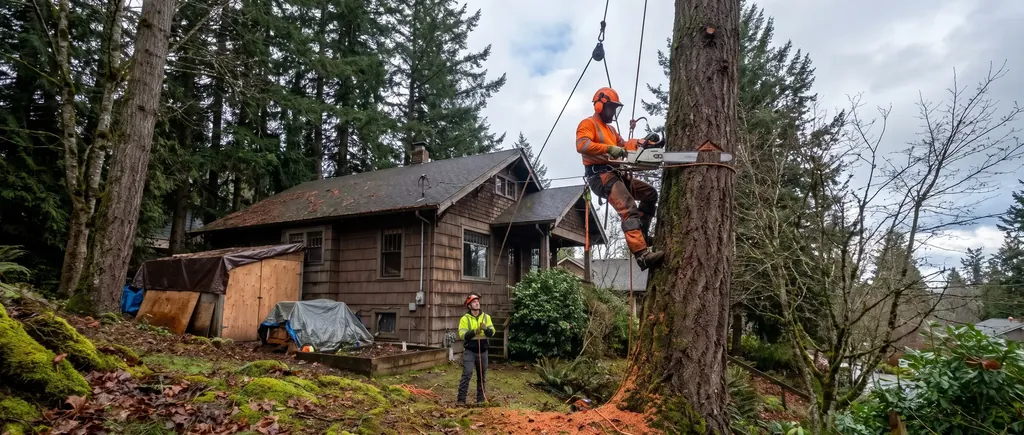
Big Douglas fir, cedar and maple taken down piece by piece when there is no room to drop them. The tree comes out. The house, the fence and the lawn stay the way they were.
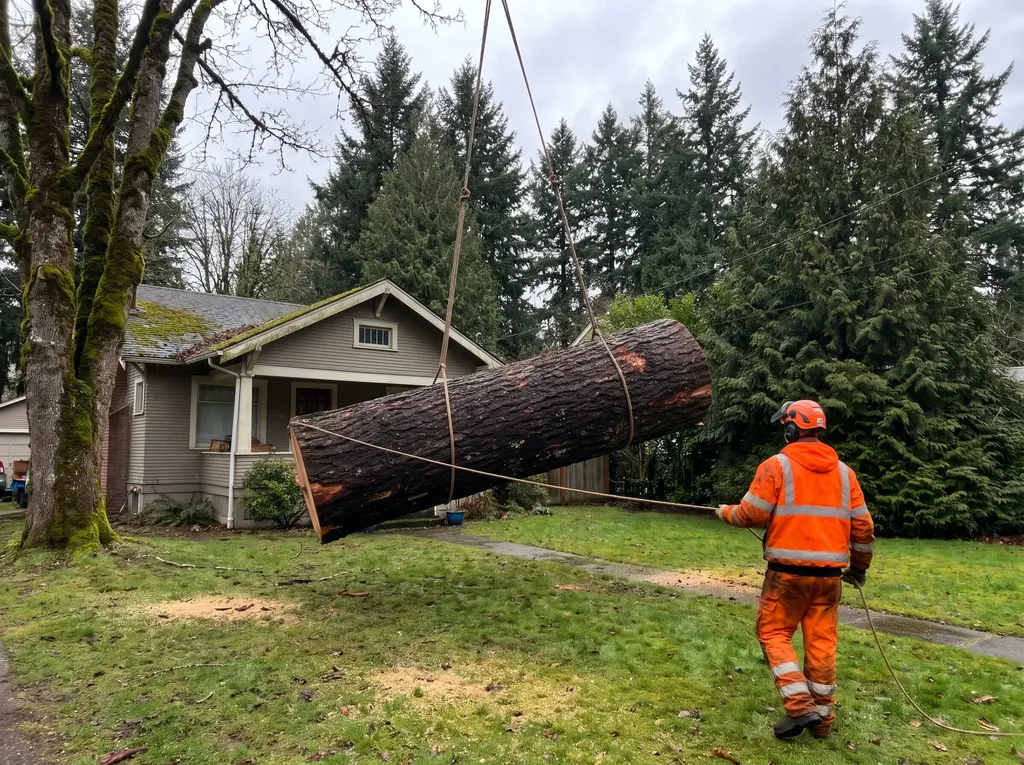
Most of the trees we remove in Bellingham were there before the house was. A Douglas fir or western red cedar that looked a sensible size when Edgemoor or South Hill was built now stands over the roof, the power drop and the neighbour's garage, with its roots under the driveway. Nobody planted a problem. The tree kept growing and the lot stayed the same size.
That is why so few of our removals start with one cut at the base. On a tight city lot there is rarely a clear line long enough to drop a tall conifer, so the tree comes down from the top. A climber limbs it on the way up, then takes the top and the trunk in manageable lengths, and the heavy pieces are lowered on ropes instead of landing on the lawn, the deck or the septic lid.
Species changes the plan. Fir is heavy, straight and predictable. Cedar wood is lighter, but a big cedar is still a lot of weight to lower, and a dead top on one can be dry and brittle. Big-leaf maple is heavy, spreading, and often hollow where old limbs rotted in years ago. Red alder grows fast and is short-lived, and black cottonwood is known for dropping heavy limbs with little warning. Each one gets rigged differently, and the rigging decides the price more than the height does.
If you are not yet sure the tree needs to come out, get a straight answer first. If it does, we will tell you exactly how we intend to take it down before you agree to anything.
Douglas fir and western red cedar leaning over roofs, decks and outbuildings. Climbed, limbed and taken down in controlled lengths, with the heavy wood lowered rather than dropped.
Hillside properties around Sehome, the Chuckanut side and Lake Whatcom where there is no drop zone and no way to get a machine near the base. We work from the tree and carry wood out by hand where we have to.
Old broadleaf trees and fast growers that have outgrown the yard, gone hollow, or started shedding limbs onto the driveway. These come down before the weak wood picks the day for you.
We walk the tree, the landing area and the access, and you get a written price covering the takedown, the cleanup and the stump before anything is scheduled.
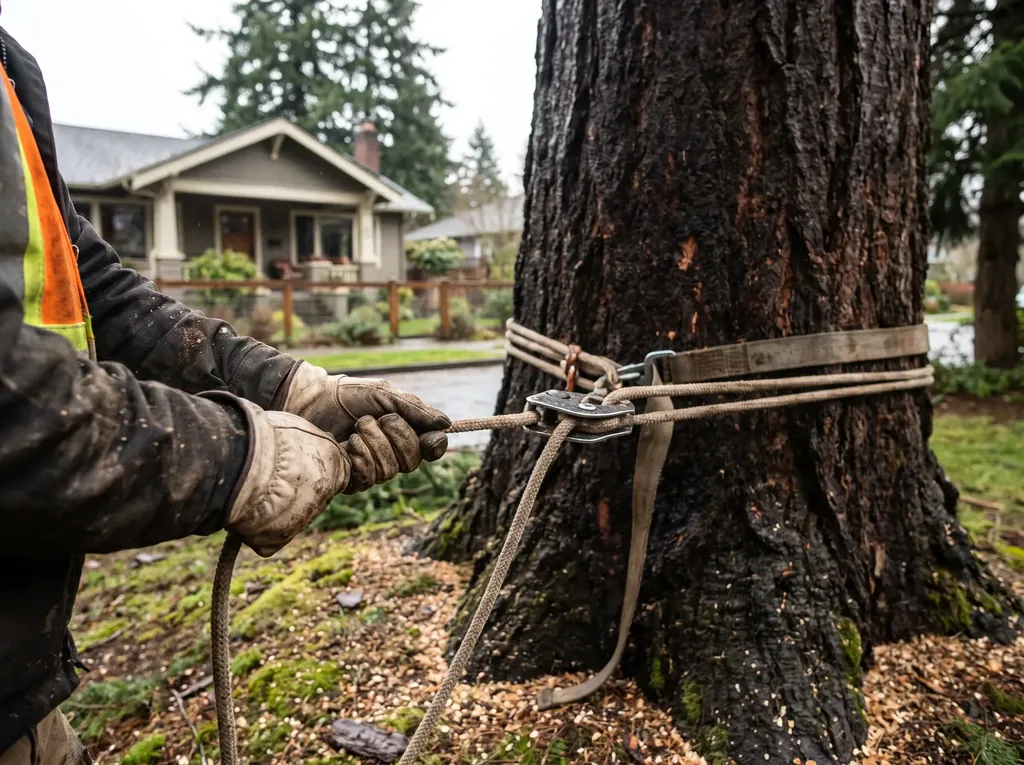
Ropes, blocks and a friction device at the base so heavy pieces come down where we choose. Roofs, gutters, fences and garden beds are protected or worked around.
Brush chipped, wood hauled away or bucked into rounds and stacked where you want it for firewood. Lawn raked and hard surfaces blown off.
Ground below grade, cut low and left, or left high to grind later. You choose at the estimate, so the stump never turns up as a surprise on the invoice.
Call or send a photo with the species if you know it, roughly how tall it is, and what it stands over. One photo of the whole tree and one of what is underneath saves a lot of back and forth.
We see the tree in person, check the lean, the trunk and the base, and work out where the wood can safely land or be lowered.
You get the method, what we will protect, what happens to the wood and the stump, and a written price. If anything needs checking with the city or county first, you hear about it at this stage.
Access cleared, ground protection laid where equipment will travel, and the work zone marked off so nobody walks under a falling piece.
The tree comes down from the top in pieces sized to the rigging and to what is underneath. The last lengths of trunk are lowered or felled once there is room.
Brush chipped, wood handled the way you chose, stump dealt with, yard cleaned. We walk it with you before the truck leaves.
Plenty of crews can drop a tree into an open field. The skill in tree removal around Bellingham is everything else: the fir with a lean toward the house, the cedar wedged between two roofs, the maple over the power drop with a garage on one side and a greenhouse on the other. That is the work we set up for.
We plan before we cut. Every job starts with where each piece of wood is going to end up and how it gets there, and the price you are quoted reflects that plan rather than a guess at height.
We protect what is underneath. Lawn, beds, pavers, fences and gutters are part of the job. If something cannot be protected, you hear that before we start, not after.
We leave it clean. A removal is not finished when the tree is on the ground. It is finished when you can walk the yard and the only sign we were there is the open sky where the tree used to be.
Send us a photo of it and what it is standing over. We will come out, look at it properly, and put a price in writing.
A thirty foot tree is at the small end of what we remove, and the price moves more on where it stands than on its height. A thirty foot alder in an open back yard is a short job. The same height of cedar growing between a house and a fence, with no room to drop it and wood to carry out by hand, takes a crew most of a morning. We price it after seeing it.
Around Bellingham a tree that tall is usually a Douglas fir or cedar, and it is priced on the plan: climbing time, how many pieces have to be lowered rather than dropped, how much wood there is to process, and whether a crane would make the job safer and faster. Distance from the house is the biggest single factor. We quote jobs like this in writing after a site visit.
A fair price pays for a takedown method that keeps the house safe, a full cleanup, and the stump handled the way you agreed, all written down. Compare quotes on what is included, not on the bottom line. A low number that leaves the wood in the yard or skips the stump is a different job.
Clear the access for the crew, keep the wood for firewood instead of paying for haul-off, leave the stump if you do not need it gone, and bundle work. Two removals and a trim on one visit cost less than three separate trips. Booking planned work outside storm season helps too.
Late fall through winter is usually the best window for planned work here. Maples and alders have dropped their leaves so the structure is easy to read, gardens are dormant, and crews are less stretched. The exception is the week after a big windstorm, when every crew in the county is on emergency calls. Our guide to the best time for tree removal goes into more detail.
A small tree in open ground with nothing to hit is a reasonable job for a careful homeowner with the right saw and protective gear. A large conifer near a house, a fence, a road or a line is not. The trees that hurt people are the ones that turned out bigger, heavier or more rotten than they looked. Whether you need approval before cutting is a separate question, and our guide to Bellingham tree rules covers what to check.
Usually by changing the scope rather than haggling over the number. Keeping the wood, leaving the stump, or letting us schedule around storm work can all bring a price down. What we will not do is cut corners on rigging to reach a lower figure.
We take down trees across Whatcom County: Bellingham, Ferndale, Lynden, Blaine, Everson, Sudden Valley, Birch Bay, Sumas, Deming and Custer, plus the rural roads in between.
Every area we cover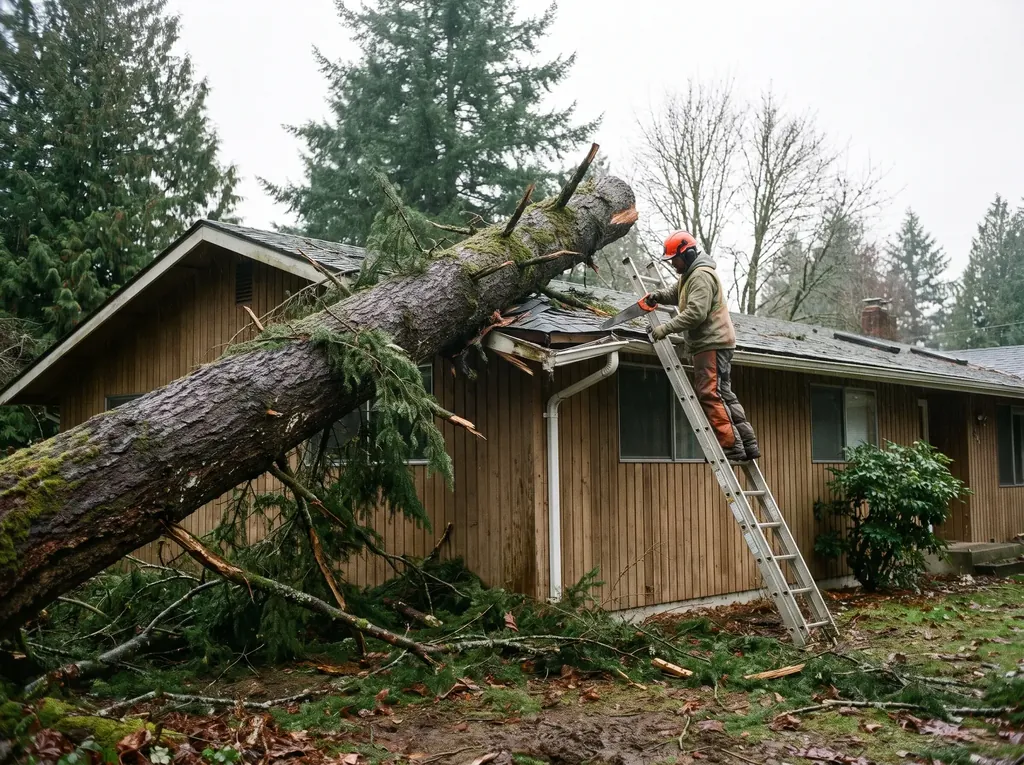
Trees on roofs, cars, driveways and fences after a windstorm, made safe first and cleared after.
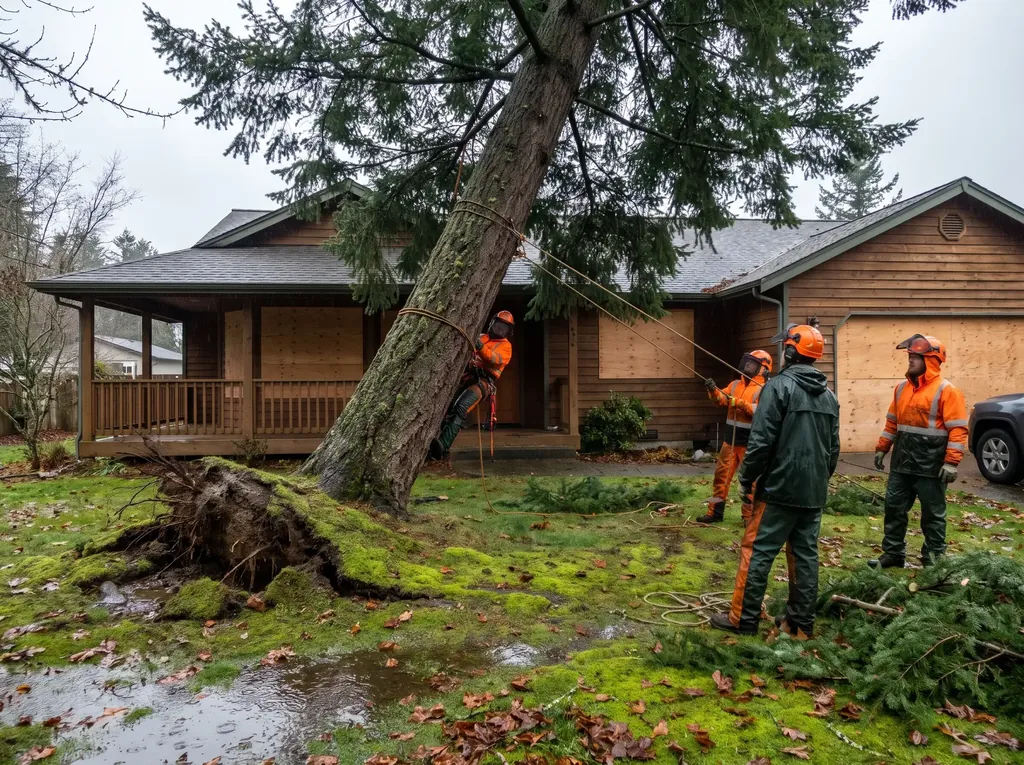
Leaning, cracked, rotting or root-lifted trees taken down before the next storm decides for you.
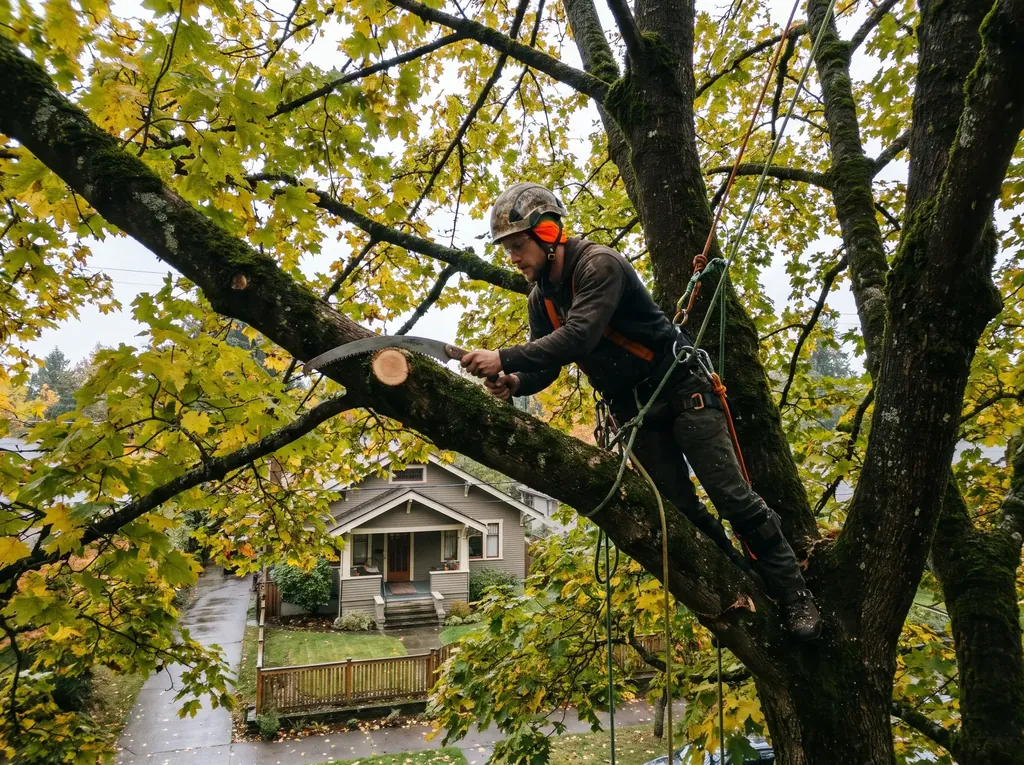
Deadwood removal, crown thinning, crown reduction and clearance from roofs and lines, done for the health of the tree.
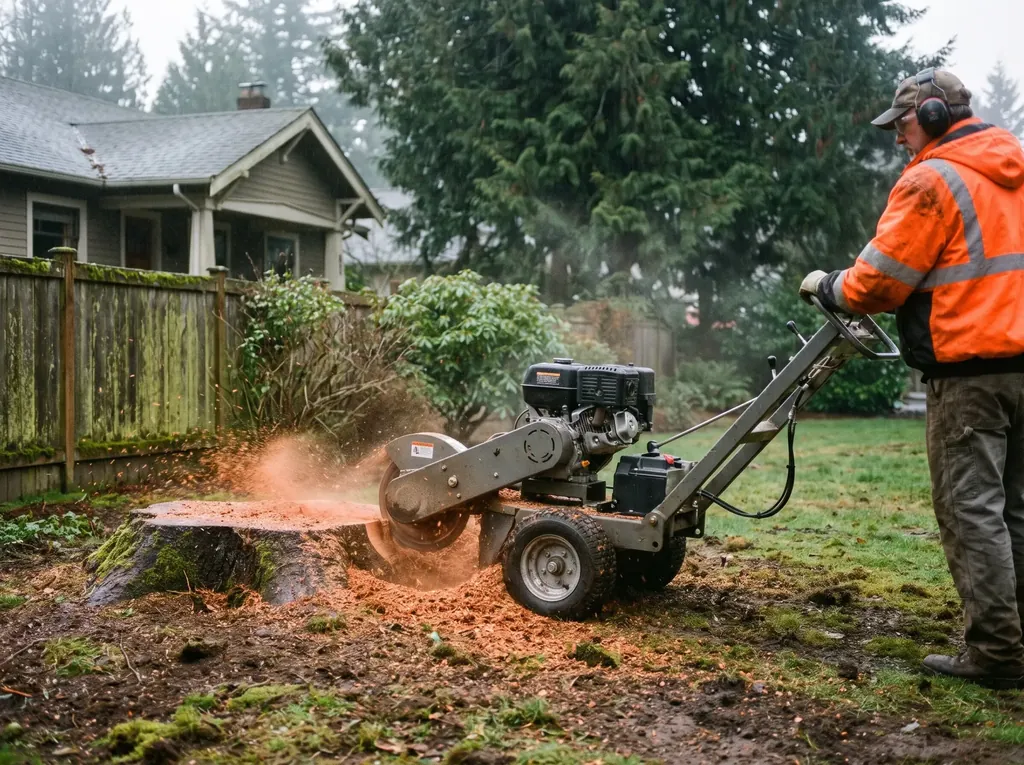
Stumps ground below grade with the chips cleaned up or left as mulch, or pulled out entirely where you are building.
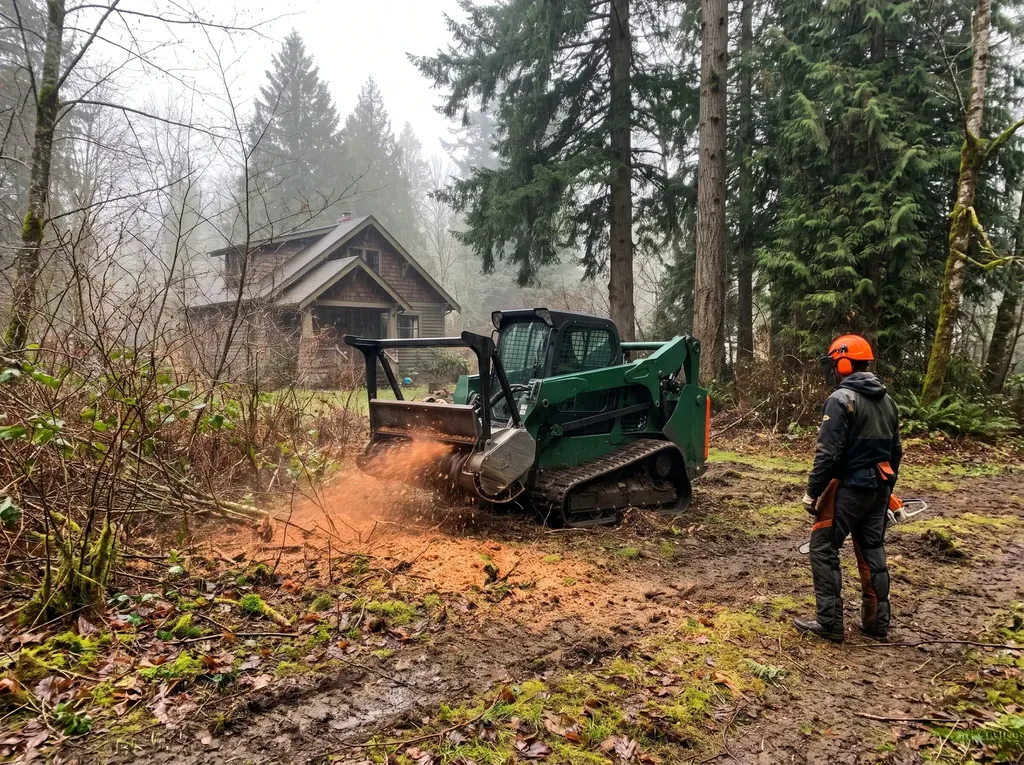
Overgrown lots and acreage cleared for building, views, fire safety or pasture, including forestry mulching and brush clearing.
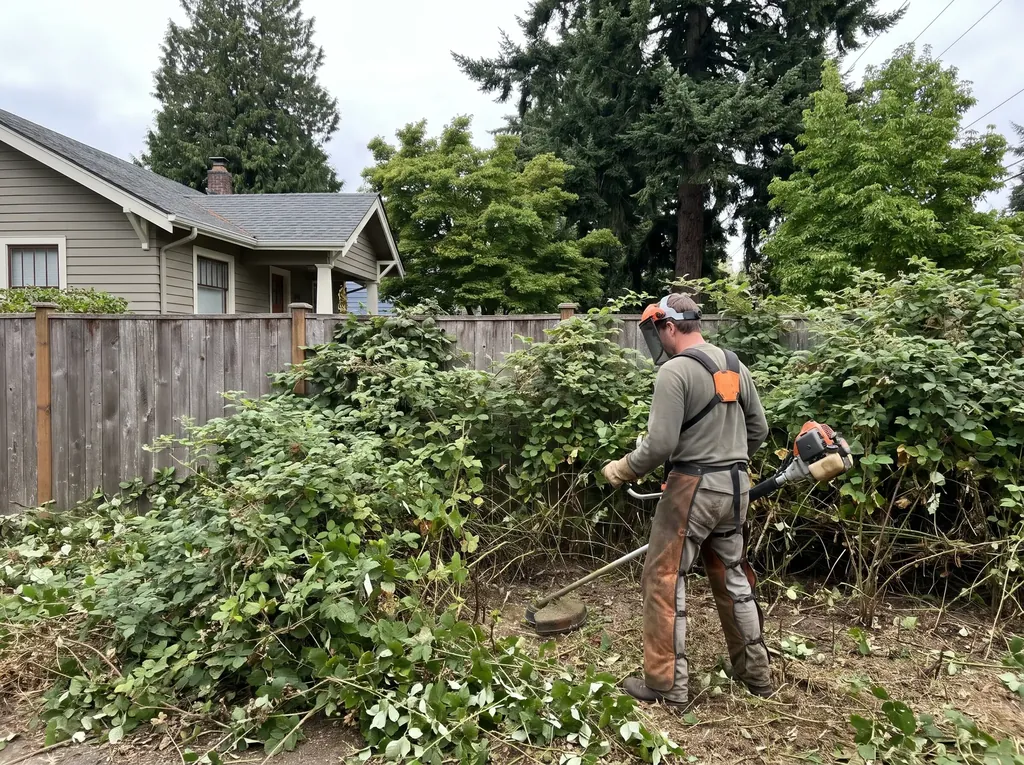
Himalayan blackberry, Scotch broom and invasive brush cut back, cleared and dealt with at the root.
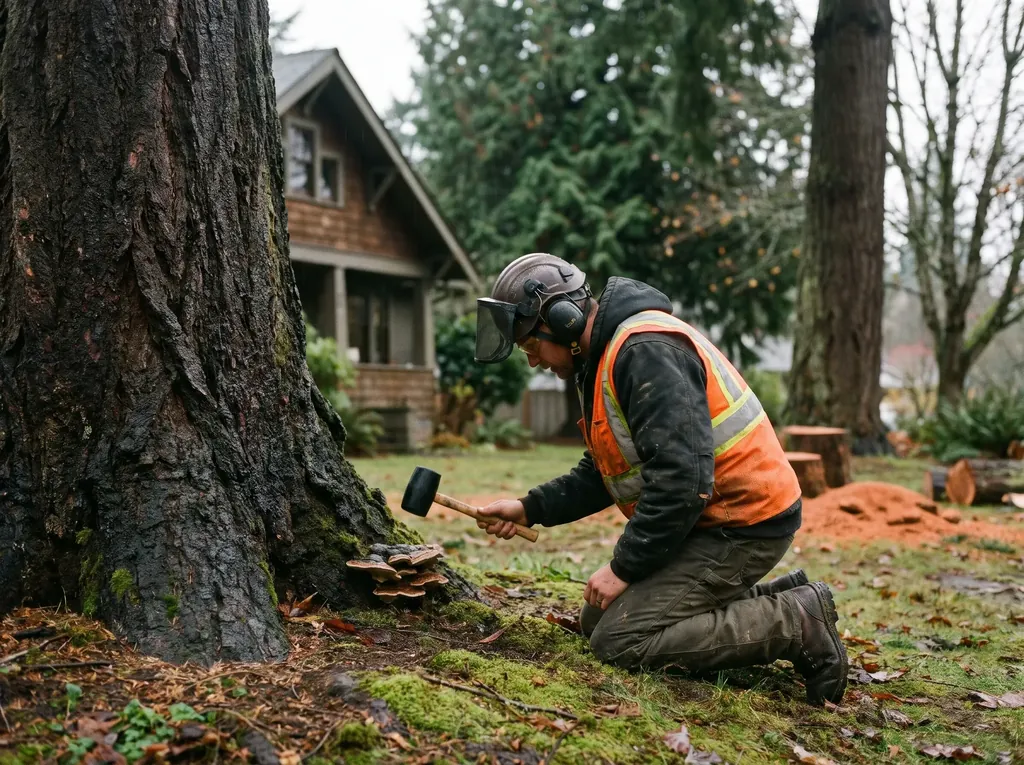
A straight answer on whether a tree is sound, needs work or needs to come down, before you spend money on it.
Tell us where the tree is, what it is near, and attach a photo if you can. We will be in touch to set a time to look at it.
We will call or text to set a time to look at the tree. If it is urgent, call (360) 555-0119.
Nothing was sent. Please call (360) 555-0119 and we will set up a time to look at the tree.