Can I Cut Down a Tree on My Property in Bellingham?
- Free on-site estimates
- Sectional takedowns where there is no room to drop
- Full cleanup, or the wood left where you want it
- Storm calls taken outside regular hours
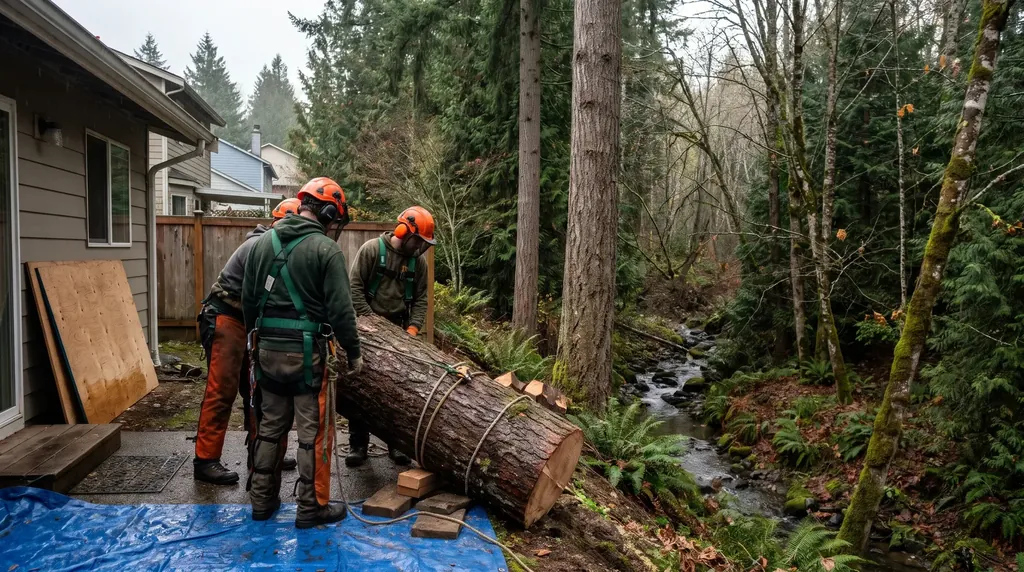
Often, yes, but not always, and where the tree stands decides it. On an ordinary flat residential lot in Bellingham, taking down a tree on your own property is frequently simple. Once the tree is on a steep slope, near a stream or wetland, inside a shoreline area, in the Lake Whatcom watershed, or covered by conditions from when the lot was developed, the city or the county may want a say before anyone cuts.
The cost of getting it wrong is not just a fine. It can mean replanting, restoration work and a stop on the job halfway through. So the rule we work by is simple: check first, cut second.
General information, not legal advice. Tree rules change and every property is different. Confirm your own situation with the City of Bellingham or Whatcom County before you cut.
Can I cut down trees on my property in Washington state?
There is no single statewide answer. Washington leaves most tree rules on private residential land to cities and counties, and they each write their own. The pattern across the state is broadly the same, though. Many cities let you remove trees on a developed residential lot with little or no paperwork, and then tighten things up in places where trees hold soil, shade streams or protect drinking water. Those places are usually called critical areas, and they include steep slopes, landslide hazard areas, wetlands, stream buffers and shorelines.
So the useful question is not “can I cut a tree in Washington” but “is my tree in one of the places my city or county protects.”
What permission is required to cut a tree?
In Bellingham, that depends on the lot, the tree and the reason.
City of Bellingham tree removal rules
We are confirming the current City of Bellingham requirements for tree removal on residential lots before publishing them. Until then, the City of Bellingham Planning and Community Development department can tell you whether your tree needs approval.
A few situations nearly always mean a phone call before cutting: the tree is on a slope, the tree is near water, the tree was a condition of a subdivision or building permit, or the tree is on a street edge where the city may own it.
Where the rules tighten: slopes, streams and shorelines
Bellingham is built on hills, ravines and creeks. Neighbourhoods around Chuckanut, South Hill, Edgemoor, Whatcom Creek and Padden Creek have trees doing real work holding up banks. Cutting in those areas is treated differently from cutting in a flat back yard, because a big root plate coming out of a slope can take the slope with it.
Critical area and shoreline requirements
We are confirming how the city and county critical area and shoreline rules apply to residential tree removal before publishing specifics. If your tree is on a slope or within sight of a creek, wetland, lake or the bay, check with the city or county first.
The Lake Whatcom watershed
Lake Whatcom supplies drinking water for Bellingham and much of the surrounding area, so the land draining into it gets extra scrutiny. Trees and ground cover on those slopes slow runoff and hold back sediment and phosphorus. If you live in Sudden Valley, on the north shore, around Geneva or anywhere else that drains to the lake, expect more questions about clearing, replanting and erosion control than you would face in town.
Watershed clearing and replanting rules
We are confirming the current watershed requirements for tree removal and clearing before publishing them. If your property drains to Lake Whatcom, ask the city or county what applies before any cutting or clearing.
Outside city limits
If you live in unincorporated Whatcom County, the county rules apply instead of the city’s. Small-acreage owners clearing for a house, a barn or pasture often run into county clearing and critical area rules rather than tree rules as such. Ferndale, Lynden, Blaine and the other cities each have their own codes too.
We are confirming the current county and small-city requirements before publishing them. Call Whatcom County Planning and Development Services, or your own city hall, with your parcel number.
What months can you not cut down trees?
There is no general month when tree removal is banned on a typical lot. Two things can change that. First, spring and early summer is nesting season, and federal and state wildlife law protects many birds and active nests. Second, some permits and critical area approvals set their own work windows.
We are confirming which seasonal limits apply to residential tree work locally before publishing dates. If a tree has an active nest in it, we will talk through the options with you before any cutting.
Can you cut down a tree in an easement?
An easement gives someone else a right over part of your land, usually a utility, a neighbour’s shared driveway or a drainage line. Owning the land under the easement does not always mean you can do what you like with the trees on it. If the tree is in a utility easement or near a line, call the utility first. If it is in a shared access or drainage easement, read the easement terms or ask a title company. Check your HOA covenants too, because many Whatcom County subdivisions have tree and view clauses of their own.
Can I cut down a tree on my property myself?
Being allowed to cut a tree and being able to do it safely are two different questions. A small tree in the open is a reasonable homeowner job with the right saw and protective gear. A tall fir or cedar near a house, a tree with a heavy lean, a dead alder that could break apart, or anything near a power line is not. Those are the jobs where people get hurt and roofs get holed.
The tree on the property line
Before cutting anything near a boundary, be sure whose tree it is. Washington has a timber trespass law that makes cutting or damaging a tree on someone else’s land expensive, even when the cut was a genuine mistake.
We are confirming the current state rules on damages for cutting a neighbour’s tree before publishing specifics. If a tree stands on or near the line, get the line confirmed and talk to your neighbour before any cutting.
Tree rules questions
What are the laws in Washington state regarding cutting down trees?
Most rules for trees on private residential land are set by cities and counties, so they vary from place to place. Steep slopes, streams, wetlands and shorelines are where rules most often apply. State law also protects your neighbour's trees from being cut without permission.
Can a neighbour cut my tree without permission?
Not the trunk or the tree as a whole. A neighbour can generally trim branches that hang over their side, back to the property line, but cutting down or seriously damaging a tree that is not theirs can leave them liable for damages under Washington law.
Can I get my neighbour to cut back or reduce the height of their trees?
You can ask, and most people agree when it is put to them reasonably. Outside of an HOA covenant, a view agreement or a genuinely dangerous tree, there is usually no general rule forcing a neighbour to reduce a healthy tree's height.
How much does it cost to cut a 100 foot tree?
A 100 foot tree is a large removal almost anywhere, and the price depends mostly on what it could hit and how much rigging it needs. A tree that can be dropped into open ground costs far less than one that has to come down in pieces over a roof.
Not sure if you can cut it? Ask first.
Send a photo of the tree and what is around it, and tell us roughly where it stands. We will tell you what kind of job it is and what to check before it comes down.
- Call(360) 555-0119
- Emailoffice@bellinghamtreeremovalpros.com
- HoursMon to Sat, 7am to 6pm. Storm damage calls taken outside those hours.
Thanks, we have your request
We will call or text to set a time to look at the tree. If it is urgent, call (360) 555-0119.
Online requests are not switched on yet
Nothing was sent. Please call (360) 555-0119 and we will set up a time to look at the tree.