Tree Removal
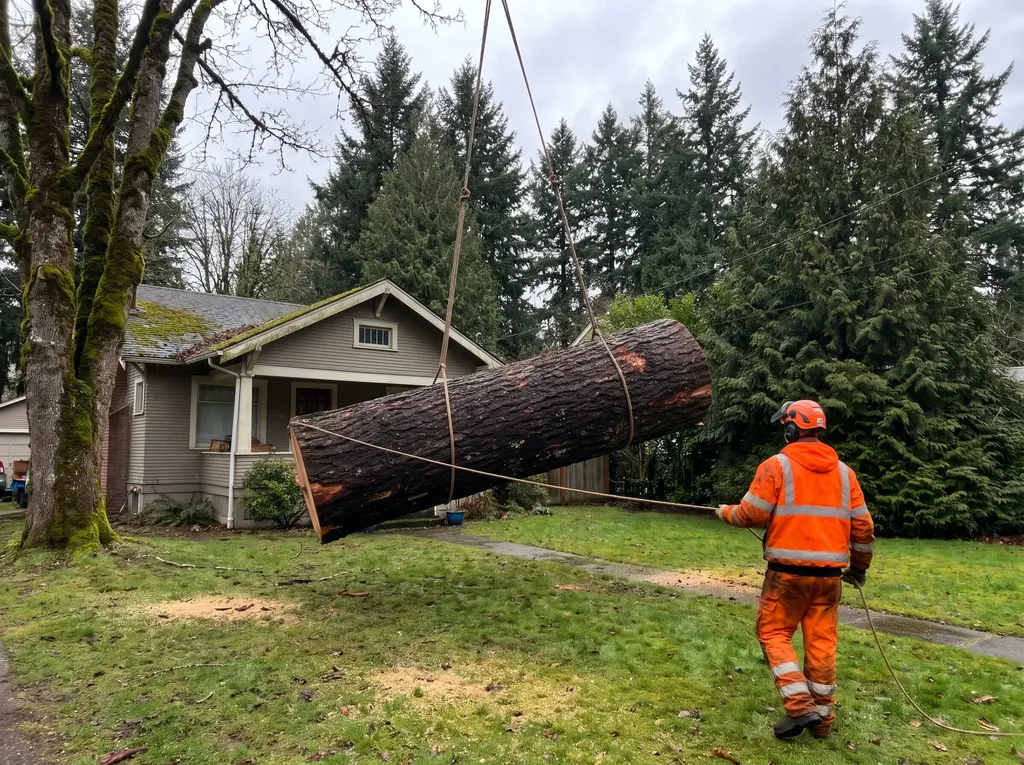
Full removal of trees of any size, including large conifers close to houses, taken down in pieces where there is no room to drop them.
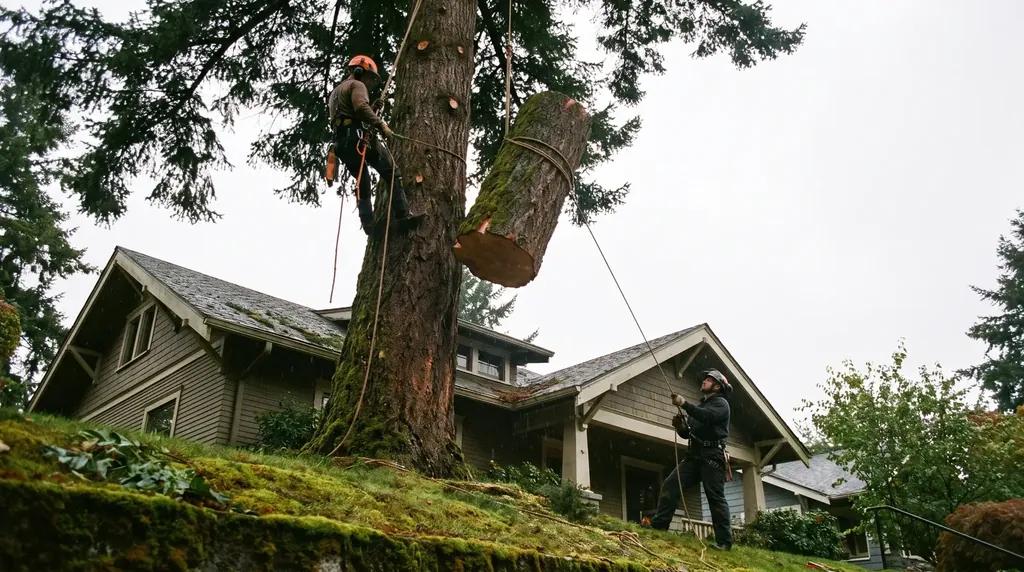
Big Douglas fir and cedar close to the house, storm damage, leaning and dead trees, stumps and overgrown lots. We take the tree down, protect everything around it, and leave the yard clean.
Storm damage calls taken outside regular hours
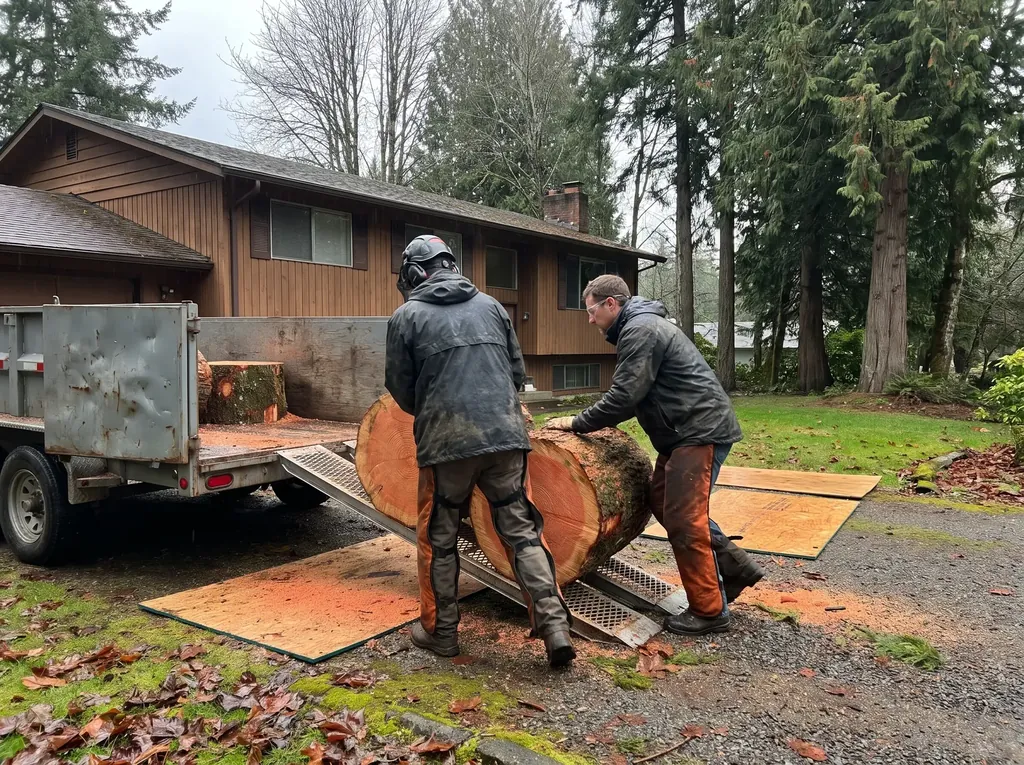
Most tree removal in Whatcom County is not a tree standing alone in an open field. It is a tall Douglas fir that was here before the house, now twenty feet from the roof. It is a western red cedar on a steep Bellingham lot with a neighbour's garage below it. It is a big-leaf maple with a co-dominant trunk hanging over the driveway, or a stand of red alder that went from saplings to forty feet while nobody was looking.
The weather makes it more urgent. Our winters soak the ground for months, and saturated soil does not hold a root plate well. When a southerly windstorm comes in off the water, or the cold northeast outflow pours down the Fraser Valley into Lynden, Ferndale and Blaine, trees that looked fine in August go over whole, roots and all.
So the job is usually about control. Rigging the tree down in pieces, lowering each one on a rope instead of dropping it, and keeping the roof, the fence, the power line and the lawn exactly as they were. That is the work we do, from one hazard tree to a full lot.
Full removal of trees of any size, including large conifers close to houses, taken down in pieces where there is no room to drop them.
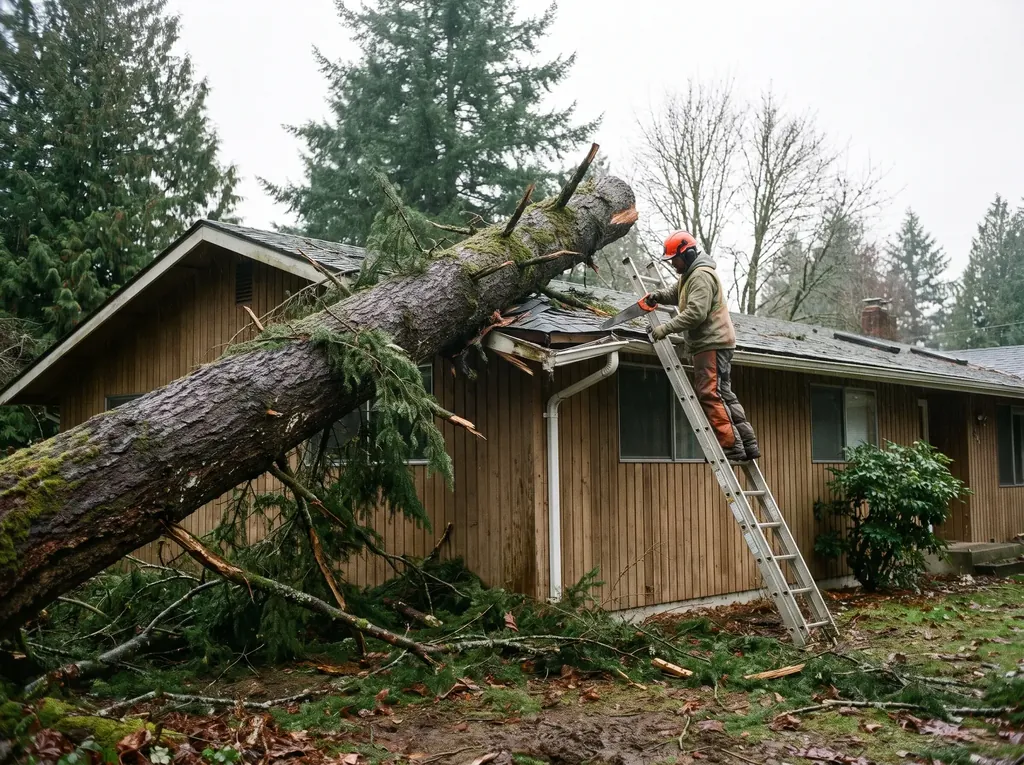
Trees on roofs, cars, driveways and fences after a windstorm, made safe first and cleared after.
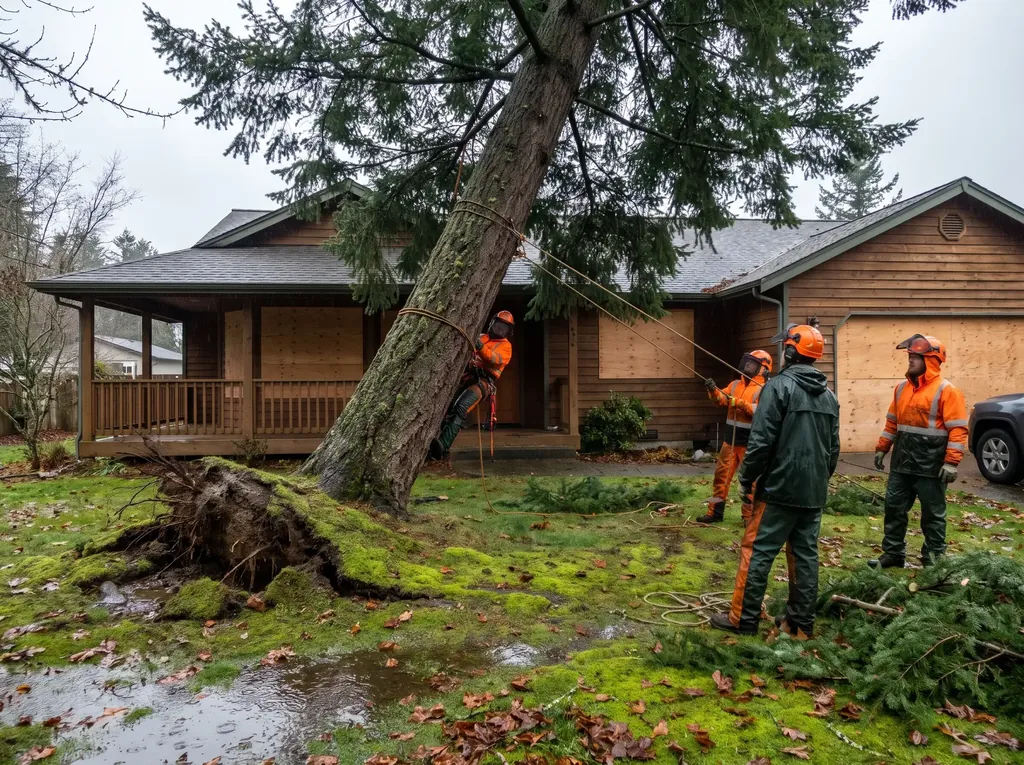
Leaning, cracked, rotting or root-lifted trees taken down before the next storm decides for you.
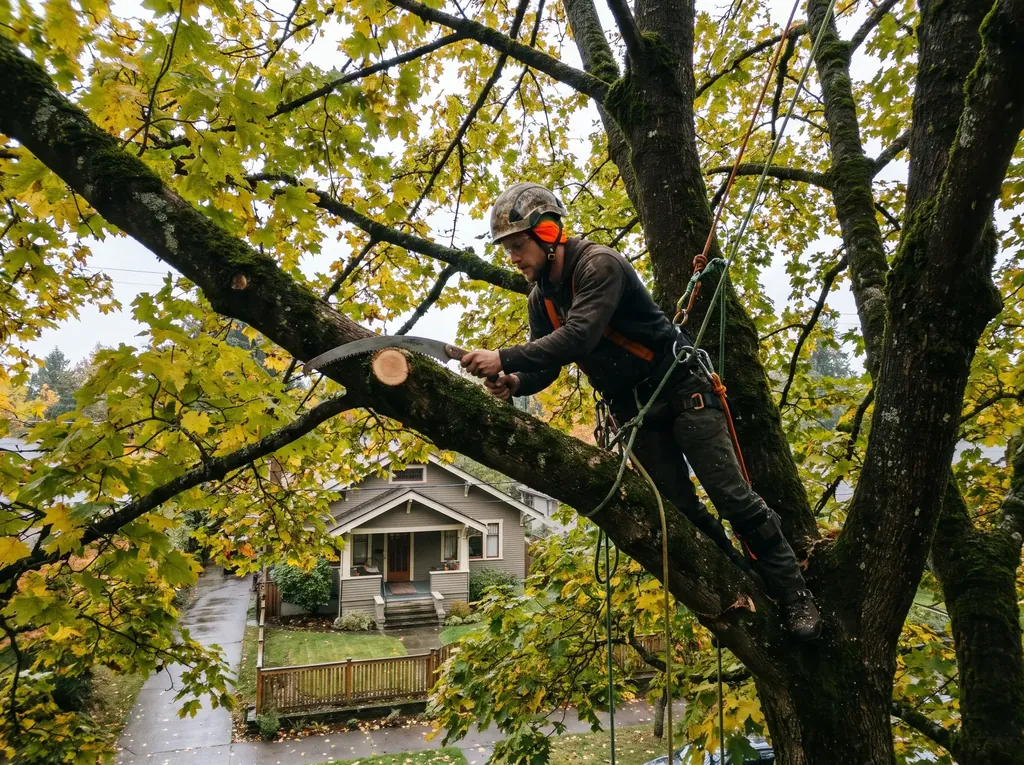
Deadwood removal, crown thinning, crown reduction and clearance from roofs and lines, done for the health of the tree.
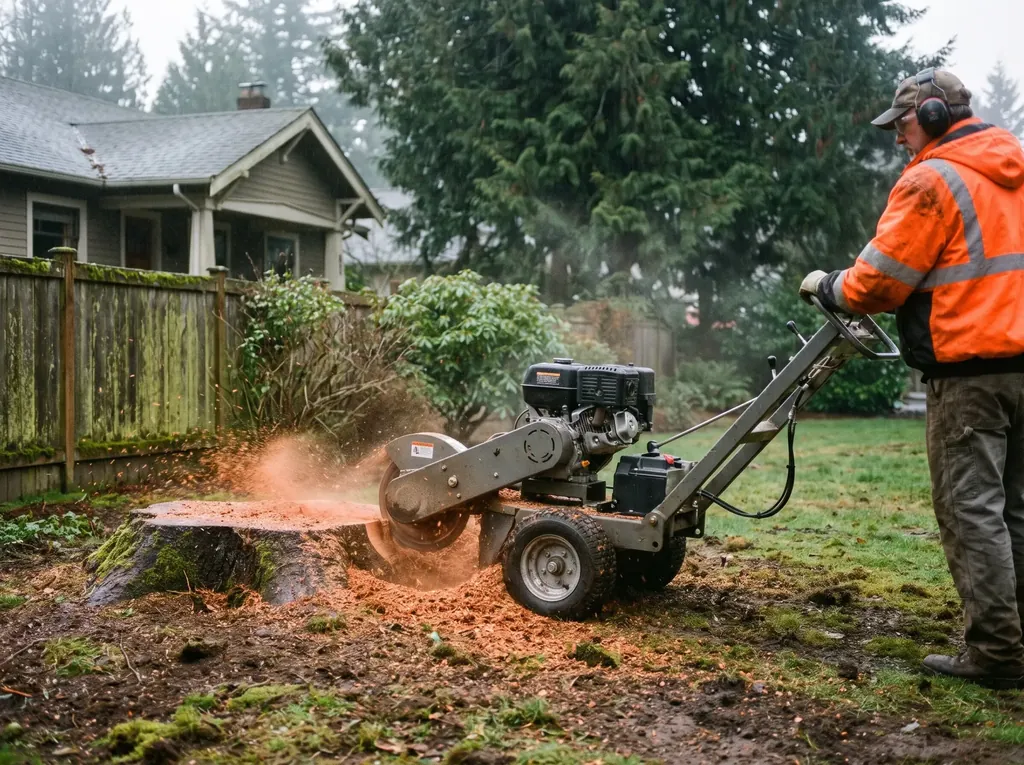
Stumps ground below grade with the chips cleaned up or left as mulch, or pulled out entirely where you are building.
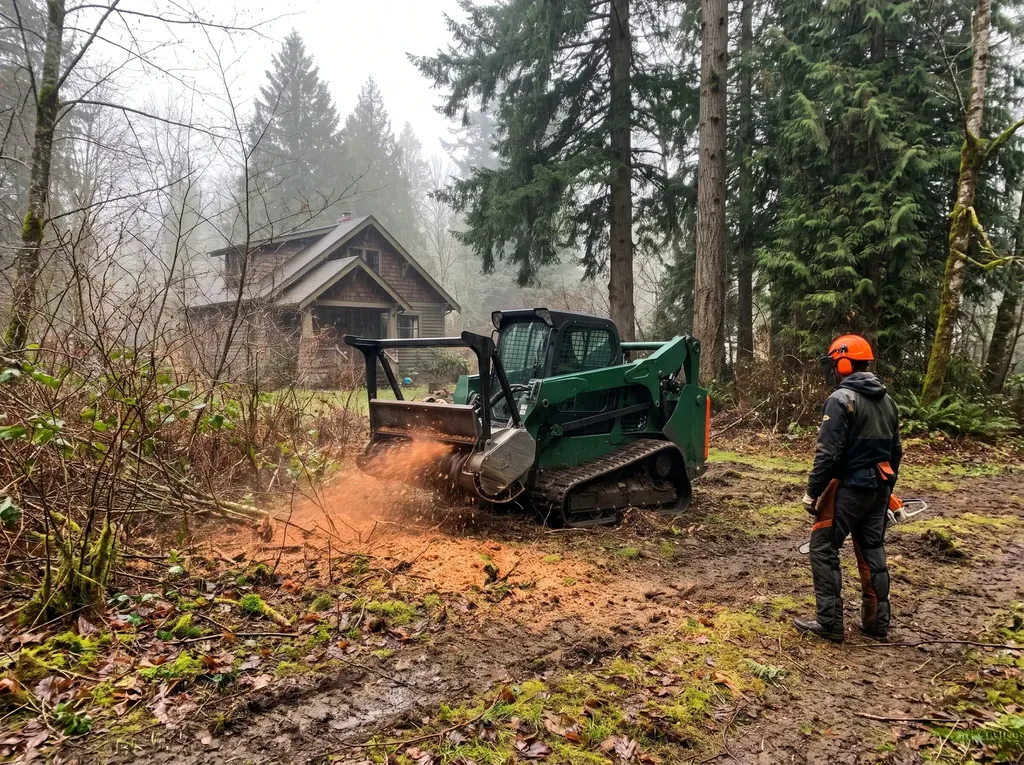
Overgrown lots and acreage cleared for building, views, fire safety or pasture, including forestry mulching and brush clearing.
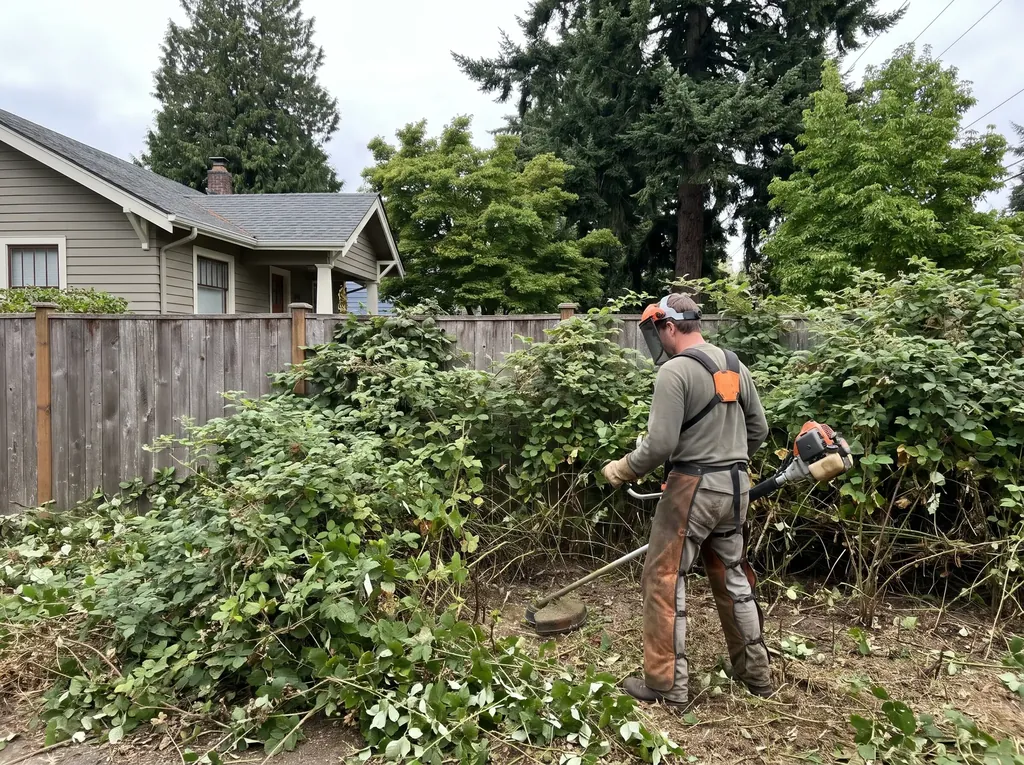
Himalayan blackberry, Scotch broom and invasive brush cut back, cleared and dealt with at the root.
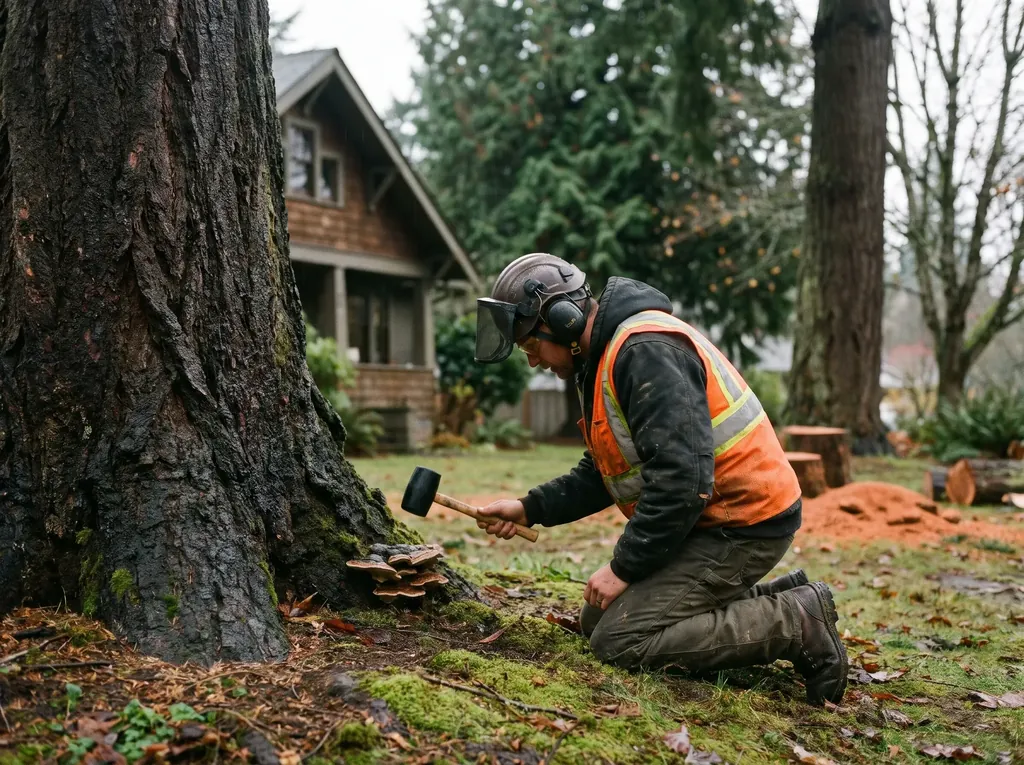
A straight answer on whether a tree is sound, needs work or needs to come down, before you spend money on it.
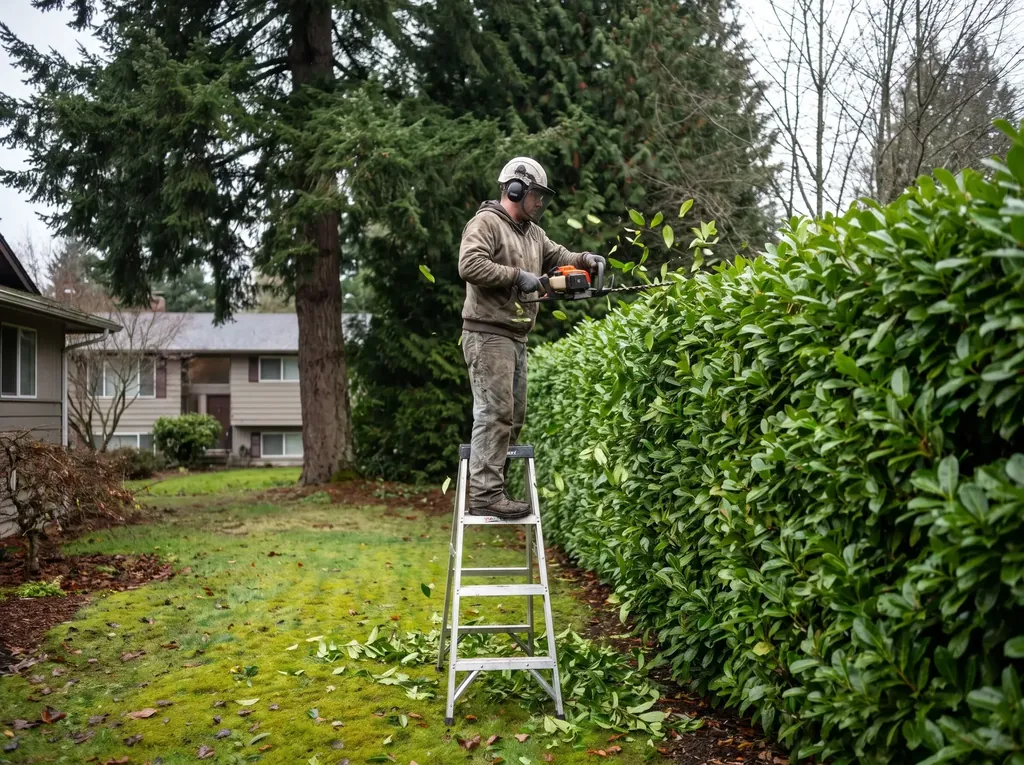
Laurel, arborvitae and overgrown shrubs shaped back or reduced.
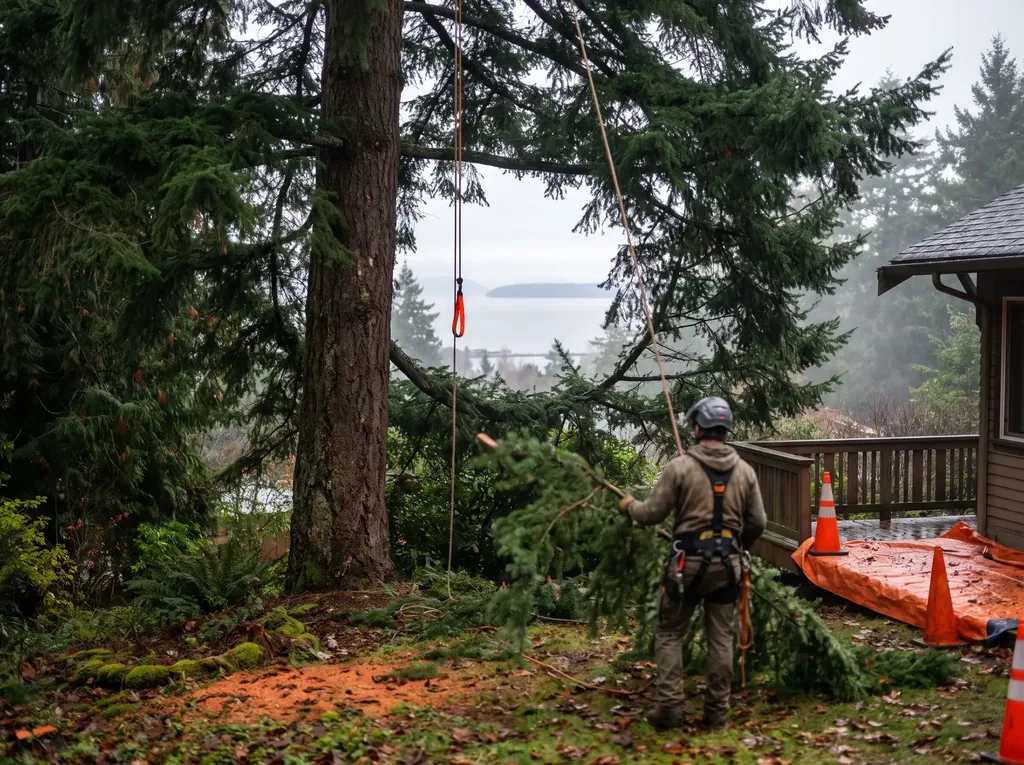
Selective thinning and windowing to open a view of the bay or the mountains without killing the tree.
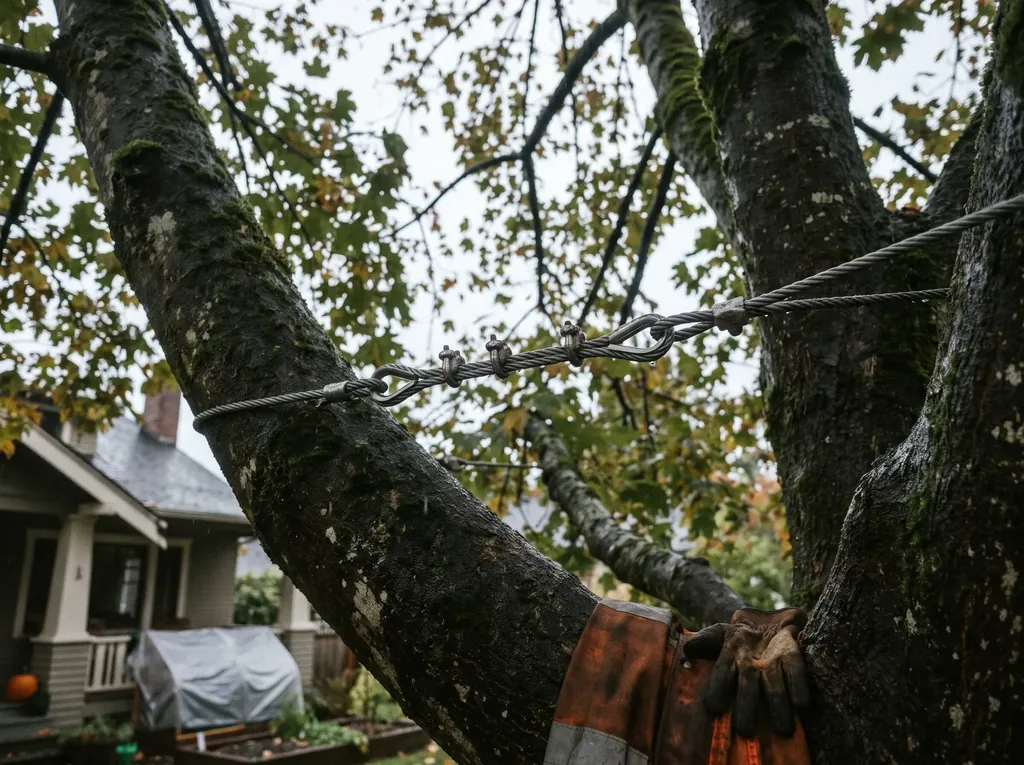
Support systems for split or weak unions on trees worth keeping.
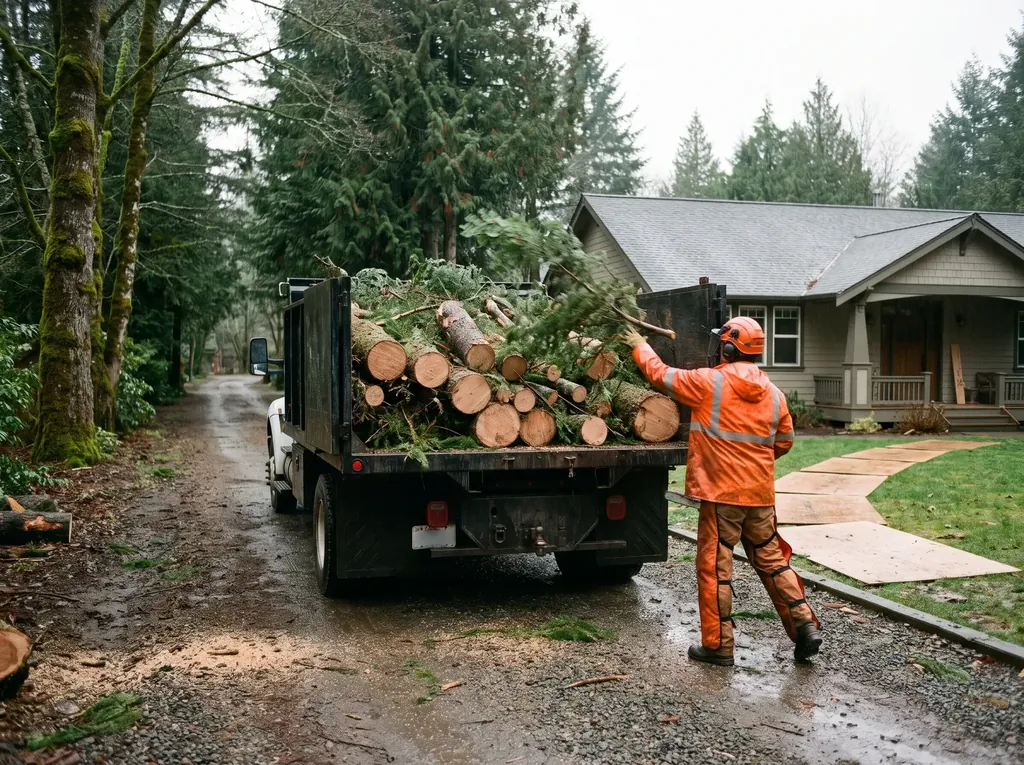
Limbs, logs and brush hauled away, chipped on site, or bucked to firewood lengths.
Where there is a clear drop zone, a tree can be felled. Where there is a roof, a fence or a neighbour's shed in the way, it comes down in pieces on ropes, each one controlled to the ground. We decide which method on site, not over the phone.
Where the pieces will land, where the equipment goes, what happens to the wood and the stump, and what could change the price. No surprises halfway up the tree.
Not every tree that worries you needs to come down. A dead limb or a heavy side can often be pruned out for far less. If trimming solves it, we say so.
Brush chipped, rounds stacked or hauled, sawdust raked out of the lawn, and the driveway blown off. You decide whether you keep the firewood or the chips.
Call or send a photo. Tell us roughly how tall it is, what it is near, and whether anything has already fallen.
We walk the site, check the lean, the trunk and the root plate, and work out access and where everything will go.
The method, the cleanup, the stump and the price, in writing, before any work is booked.
Lines, roofs, fences, gardens and the lawn are dealt with before the first cut, not after.
Felled where there is room, rigged down in pieces where there is not.
Brush chipped, wood handled the way you asked, and a walk around the yard with you before we leave.
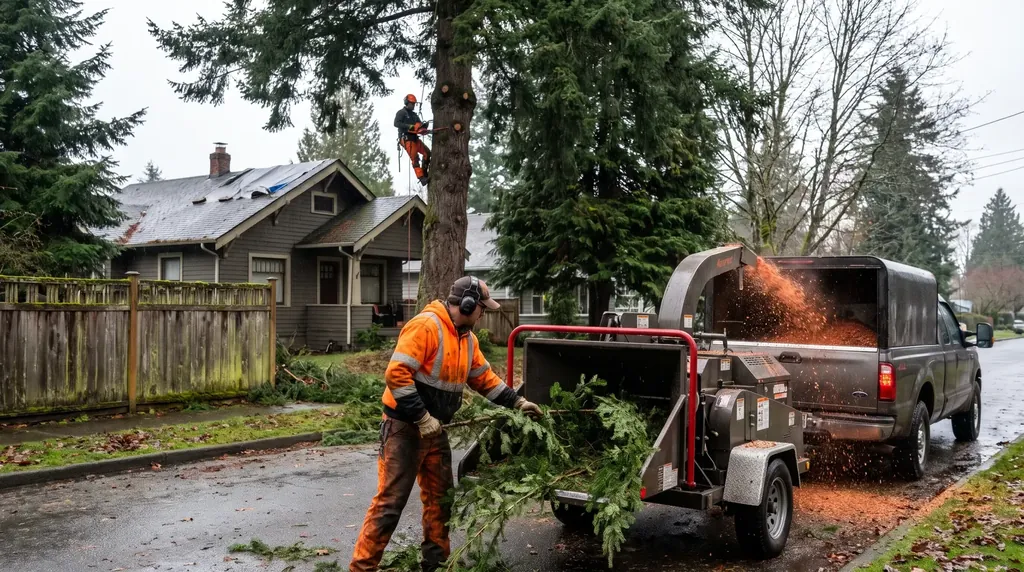
We take down, trim and clear trees across Whatcom County: Bellingham, Ferndale, Lynden, Blaine, Everson, Sudden Valley, Birch Bay, Sumas, Deming and Custer, plus the rural ground in between.
Long gravel drive, steep lot, no truck access to the back yard? Tell us when you call. It changes what we bring, not whether we come.
Every area we coverIt depends on the tree and what is around it far more than on the state. Height and trunk size matter, but the biggest swings come from access and proximity. A fir in an open field can be felled in one cut. The same fir twenty feet from a house has to be climbed and lowered in pieces, which takes more time, more crew and more gear. Crane work, haul-off and stump grinding all add to it.
We give a fixed price after seeing the tree.
A thirty foot tree is a small to medium job by local standards, and it is usually one of the quicker removals we do. What moves the price is whether it can be felled in one piece or has to be taken down in sections because of a roof, a fence or a line, and whether you want the stump ground and the wood hauled away. Send a photo and we can often give you a rough idea before we visit.
Often, when a tree falls on something your policy covers, like the house, a garage or a fence. Removal of a tree that falls across the lawn without hitting anything, or of a healthy tree you simply want gone, is usually not covered. Call your insurer before the cleanup if a structure was hit, take photos first, and keep our invoice. We can describe the damage in writing for your claim.
Late fall and winter, outside of storm weeks, are often the easiest time to schedule, and deciduous trees are lighter and easier to see into once the leaves are down. Right after a big windstorm is the worst time to book planned work, because every crew in the county is clearing fallen trees. If a tree is already leaning or cracked, do not wait for a cheaper month.
Clear access for the crew, keep the wood for firewood instead of paying to haul it, leave the stump if you do not need it gone, and have two or three trees done in one visit rather than separately. Booking ahead of storm season instead of after a tree has already failed also keeps the work simpler and the price lower.
We do not run a free program, and we would rather not send you to assistance programs we have not checked ourselves. Two things are worth knowing. If a tree is touching a power line, call the utility before anyone else, including us, because making the line safe is their job. And if a tree on your property is a genuine hazard, getting it assessed early usually means a smaller, cheaper job than waiting for it to fail.
Tell us where the tree is and what is worrying you. A photo helps a lot. If a tree is on the house or across a line, call instead of filling this in.
We will call or text to set a time to look at the tree. If it is urgent, call (360) 555-0119.
Nothing was sent. Please call (360) 555-0119 and we will set up a time to look at the tree.