Blackberry walls on fence lines and back yards
The thicket along the back fence, the mound that swallowed the shed, the canes coming through from the neighbour's side. Cut, cleared and dug out.
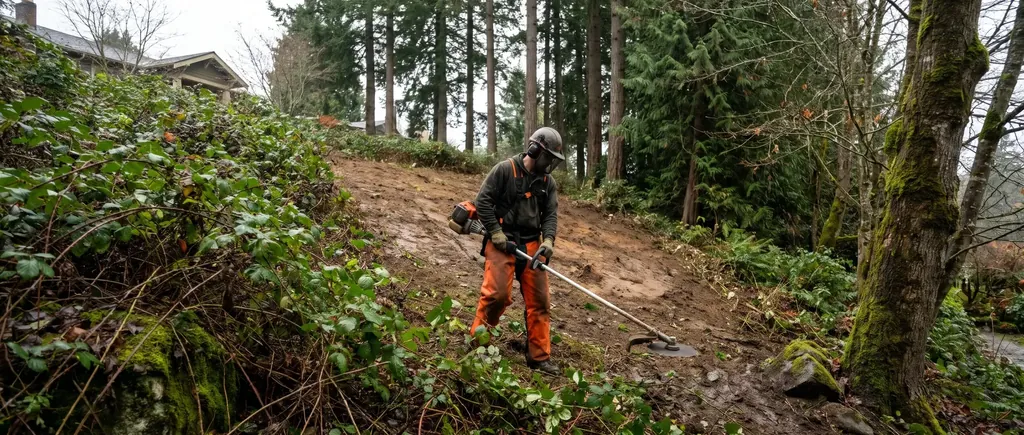
Himalayan blackberry, Scotch broom and invasive brush cut back, cleared, and dug out at the root crown so it does not just come back next spring.
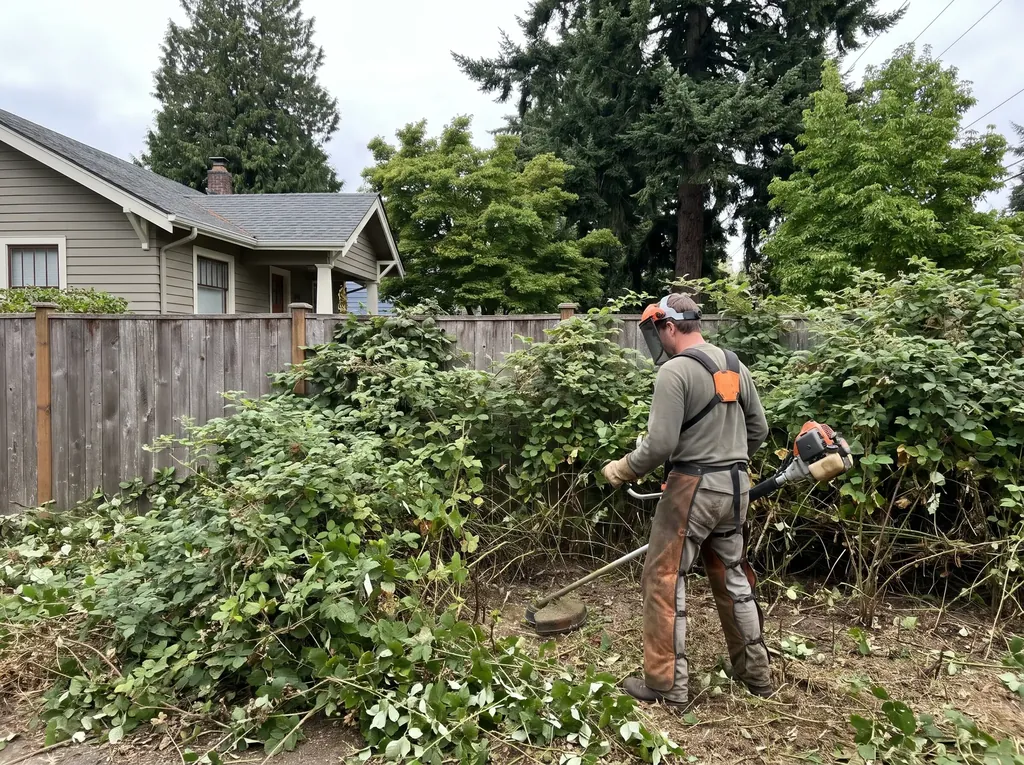
Himalayan blackberry is the plant every Bellingham homeowner eventually fights. It came here as a garden berry and escaped, and it now covers fence lines, ravines, vacant lots and the back corner of a great many yards in the county. Canes grow many feet in a single season, arch over, and root wherever their tips touch the ground. Leave it two summers and a corner becomes a thicket you cannot get into.
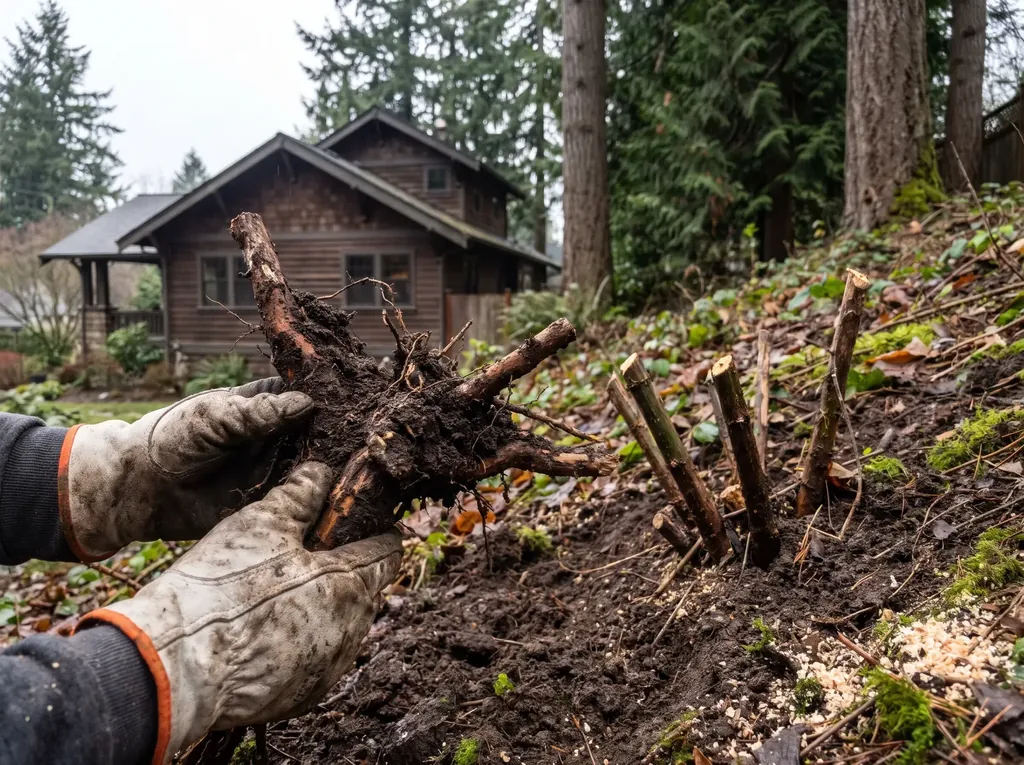
The reason it keeps winning is underground. Each plant grows from a woody root crown just below the surface, and every crown you leave will send up new canes after it is cut. Mowing, brush cutting and string trimming knock the top back but leave the crowns alive, so a cut or two a year just keeps the patch going. That is why so many people clear the same patch every year.
It costs you more than garden space, too. A big blackberry mound is a weight that slowly leans fences over and pulls gutters off sheds. It hides old stumps, rusted wire and holes you only find with an ankle. And once it reaches the trunk of a tree, it climbs, shading out the lower limbs and making that tree harder to work on later.
Scotch broom is the other one. It takes over sunny, dry, disturbed ground: road edges, cleared lots, the bank above the beach at Birch Bay. It fixes its own nitrogen, outcompetes almost everything, and drops seed that can stay alive in the soil for many years. Pull it young, cut it before it seeds, and expect seedlings for a while after.
We clear both, along with English ivy climbing into trees, overgrown laurel and holly, and general brush. Then we deal with the roots, which is the part that actually gets rid of it.
Blackberry on a steep bank, a ravine or along a creek can hide erosion that is already happening, and stripping it leaves bare soil. Clearing those areas can need approval and usually needs replanting. We look at slope and water before we quote and will tell you if a slope needs a different plan.
The thicket along the back fence, the mound that swallowed the shed, the canes coming through from the neighbour's side. Cut, cleared and dug out.
Blackberry and brush on slopes and gullies behind houses, cleared by hand with care for the bank underneath and a plan for what grows there next.
Broom, ivy, holly, laurel and the rest of the garden escapes that crowd out everything else. Pulled, cut or cleared depending on size and season.
Canes and brush cut down to the ground with brush cutters and saws, and the tangle pulled out so the ground is visible.
Each blackberry crown dug out with mattocks and grubbing tools, and broom pulled with its root where the ground allows. This is the step that stops the regrowth.
Cut material chipped on site where it is clean enough to use as mulch, or hauled away. Blackberry canes full of thorns are usually hauled rather than spread.
Some regrowth from missed roots and buried seed is normal. We tell you what to expect and price a follow-up pass with the job if you want one.
A couple of photos of the patch and a rough idea of its size. Note anything hidden in it if you know, like an old fence, a stump or a pile of debris.
For larger areas, slopes or anything near water, we come out to see it before we price.
Native shrubs, young trees and anything worth keeping inside the patch are flagged before we start cutting.
Canes cut, pulled out and piled, exposing the ground and the crowns underneath.
Root crowns dug out one by one. On bigger patches this is most of the job, and it is the part that pays off.
Material chipped or hauled, the ground raked, and a follow-up pass booked if you chose one.
We go after the roots. Cutting blackberry down is easy and fast, which is why most brush clearing stops there. Digging out the crowns is slow, hard work, and it is the only part that makes the clearing last.
We do not spray. Herbicide follow-up is a separate service we do not offer, and our clearing does not depend on it. If your site would genuinely benefit from treatment afterward, we will tell you so you can decide.
We look before we strip a slope. Pulling blackberry off a steep bank above a creek can turn a weed problem into an erosion problem. On slopes and near water we clear more carefully and plan for planting.
We do the whole job. Fallen trees inside the thicket, old stumps, buried fencing and the half-rotten shed that the blackberry was hiding are all part of the same clearing, and we price them in rather than leaving them for you.
Send a photo of the patch. We will price it, clear it, and dig out what keeps bringing it back.
Himalayan blackberry and evergreen blackberry are non-native and invasive across western Washington, and both appear on the state's noxious weed lists. The native trailing blackberry, with thin trailing stems and small leaves, is not invasive and is worth leaving where it is not in the way.
Yes. The canes are easy to cut, but every root crown left in the ground regrows, and cane tips that touched the soil have often rooted into new plants. Getting rid of it means digging out the crowns and then keeping on top of regrowth for at least a couple of seasons, sometimes longer, until missed roots and buried seed are used up.
For a backyard thicket or a fence line, hand clearing with brush cutters and saws, followed by digging out the roots, gives the cleanest result and protects what you want to keep. On a large open area a machine is faster for the cutting, but the blackberry crowns still need dealing with afterward.
If the problem is brush rather than trees, the cheapest lasting approach is to clear it once properly, roots included, rather than cutting the same patch every summer. Mowing once a year looks cheaper but rarely gets rid of blackberry. Wearing the roots out by cutting alone takes several cuts a year for several years, so one proper clearing with the crowns dug out is usually the quicker way to be done with it.
It is not a good idea. Even if the branches or canes came from their side, dumping them back over the fence usually starts a dispute rather than ending one. Talk to your neighbour, and if the brush is coming through on both sides, clearing the whole fence line at once often makes sense for both of you.
We clear blackberry, broom and brush in Bellingham, Ferndale, Lynden, Blaine, Everson, Sudden Valley, Birch Bay, Sumas, Deming and Custer, from city back yards to overgrown acreage.
Every area we cover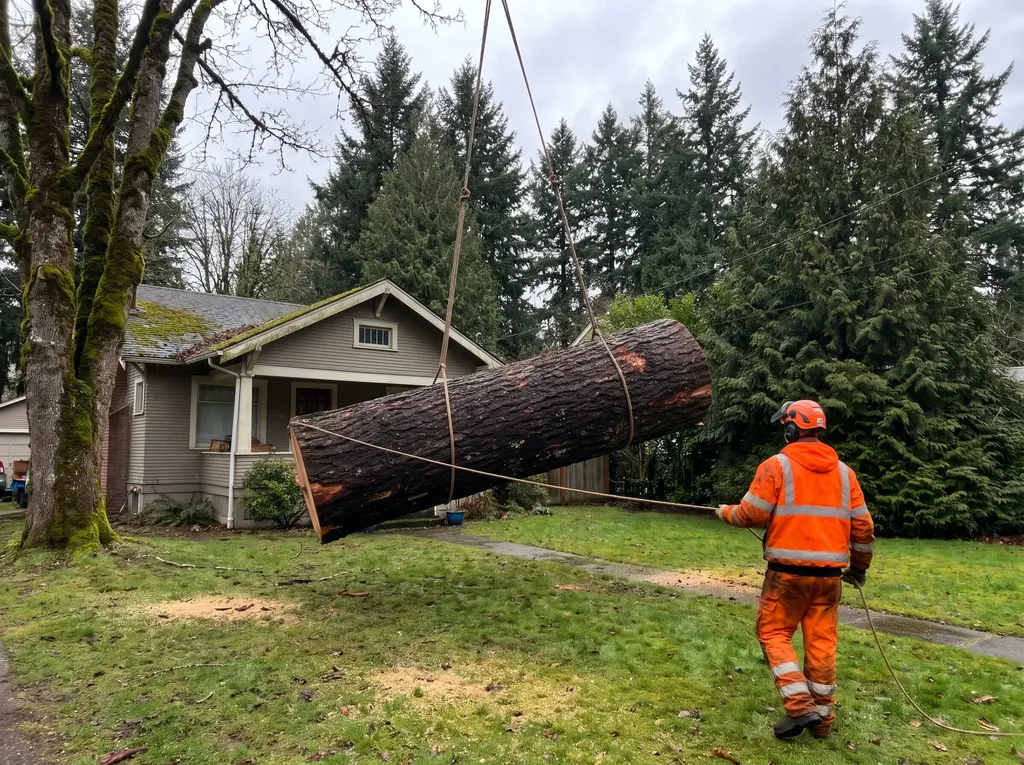
Full removal of trees of any size, including large conifers close to houses, taken down in pieces where there is no room to drop them.
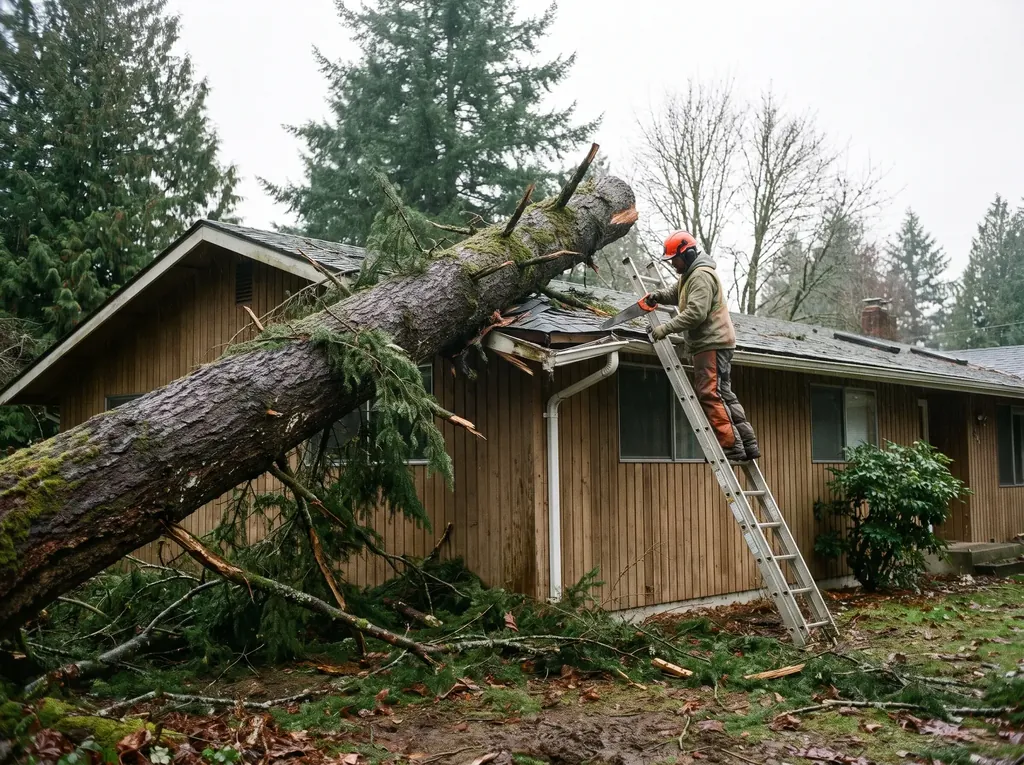
Trees on roofs, cars, driveways and fences after a windstorm, made safe first and cleared after.
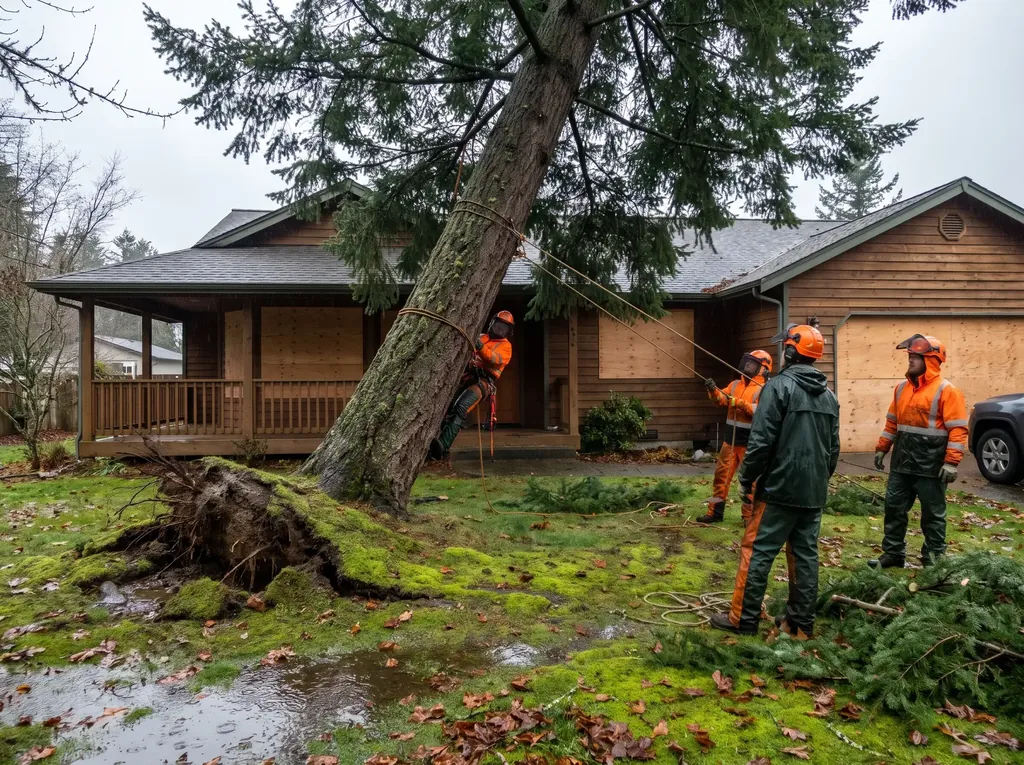
Leaning, cracked, rotting or root-lifted trees taken down before the next storm decides for you.
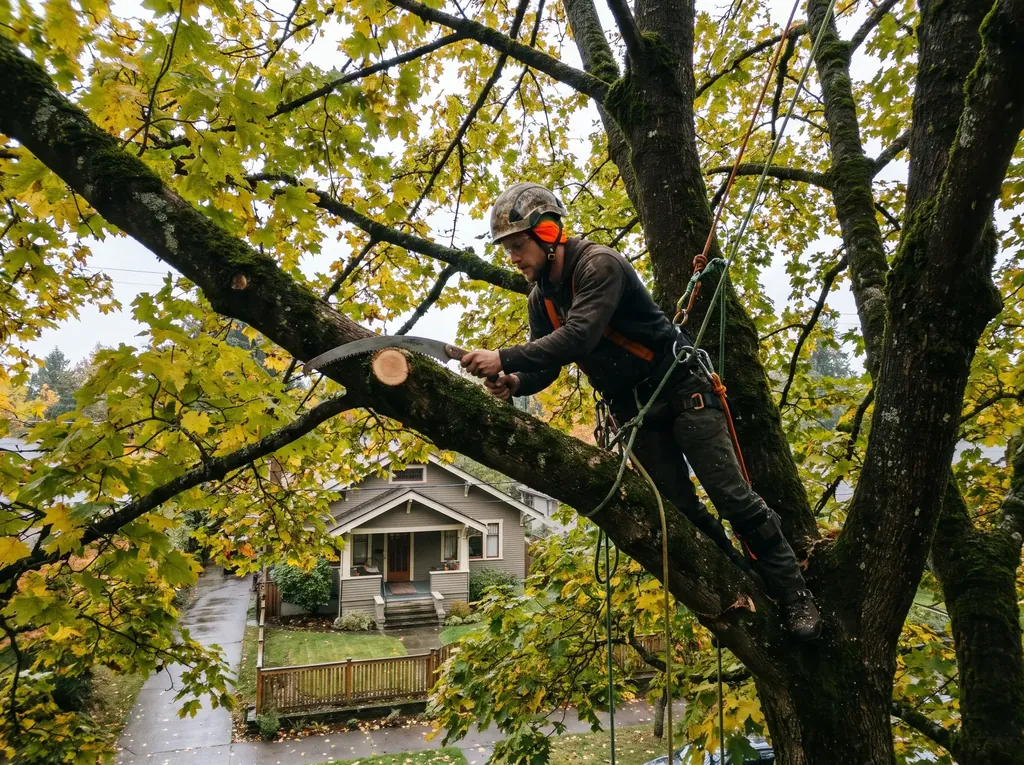
Deadwood removal, crown thinning, crown reduction and clearance from roofs and lines, done for the health of the tree.
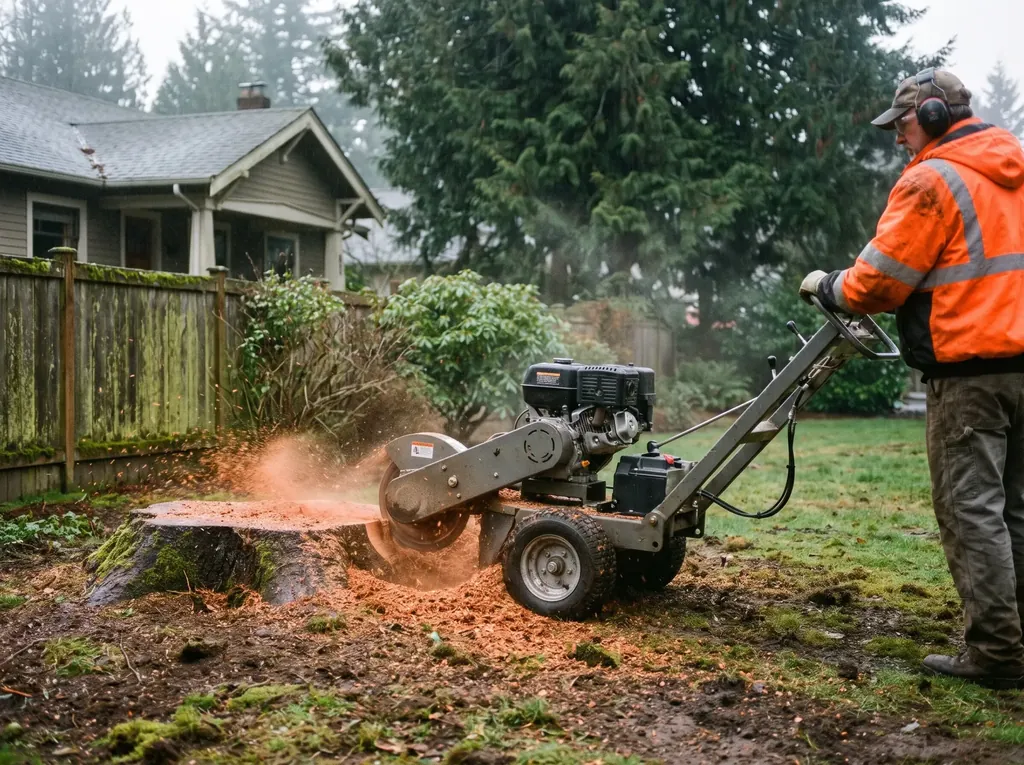
Stumps ground below grade with the chips cleaned up or left as mulch, or pulled out entirely where you are building.
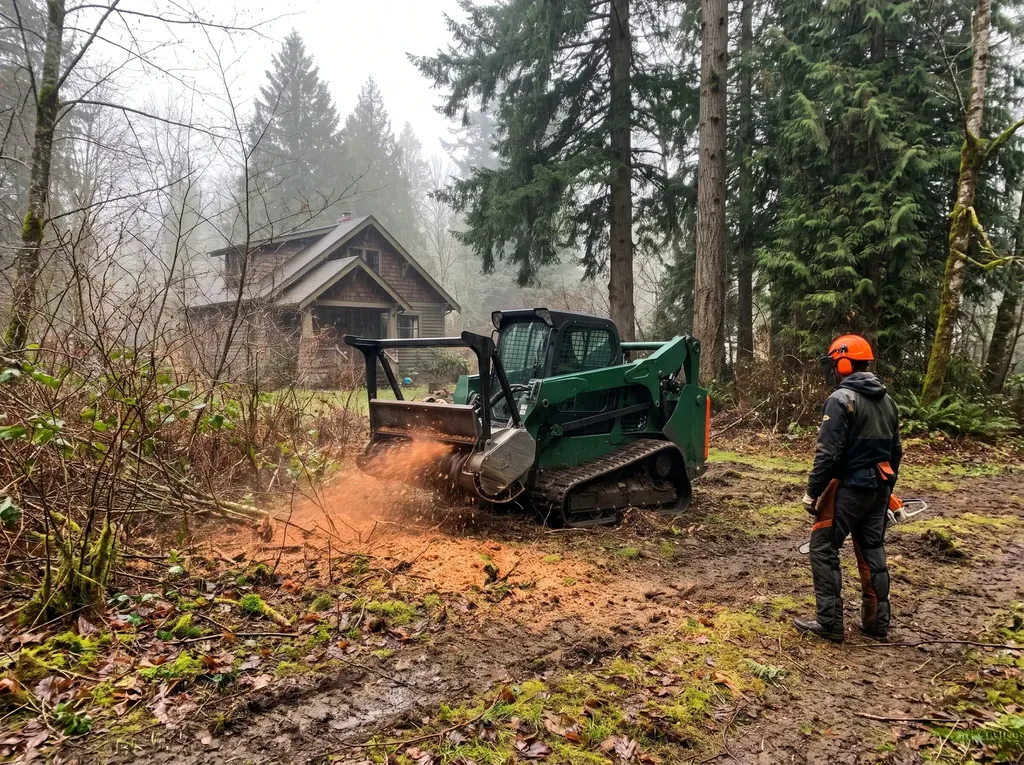
Overgrown lots and acreage cleared for building, views, fire safety or pasture, including forestry mulching and brush clearing.
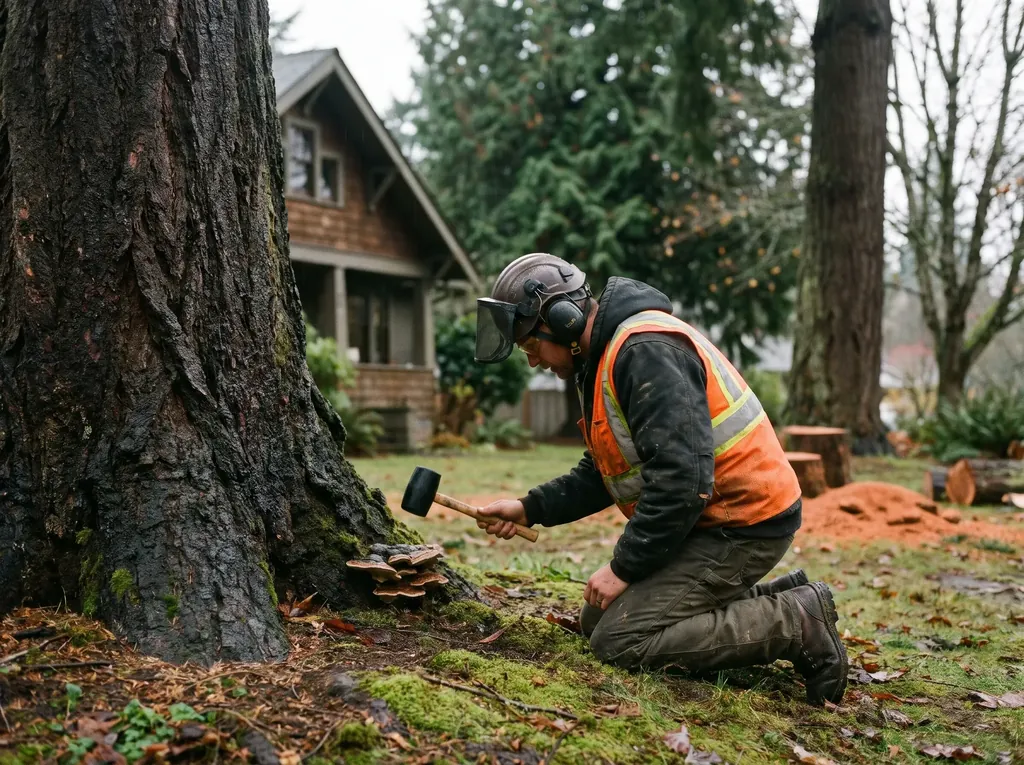
A straight answer on whether a tree is sound, needs work or needs to come down, before you spend money on it.
Tell us roughly how big the patch is, what is in it, and whether it is on flat ground or a slope. A photo or two is plenty.
We will call or text to set a time to look at the tree. If it is urgent, call (360) 555-0119.
Nothing was sent. Please call (360) 555-0119 and we will set up a time to look at the tree.