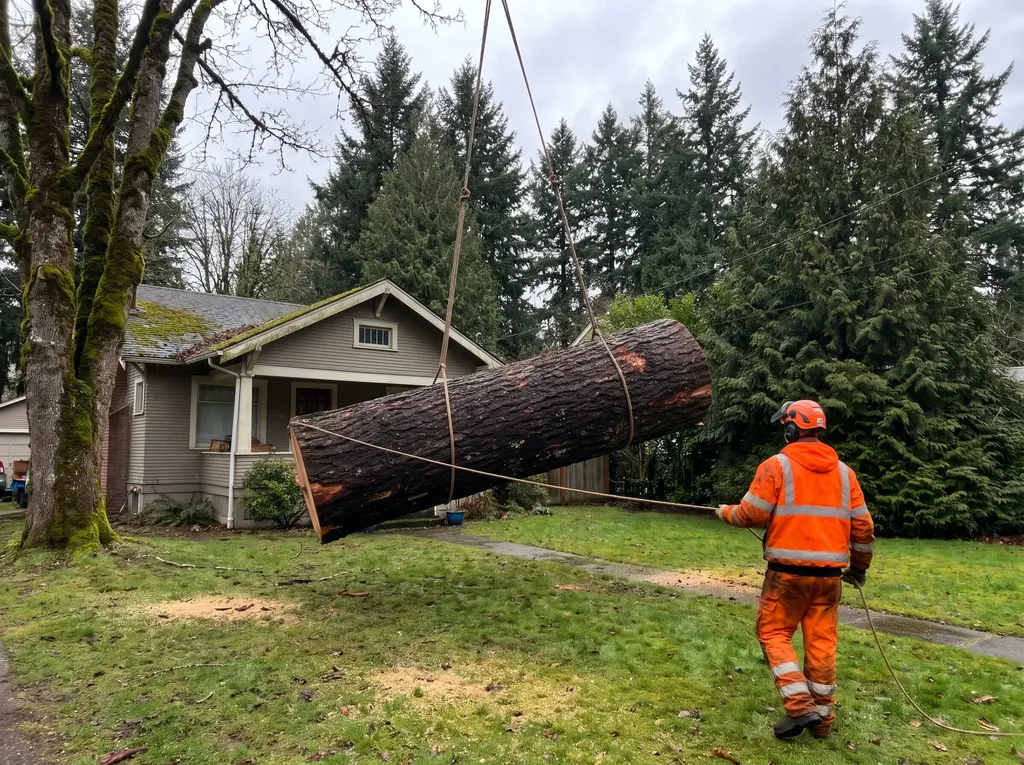
Tree removal
on tight shoreline lots, climbed and lowered in pieces close to houses.
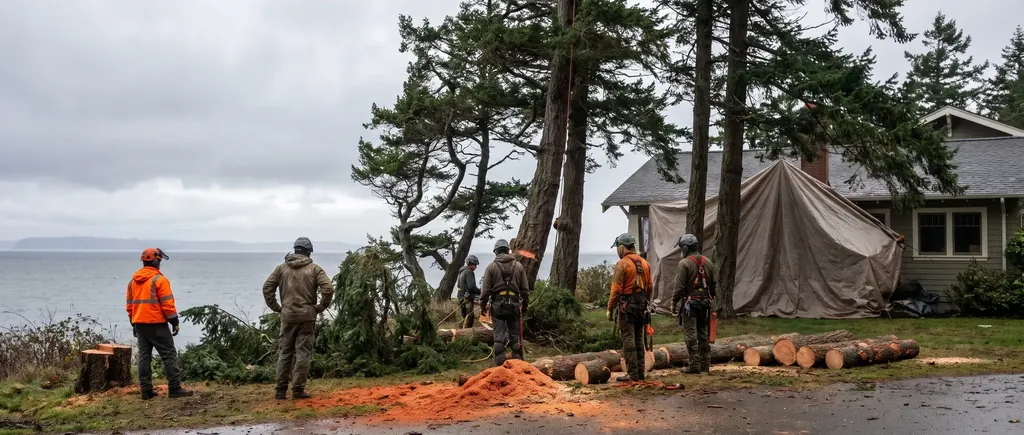
Shoreline trees in Blaine, Birch Bay and Semiahmoo, taken down, thinned or cut back with the house, the view and the neighbours in mind.
Blaine is the last town before the border, and most of it faces the water. Drayton Harbor and Semiahmoo Bay on one side, Birch Bay a few miles south, the Peace Arch at the crossing. That exposure is the whole story for trees here.
When a winter storm blows in, the trees along the shore take it straight off the water with nothing to break it. When the cold northeast outflow comes down the Fraser Valley, it crosses the bay and hits the north county coast hard.
The lots make it more delicate. Around Semiahmoo and along the Birch Bay shoreline, houses sit close together, often close to the water, and many owners bought them for the view. Here the question is rarely only whether a tree is safe. It is also whether it is blocking the water, whether the neighbour values it, and whether it can be thinned instead of removed. Inland, the older parts of Blaine and the rural ground toward Custer have bigger lots with Douglas fir, red alder and cedar, open to the same winter wind.
on tight shoreline lots, climbed and lowered in pieces close to houses.
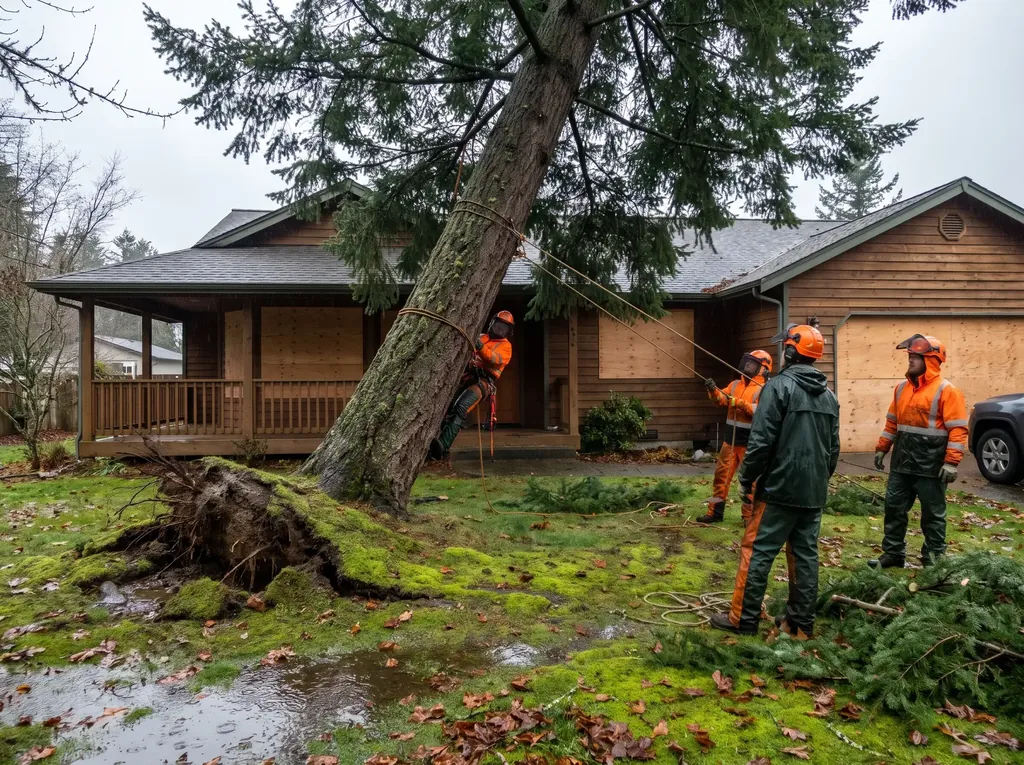
for wind-bent, leaning and storm-weakened trees above homes and decks.
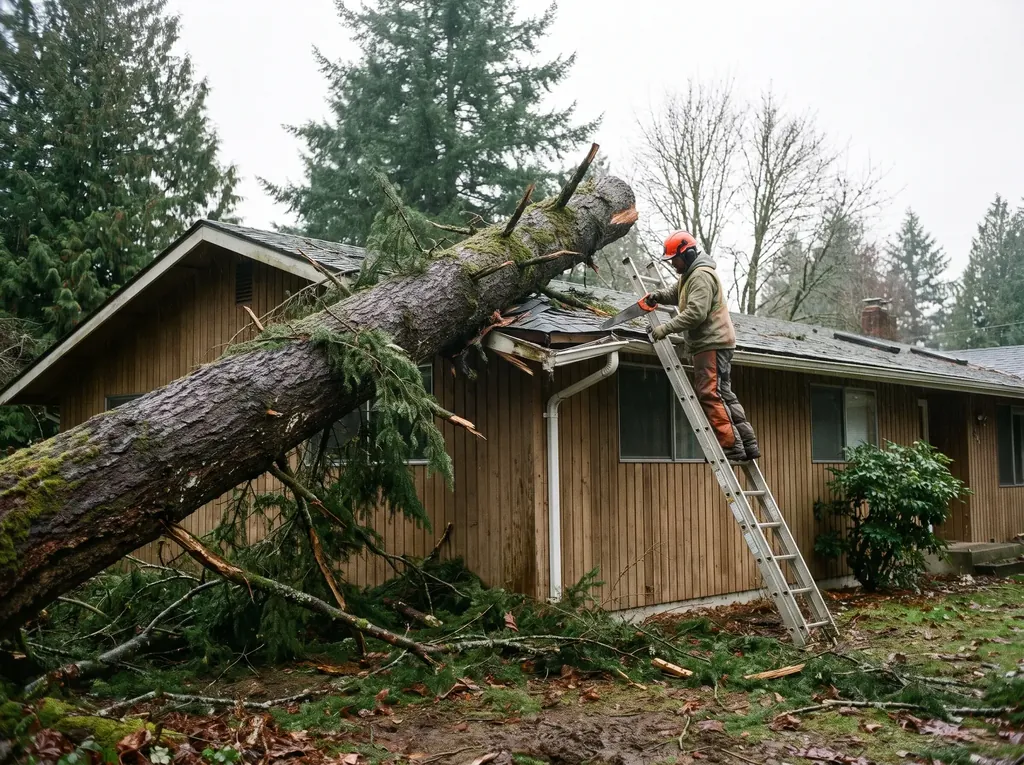
after winter wind events off the water.
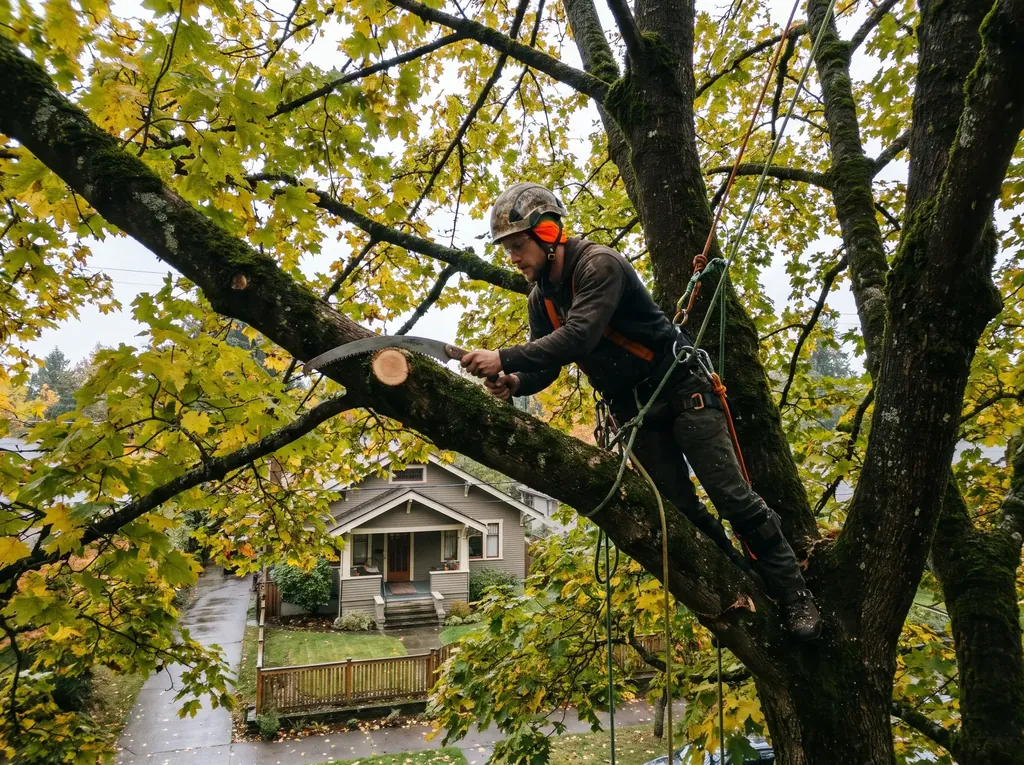
to thin for views, shorten heavy limbs and take out dead and broken limbs.
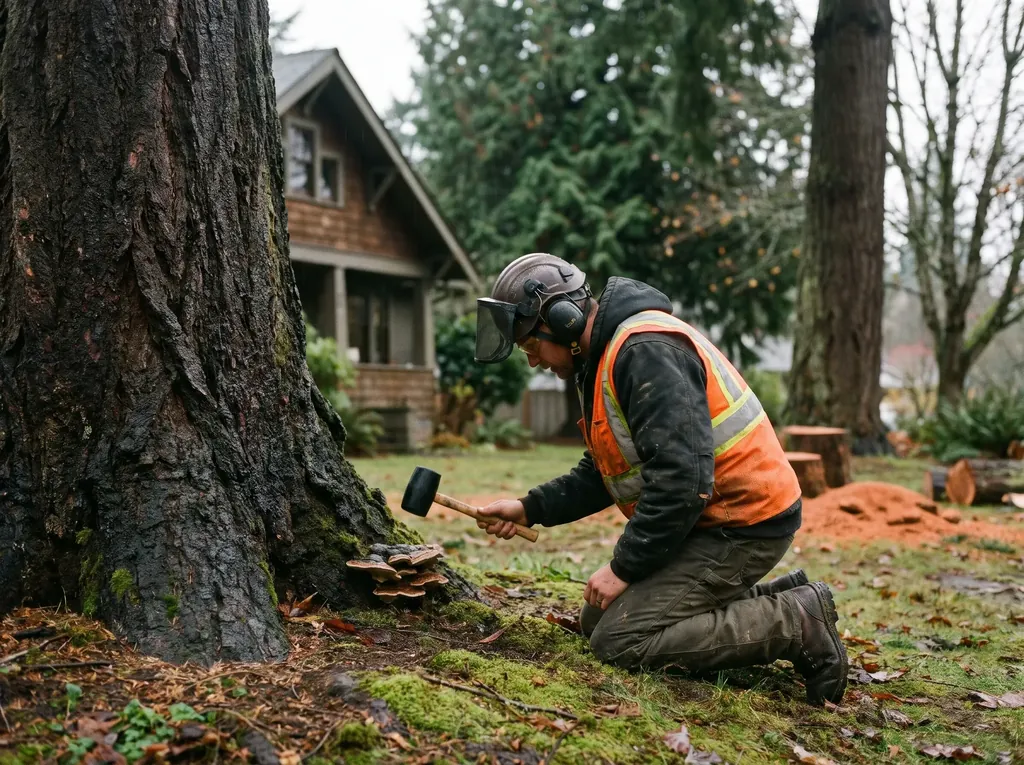
when you want to know if a tree can stay safely before deciding.
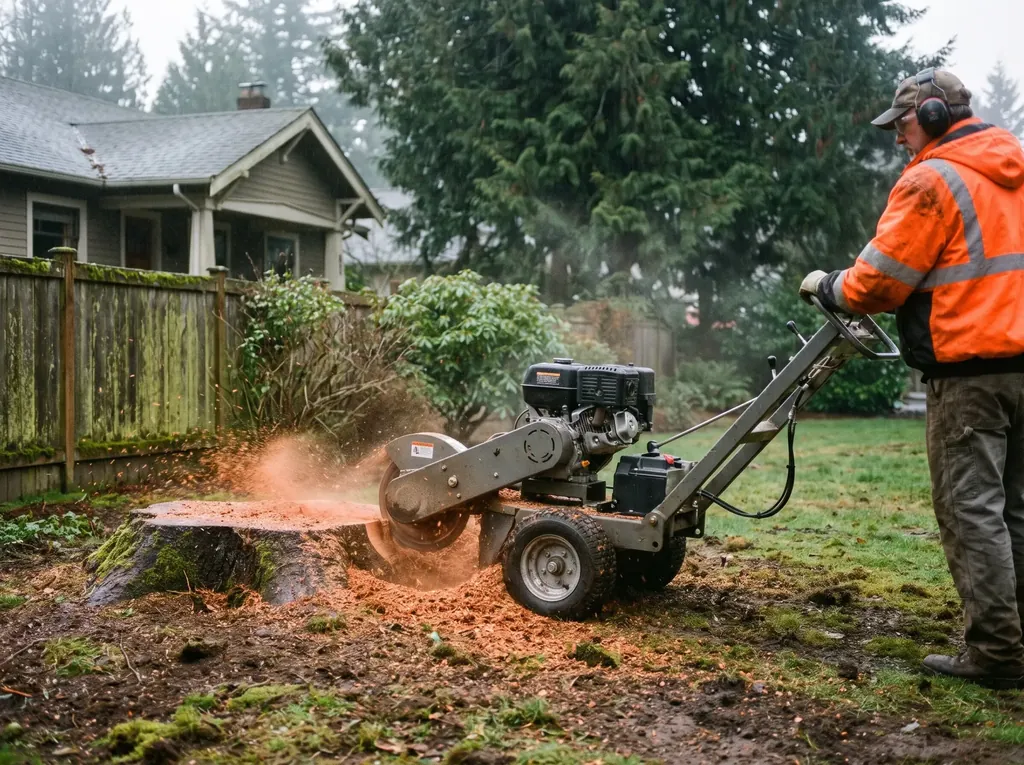
after removals in yards, beside drives and on tight shoreline lots.
Shortening the longest, heaviest limbs does more to take wind load off a tree than thinning alone, and careful thinning can open up the view at the same time. On the shore, that can be the better answer than taking a healthy tree down.
Properties close to the water can fall under shoreline rules that limit what can be cut and how. We check what applies to your lot before we quote the work.
On tight Birch Bay and Semiahmoo lots, a tree often affects two or three households. We plan where every piece lands and keep the neighbouring yards clean.
A tree with a lean is carrying its weight on one side. We read that before we cut, because it changes how each piece will move.
Anything that grows very tall or very wide for the space. Here that mostly means Douglas fir, western red cedar and big-leaf maple, which all outgrow a small lot quickly, and fast, brittle trees like cottonwood and willow. On an exposed shoreline lot, also avoid anything tall enough to reach the house if it goes over in a winter wind.
Usually, but shoreline and steep or wet properties are where the exceptions are, and a lot of Blaine and Birch Bay sits right on the water.
We check the rules that apply to your parcel before any cutting.
It is a bad idea. Tossing debris onto someone else's property can create a dispute or a legal problem of its own, even if the branches came from their tree. If a neighbour's tree keeps dropping limbs on your side, talk to them, and if the tree looks unsound, get it assessed. We can haul or chip branches that land on your property.
A common rule of thumb is no more than about a quarter of the living crown in one season. For a view, that means thinning and windowing through the crown rather than cutting the top off. Topping a shoreline tree weakens it, and the regrowth catches even more wind.
We also work in Bellingham, Ferndale and Lynden, plus Birch Bay, Custer, Everson, Sumas, Deming and Sudden Valley.
Every area we coverTell us the address and what the tree is doing. A photo helps. If a tree is on the house or across a line, call instead.
We will call or text to set a time to look at the tree. If it is urgent, call (360) 555-0119.
Nothing was sent. Please call (360) 555-0119 and we will set up a time to look at the tree.