Leaning and root-lifted trees
Firs and cedars whose lean is new or getting worse, with mounded or cracked soil at the base. On wet ground these are the ones that tip over whole.
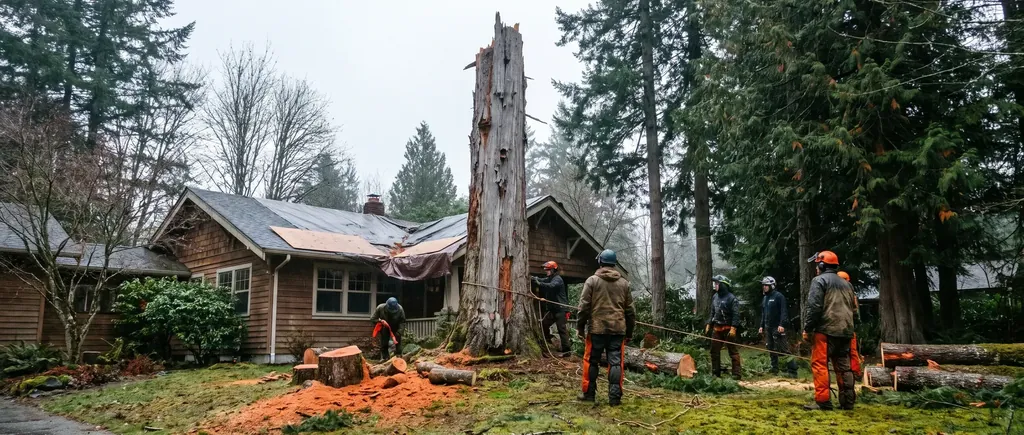
Leaning, cracked, dead or lifting at the root. If a tree near your house worries you every time the wind picks up, we will take it down on your schedule instead of the storm's.
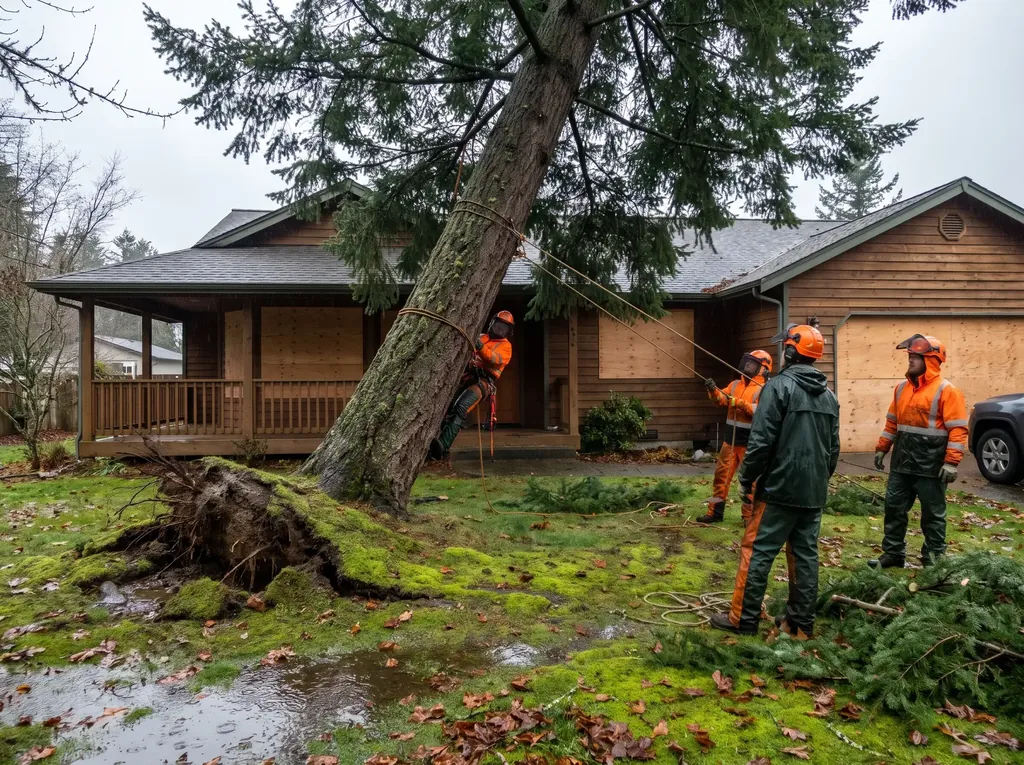
A hazard tree is a tree with something wrong with it and something underneath it. A dead snag in the back of a ten acre lot is just habitat. The same snag beside a bedroom is a problem waiting for a November night.
The warnings here are fairly consistent. A Douglas fir that has started to lean when it used to stand straight, especially with the soil cracking or heaving on the side away from the lean. Shelf-shaped fungal conks on the lower trunk, or a ring of mushrooms around the base in fall. Western red cedars thinning and browning from the top down after a run of hot, dry summers. Big-leaf maple with a long crack down from a fork, or a cavity you can put your arm into.
Root disease is the quiet one. Laminated root rot is common in Douglas fir west of the Cascades and it works underground for years, so a tree can look healthy in the crown while the roots holding it upright are failing. Combine weak roots with saturated winter soil and a strong northeast outflow, and the tree goes over whole.
Taking a hazard tree down is also harder than taking down a sound one. Dead or decayed wood does not hold rigging the way live wood does, and a tree with a cracked trunk may not be safe to climb. We plan around the defect, not around the height.
Firs and cedars whose lean is new or getting worse, with mounded or cracked soil at the base. On wet ground these are the ones that tip over whole.
Cedars dying back from the top, drought-stressed firs, beetle-killed trees and long-dead snags. Dry, brittle wood that has to be handled with more care, not less.
Split forks, hollow maples, fungal conks, and old topping wounds that rotted into the trunk. Rigged so the weak point never carries the load.
Before we price the job we find out what is actually wrong: where the decay is, which way the tree wants to go, and what it would hit.
If the tree is sound enough to climb, we climb it. If it is not, we work from a lift, rig from a neighbouring tree, or bring in a crane, and we tell you which and why.
When a hazard tree leans over a neighbour's house or fence, we can talk to them about access and timing so the job does not turn into a dispute.
Wood and brush handled the way you chose, stump ground or left, and the yard cleaned before we go.
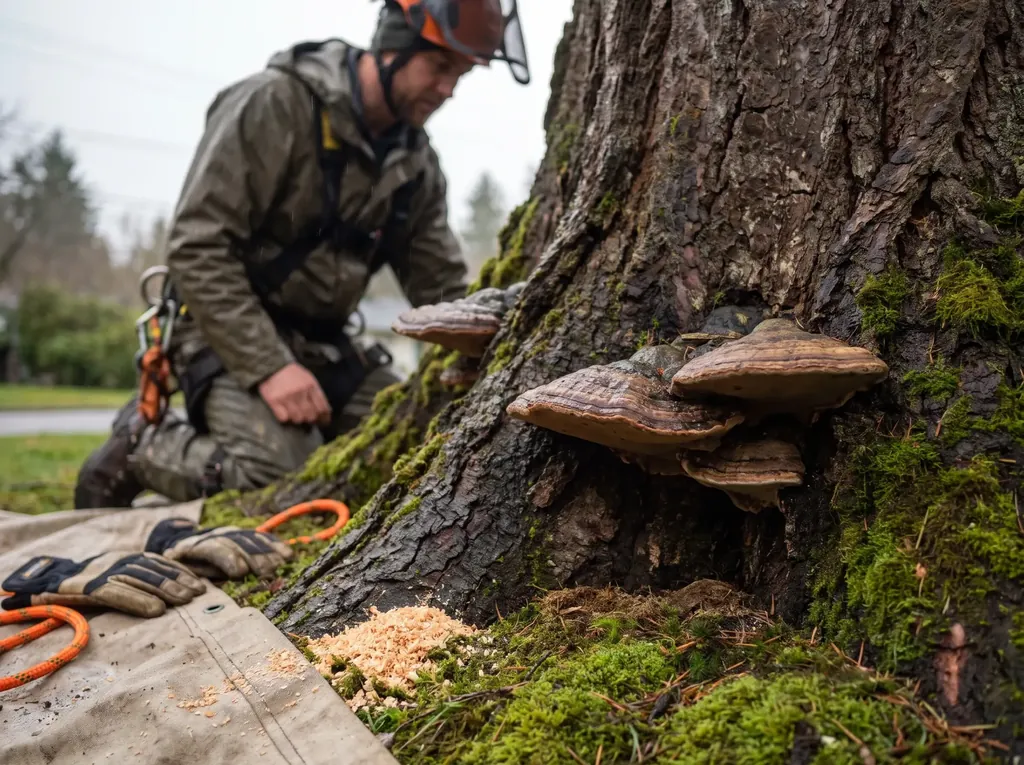
A new lean, a crack, dropping limbs, mushrooms at the base. Photos of the trunk, the base and the whole tree help us bring the right gear.
On site we check the lean, the root plate, the trunk and the crown, and look at what is in the strike zone.
Climb, lift, rig from another tree or crane. The condition of the wood decides it, and the choice is explained in the written estimate.
Vehicles moved, people and pets kept clear, ground protection laid, and neighbours told when work is close to them.
The tree comes down in controlled pieces with the rigging kept off the defect, so a weak trunk never takes a load it cannot hold.
Wood, brush and stump dealt with, then a look at the trees nearby that the hazard tree used to shelter.
We take you seriously. "It has been leaning like that for years" is sometimes true and sometimes the story people tell themselves until the storm proves otherwise. We look for the evidence and tell you which it is.
We do not treat every old tree as a hazard. If a tree is sound and only needs deadwood taken out or its weight reduced, you hear that, along with what to watch for.
We plan for bad wood. A dead or decayed tree behaves differently in rigging than a live one, and we set the job up for the tree you actually have.
We get it done before it matters. A hazard tree removal booked in early fall is a planned job with time to protect everything around it. The same tree after it fails is an emergency, a bigger bill and often an insurance claim.
Send a photo of the lean, the crack or the base. We will come out and tell you straight whether it needs to come down.
Often yes, but not everywhere. Rules depend on where the property sits. Steep slopes, streams, wetlands, shorelines and the Lake Whatcom watershed can all bring extra review, and the City of Bellingham and Whatcom County have their own requirements. Trees that are a genuine hazard are sometimes handled differently. We check what applies to your address as part of the estimate, and our guide to Bellingham tree rules covers the basics.
Generally, you may trim branches that cross onto your side of the line, at your own cost, as long as you do not damage the health of the tree or go onto your neighbour's property to do it. Cutting the tree itself is a different matter and can carry serious liability. Talk to your neighbour first, and read our guide on overhanging branches before anyone picks up a saw.
They can usually trim what hangs over their side, within limits, but they cannot cut down or seriously damage a tree that stands on your property without your agreement. If the tree is a hazard to their house, the better route is a conversation and a written plan both of you sign off on before work starts.
Usually not for a standing tree, even a dangerous one. Most homeowner policies treat removing a tree before it fails as maintenance. That is the frustrating part: the same tree is often covered once it lands on the house. Check your policy, but plan on paying for a preventive removal yourself.
In this part of Washington, the trees that cause the most trouble close to houses are the ones that get huge or weak. Douglas fir, western red cedar and big-leaf maple all grow far too big for a typical yard. Black cottonwood and red alder grow fast and drop limbs. Willows and poplars have aggressive roots that will grow into any cracked or leaking water or sewer line nearby. Keep large species well away from the foundation, the roof and the septic system.
There is no general month when a homeowner is barred from removing a tree on private property, but nesting birds change things in spring and early summer. Active nests of many wild bird species are protected, so we check before cutting during nesting season. A tree that is an immediate danger is a different conversation.
We take down hazard trees in Bellingham, Ferndale, Lynden, Blaine, Everson, Sudden Valley, Birch Bay, Sumas, Deming and Custer, from tight hillside lots to wet farm ground along the Nooksack.
Every area we cover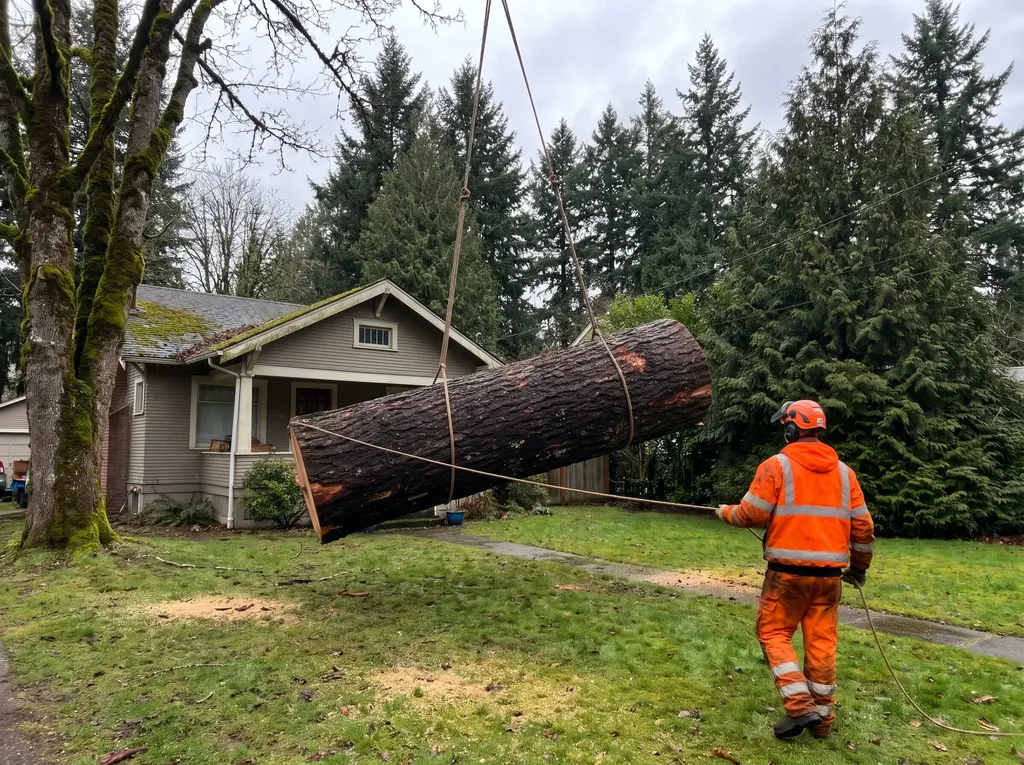
Full removal of trees of any size, including large conifers close to houses, taken down in pieces where there is no room to drop them.
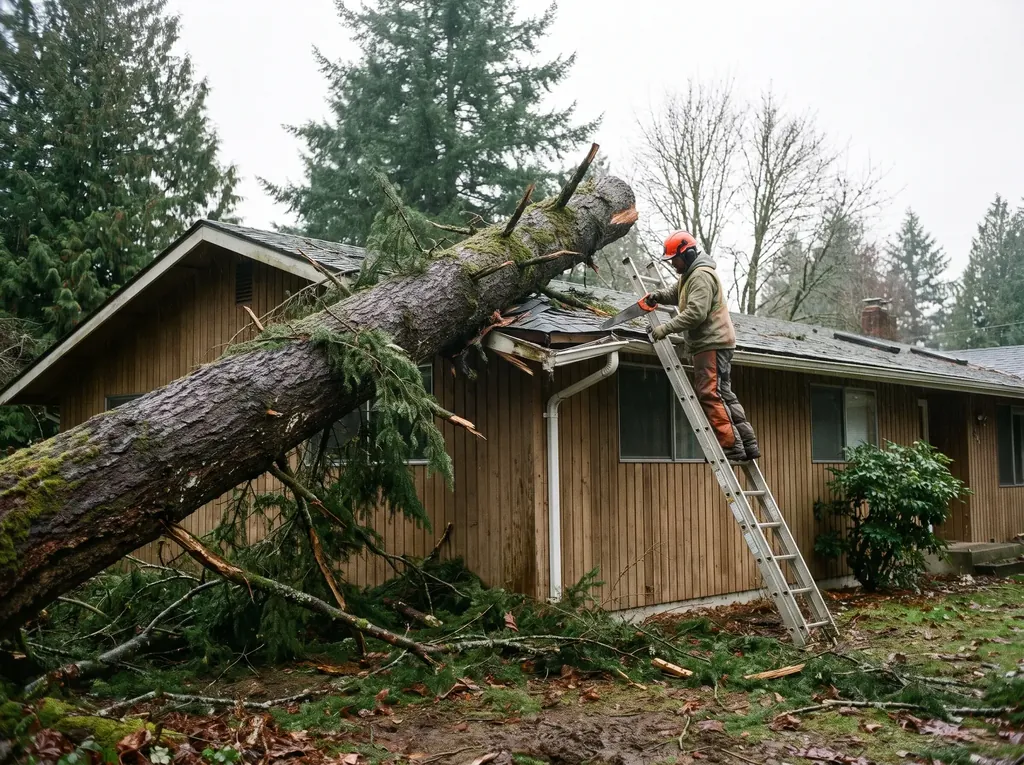
Trees on roofs, cars, driveways and fences after a windstorm, made safe first and cleared after.
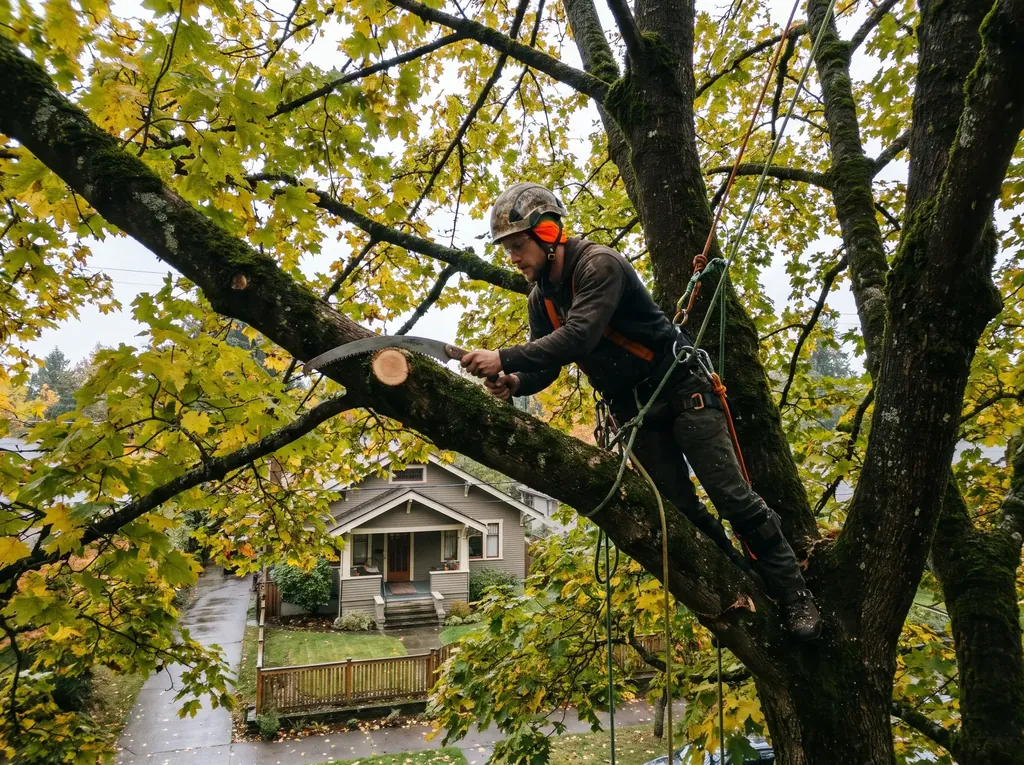
Deadwood removal, crown thinning, crown reduction and clearance from roofs and lines, done for the health of the tree.
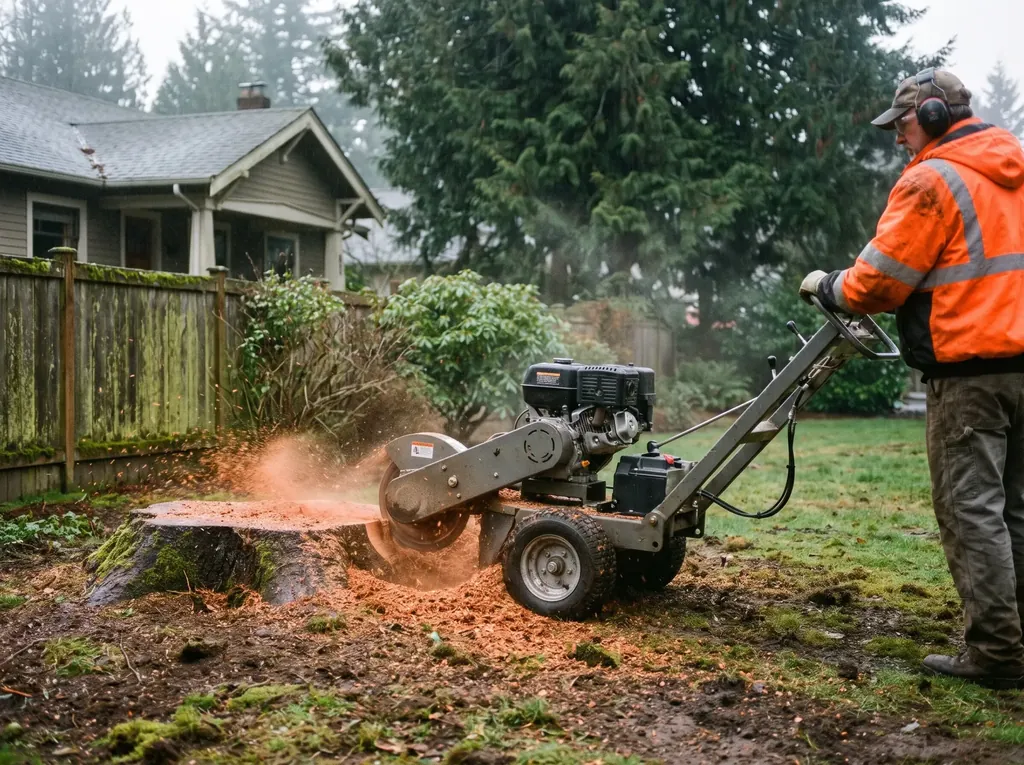
Stumps ground below grade with the chips cleaned up or left as mulch, or pulled out entirely where you are building.
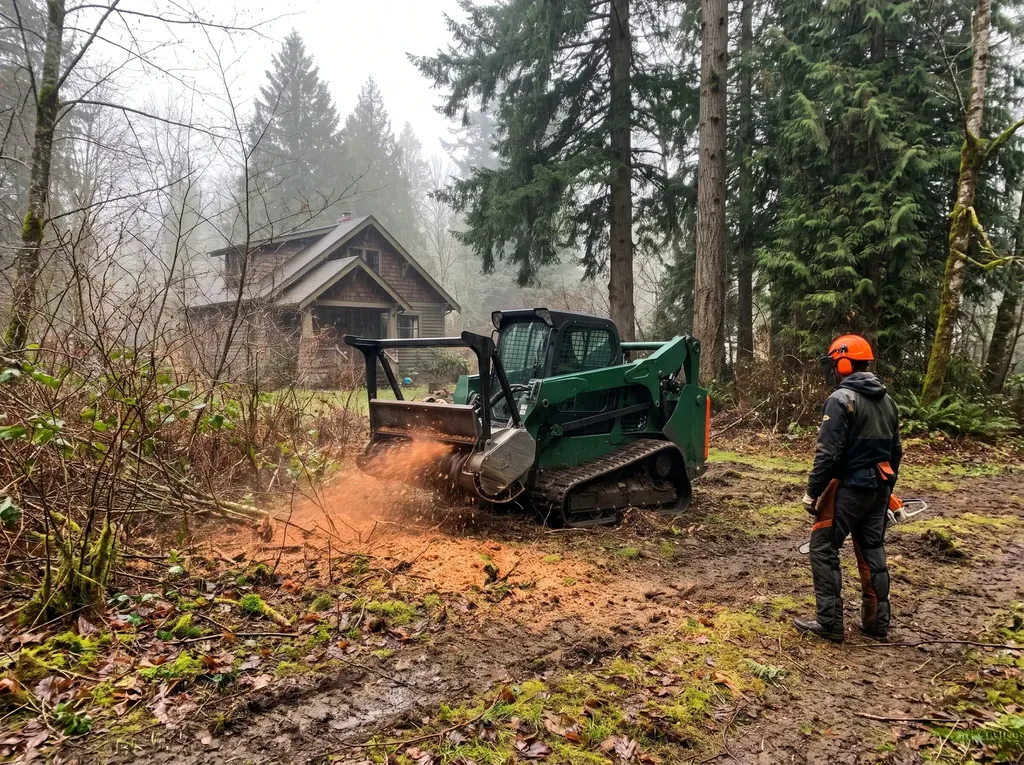
Overgrown lots and acreage cleared for building, views, fire safety or pasture, including forestry mulching and brush clearing.
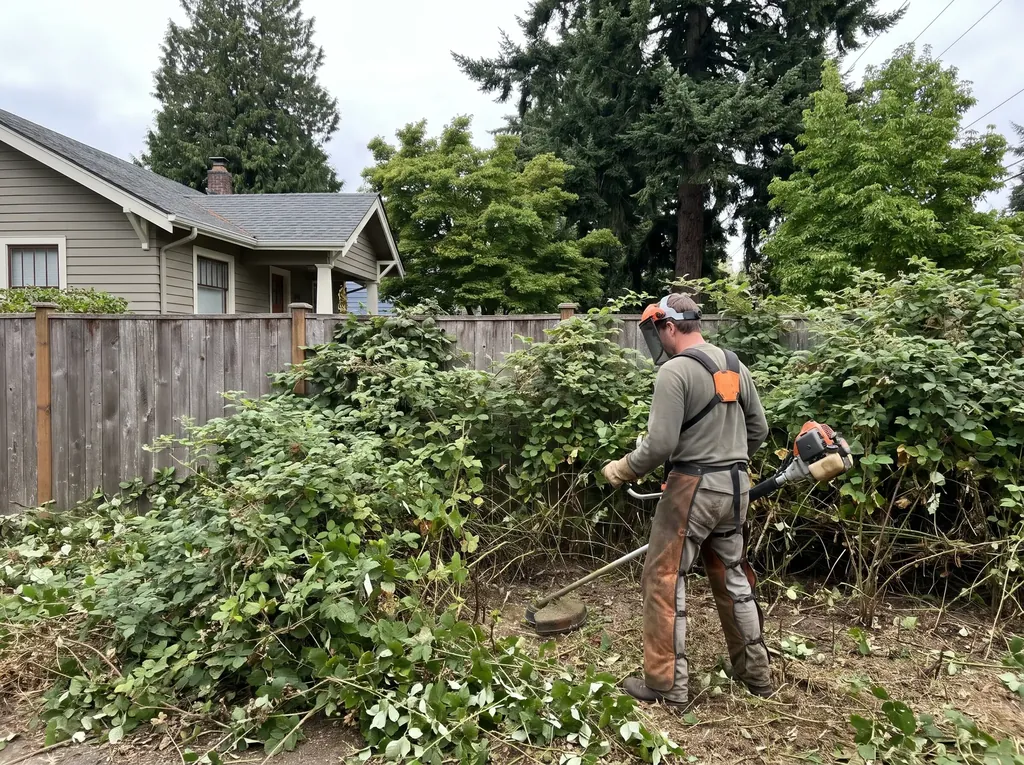
Himalayan blackberry, Scotch broom and invasive brush cut back, cleared and dealt with at the root.
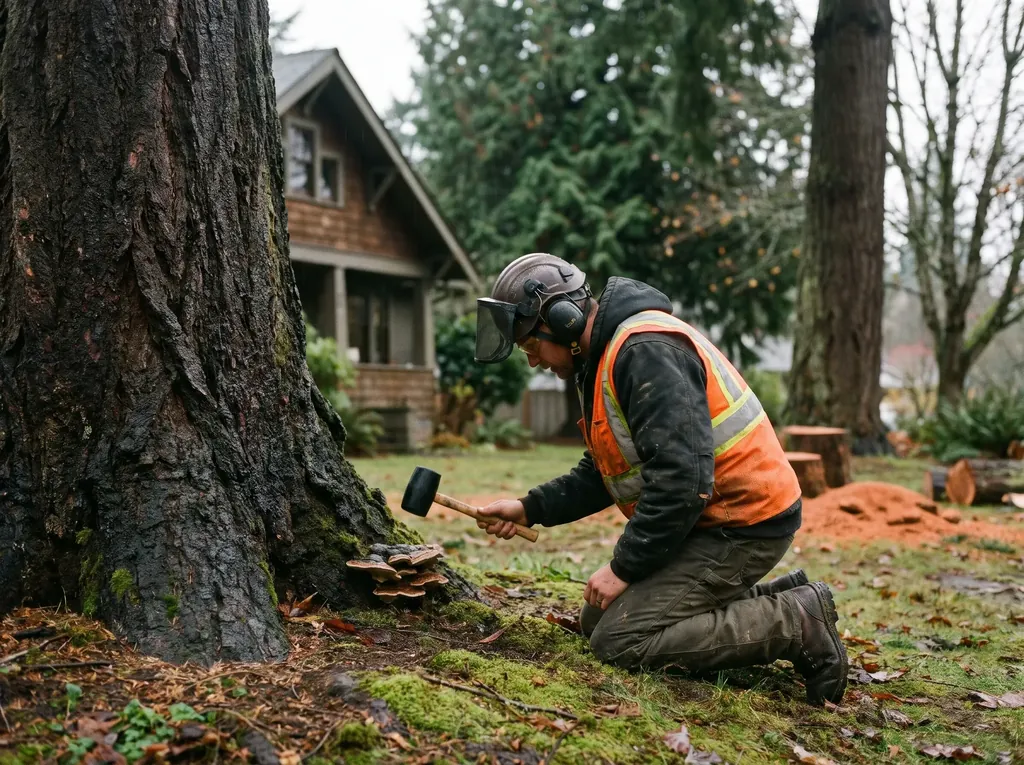
A straight answer on whether a tree is sound, needs work or needs to come down, before you spend money on it.
Tell us what you have noticed about the tree and what it stands over. A photo of the base and one of the whole tree is the most useful thing you can send.
We will call or text to set a time to look at the tree. If it is urgent, call (360) 555-0119.
Nothing was sent. Please call (360) 555-0119 and we will set up a time to look at the tree.