Trees on roofs and structures
Firs, cedars and maples on houses, garages, carports and sheds. Weight taken off in the right order so the damage stops where it is.
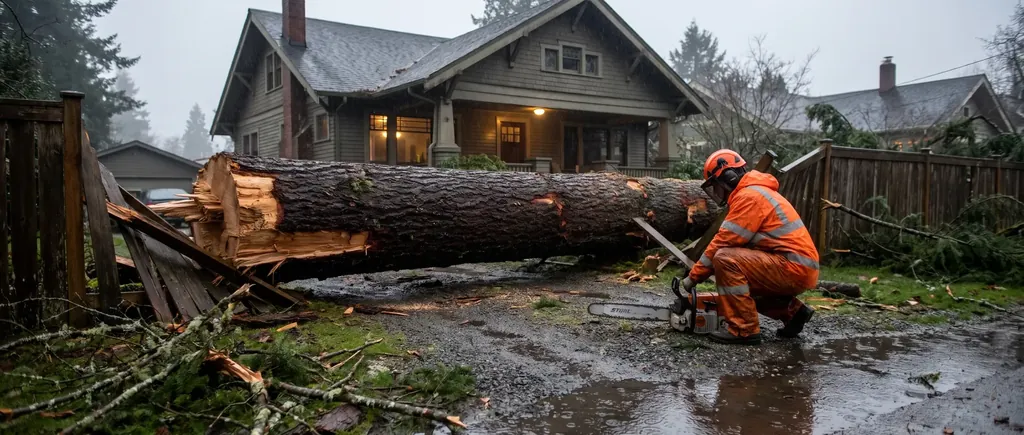
Tree on the roof, the car or across the driveway? We make it safe first, then clear it. Storm damage calls are taken outside our normal hours.
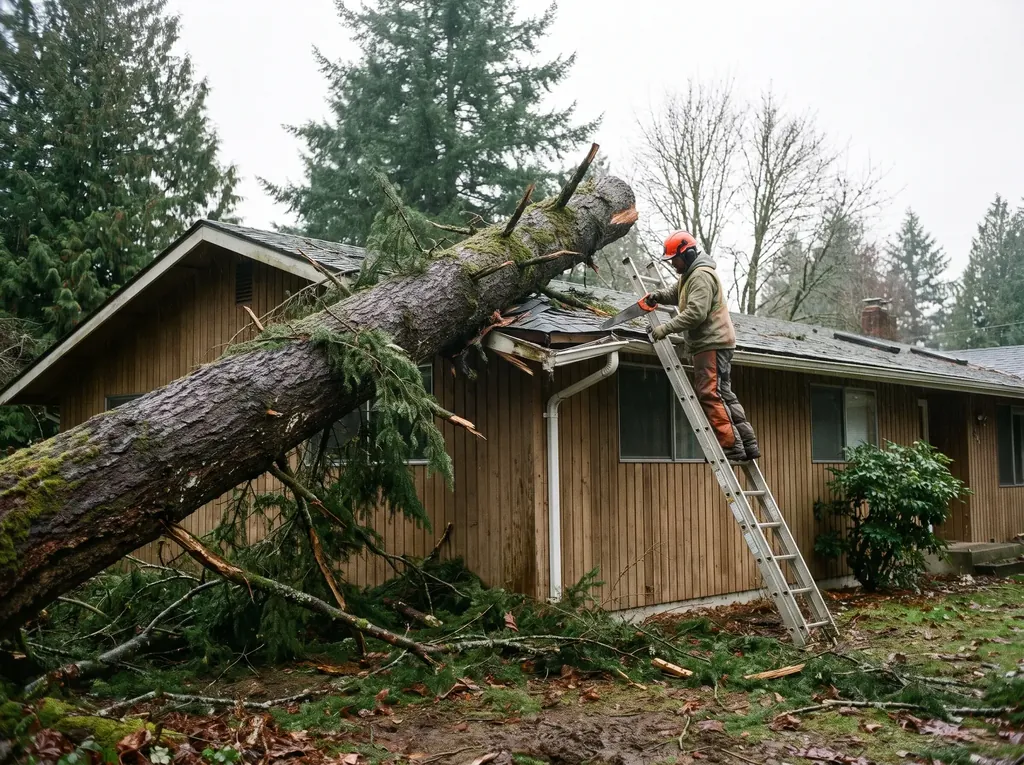
Whatcom County gets two kinds of damaging wind. The familiar one is the winter southwesterly that comes in off the water ahead of a front. The other is the cold northeast outflow that pours out of the Fraser Valley, hitting Lynden, Ferndale, Blaine and north Bellingham from a direction our trees take less wind from, so they are less braced for it.
Either one is worse after weeks of rain. When the soil is saturated, a big Douglas fir does not have to snap to fail. The whole root plate lets go and the tree tips over at the base, lifting a disc of turf and roots with it. That is why so many storm calls here involve a full-size conifer lying on a house rather than a broken limb.
The first job is never cleanup. A tree on a roof is still moving weight around, and a careless cut can drop it further into the house or spring a trunk under tension. We stabilise it, take the load off the structure in a controlled order, and only then start clearing. The roofer and the insurer can do their work after that.
Firs, cedars and maples on houses, garages, carports and sheds. Weight taken off in the right order so the damage stops where it is.
Whole trees and big limbs blocking the only way in or out, flattening fences, or lying across a car. Cut into rounds and moved so you can get out again.
Snapped tops caught in other trees, trunks split down a fork, and leaning firs with a lifted root plate. These are often more dangerous than the tree already on the ground.
The first visit deals with immediate danger: hanging pieces, trees under tension, anything still able to move. Some of the clearing may wait until daylight or the next day.
Wood taken off a roof in pieces with rigging, not dragged or dropped, so the tree does not cause a second round of damage on its way off.
Before and after photos of the tree and what it hit, plus a written description of the work, ready to hand to your insurer or adjuster.
When one tree goes, its neighbours lose shelter. We look at the trees around it and tell you honestly whether any of them have become a problem.
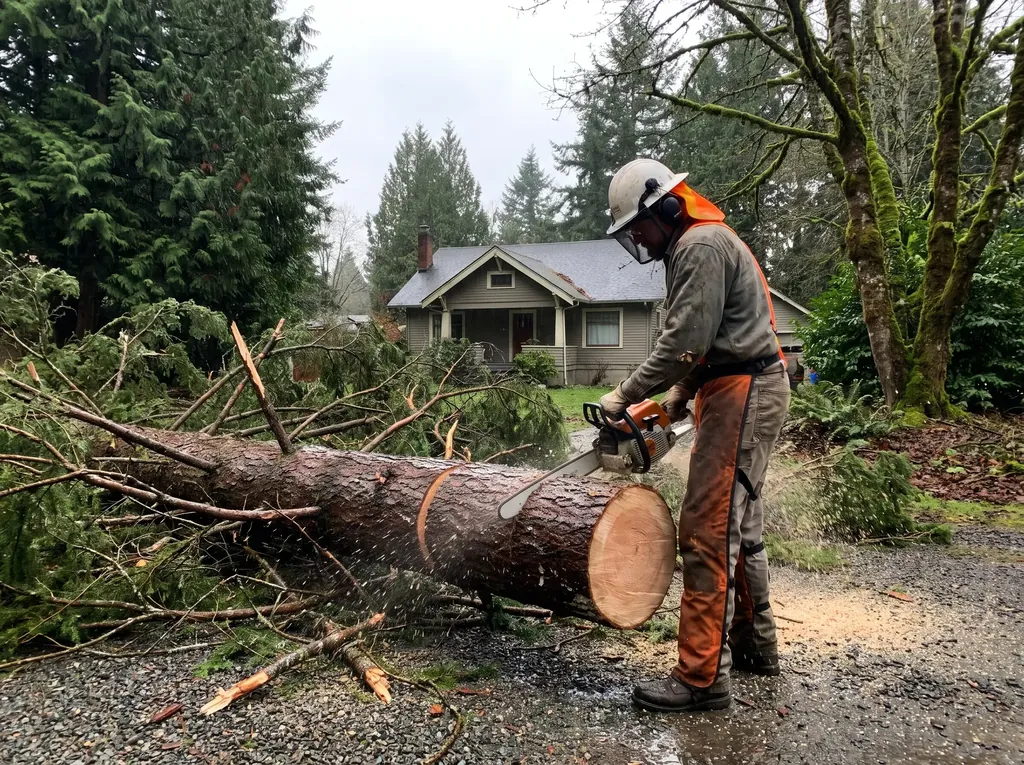
Tell us where you are, what the tree is on, and whether anyone is hurt or trapped. If anyone is, call 911 first. Photos let us bring the right gear on the first trip.
After a big storm the calls come in faster than any crew can answer them. Trees on occupied houses come first, then trees blocking the only access, then everything else. We tell you honestly where you are in the queue.
On arrival we deal with anything that can still fall, roll or spring, and keep everyone clear of the work.
The tree is taken off the roof or vehicle in controlled pieces. Where a crane is the safer option, we tell you and explain why.
Wood cut and removed or stacked, brush chipped, driveway and yard cleared.
We walk the remaining trees with you and flag anything the storm has loosened or exposed, without pressure to do it that day.
We do not make it worse. The most expensive storm damage is often the second round, caused by someone cutting a loaded trunk in the wrong order and sending it through the ceiling. Our first hour on site is spent working out how the weight is sitting before a saw starts.
We are straight about timing. After a real windstorm nobody can be everywhere at once, and a promise of "right away" made to everyone means nothing. We tell you where you stand and stick to it.
We document for you. Insurers want to see the tree, the damage and the work, and you have enough to deal with. Photos and a written scope come with the job.
We do not upsell in a crisis. If the trees around the fallen one are fine, we say so. If one does need attention, we price it separately and you decide when the dust has settled.
Call us and send photos. If anyone is in danger or a line is down, call 911 and your power company first.
Often, when a tree falls on something the policy covers, such as the house or a garage, the cost of getting it off that structure is usually part of the claim. A tree that falls in open yard without hitting anything is frequently not covered, and neither is removing a healthy standing tree. Every policy is different, so read yours and call your agent. We provide the photos and written scope either way.
In general, the owner of the property the tree lands on usually claims on their own policy, and fault usually only shifts to the tree's owner if the tree was visibly dead, dying or dangerous and they had reason to know. Washington law and your policy decide the details, so ask your insurer before assuming either way.
Stick to what you know: when it fell, what it hit, and the photos. Do not guess about the condition of the tree, the cause, or who is at fault, and do not agree to a version of events you are not sure of. If you are unsure what your policy covers, ask before you agree to anything. We are not insurance advisors, but we can give you an accurate written description of the tree and the work.
If a tree or limb is down on a utility power line, the power company normally clears it from the line at no charge to you, though the wood is usually left on your property. Trees in the public right of way may be the city's or county's responsibility. A tree on your own property and your own structures is usually yours to pay for, or your insurer's.
For storm work the main drivers are what the tree is lying on, whether it is still under tension, how much rigging or crane time it needs, and how much wood has to be moved. A fallen alder across a lawn and a hundred foot fir on a roof are completely different jobs. We price each storm call on what we find, and our tree removal cost guide explains the factors in more depth.
We respond to storm damage across Whatcom County: Bellingham, Ferndale, Lynden, Blaine, Everson, Sudden Valley, Birch Bay, Sumas, Deming and Custer. After the outflow winds, the north county towns are often hit first.
Every area we cover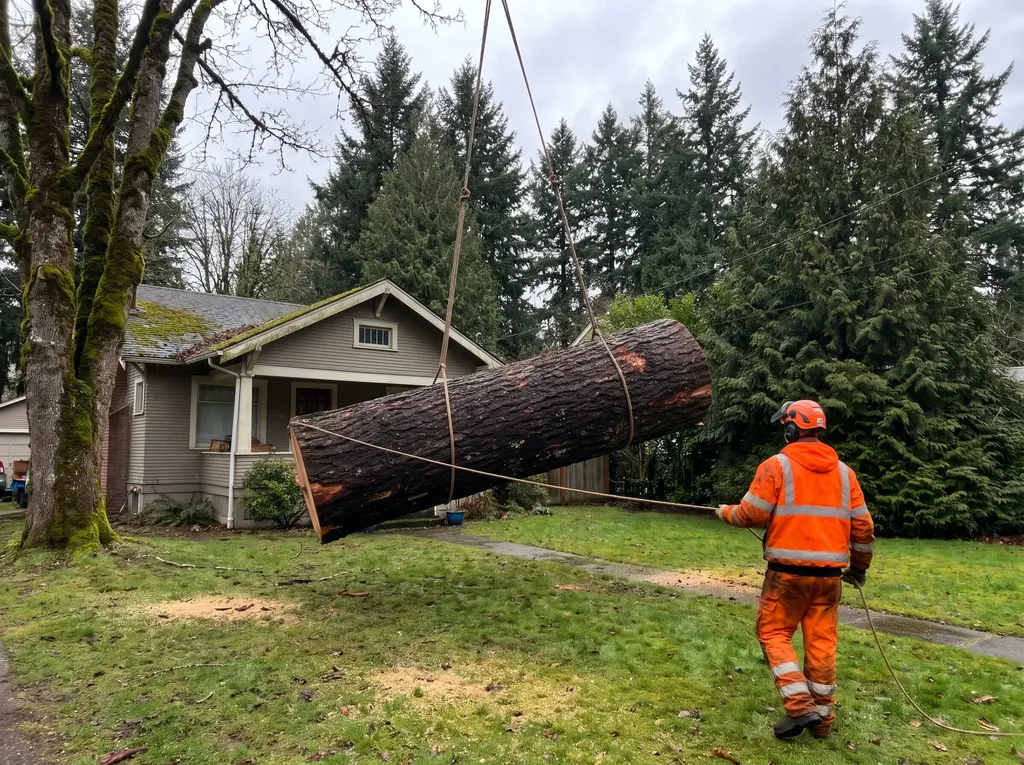
Full removal of trees of any size, including large conifers close to houses, taken down in pieces where there is no room to drop them.
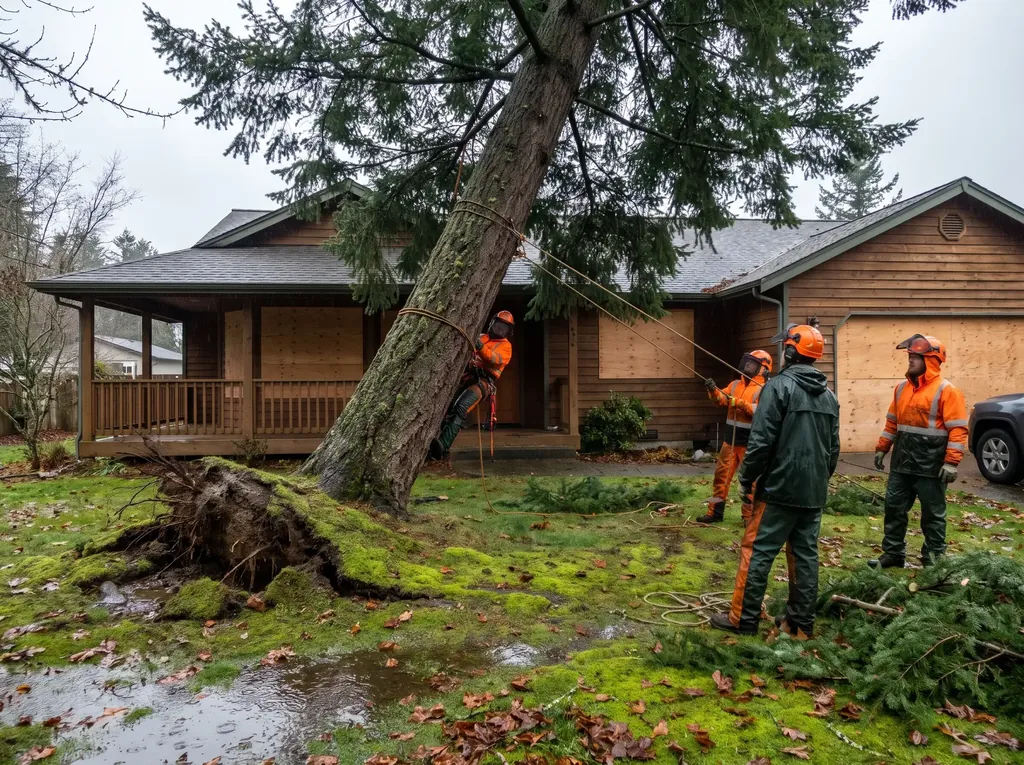
Leaning, cracked, rotting or root-lifted trees taken down before the next storm decides for you.
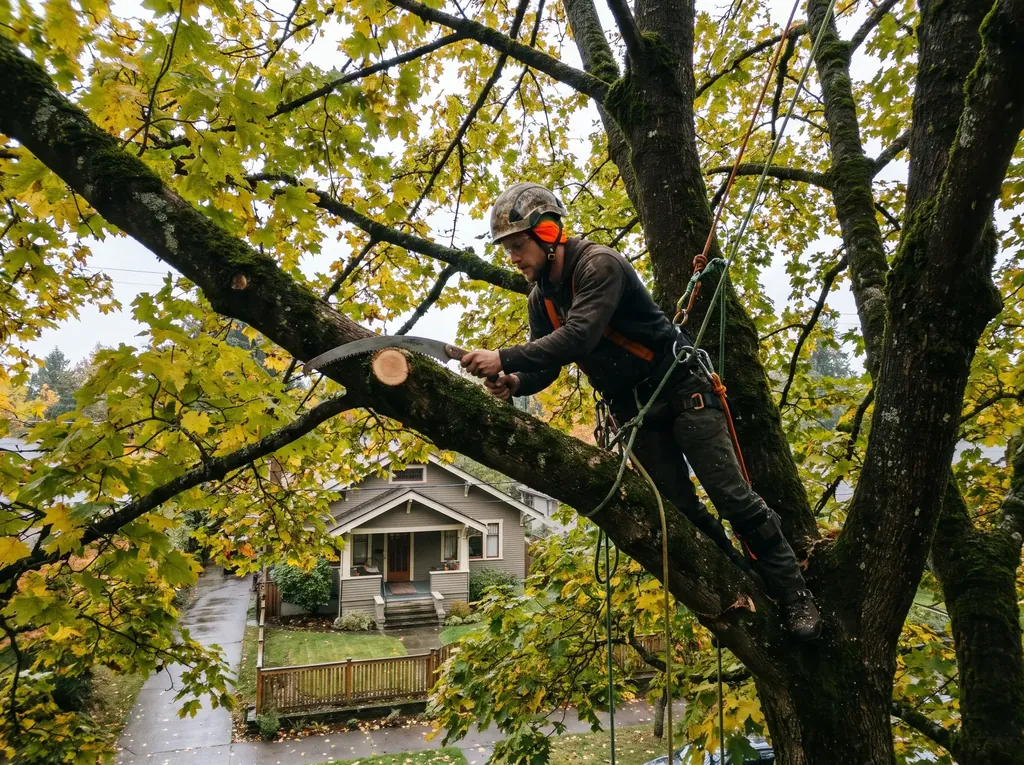
Deadwood removal, crown thinning, crown reduction and clearance from roofs and lines, done for the health of the tree.
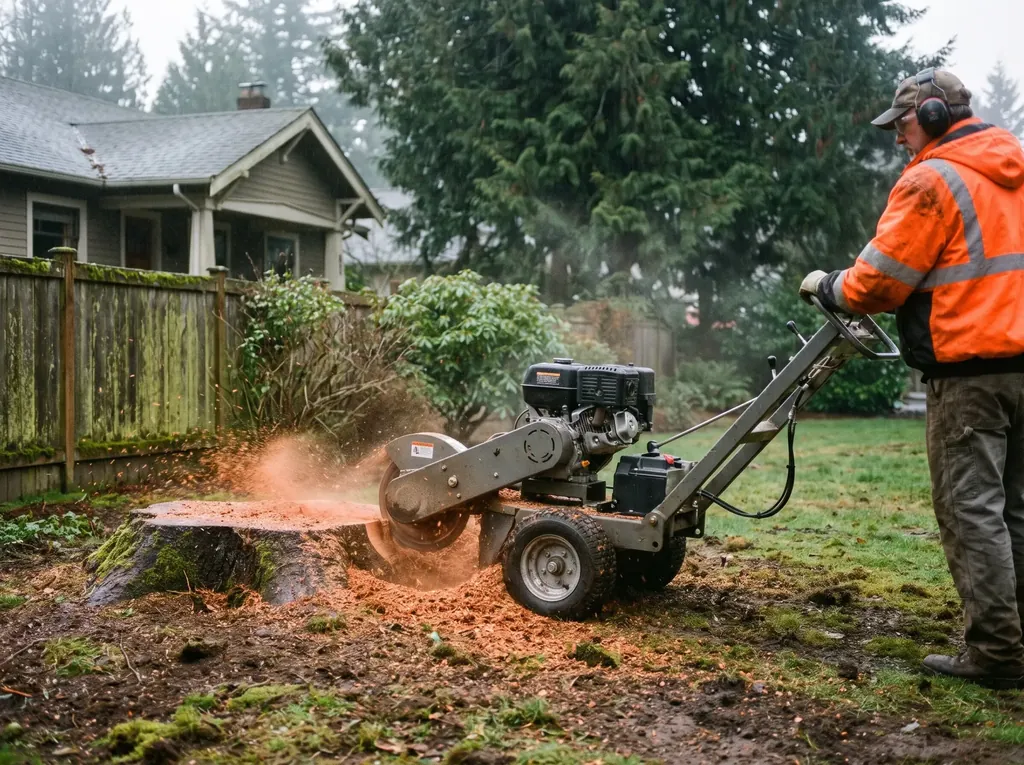
Stumps ground below grade with the chips cleaned up or left as mulch, or pulled out entirely where you are building.
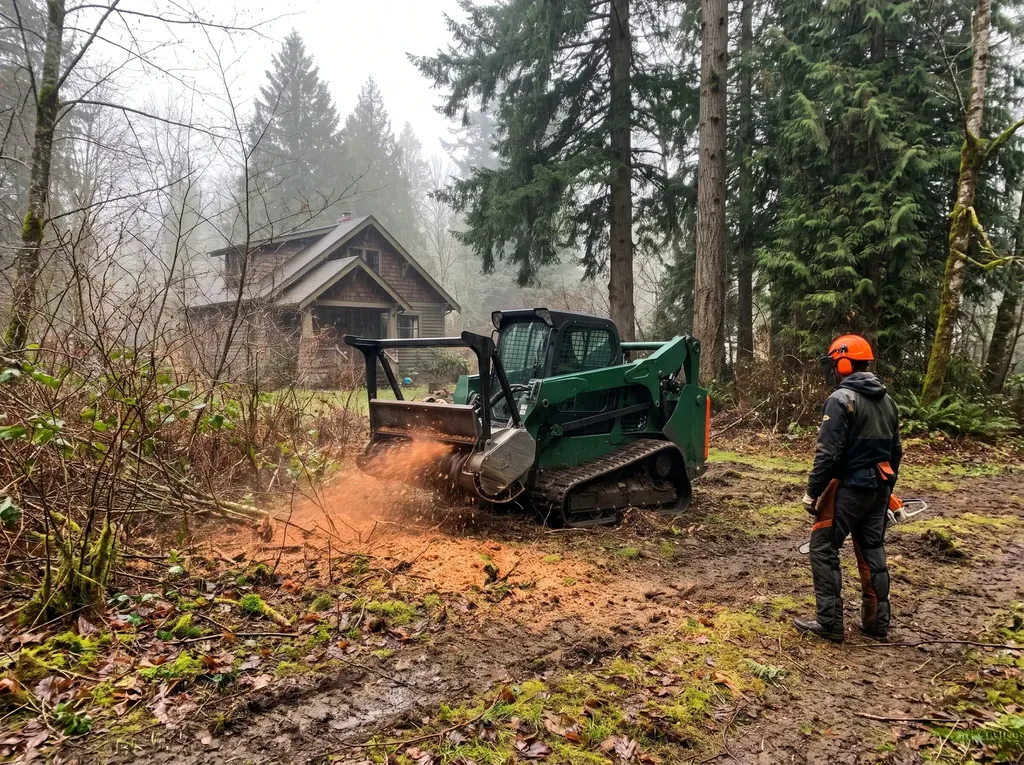
Overgrown lots and acreage cleared for building, views, fire safety or pasture, including forestry mulching and brush clearing.
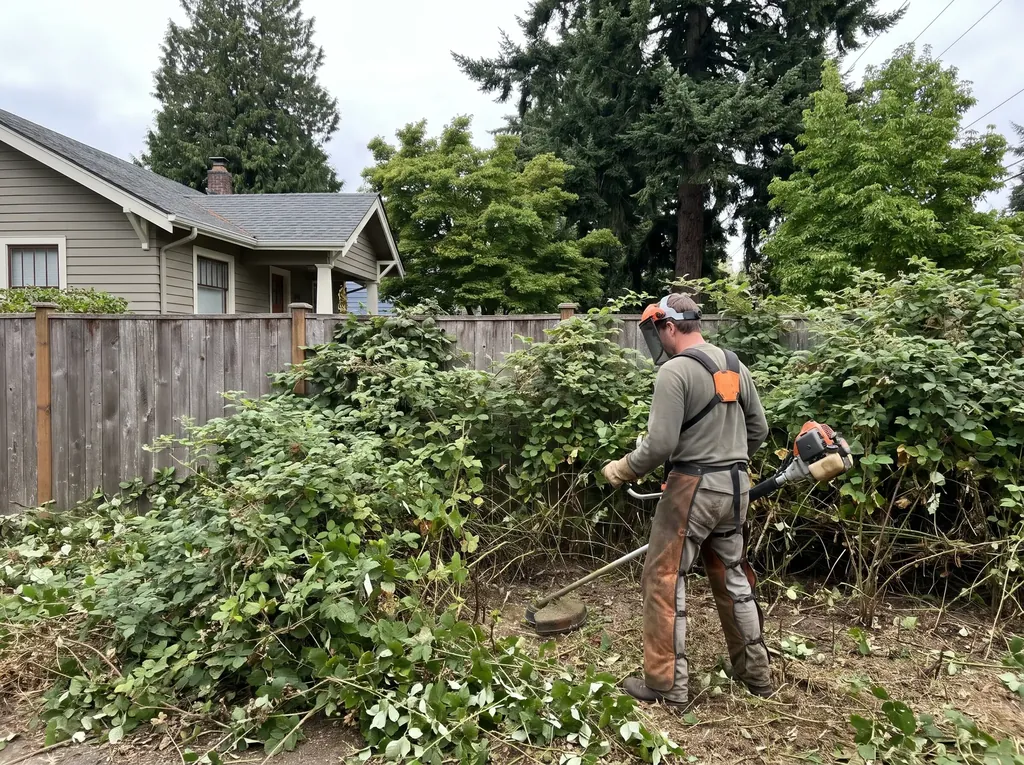
Himalayan blackberry, Scotch broom and invasive brush cut back, cleared and dealt with at the root.
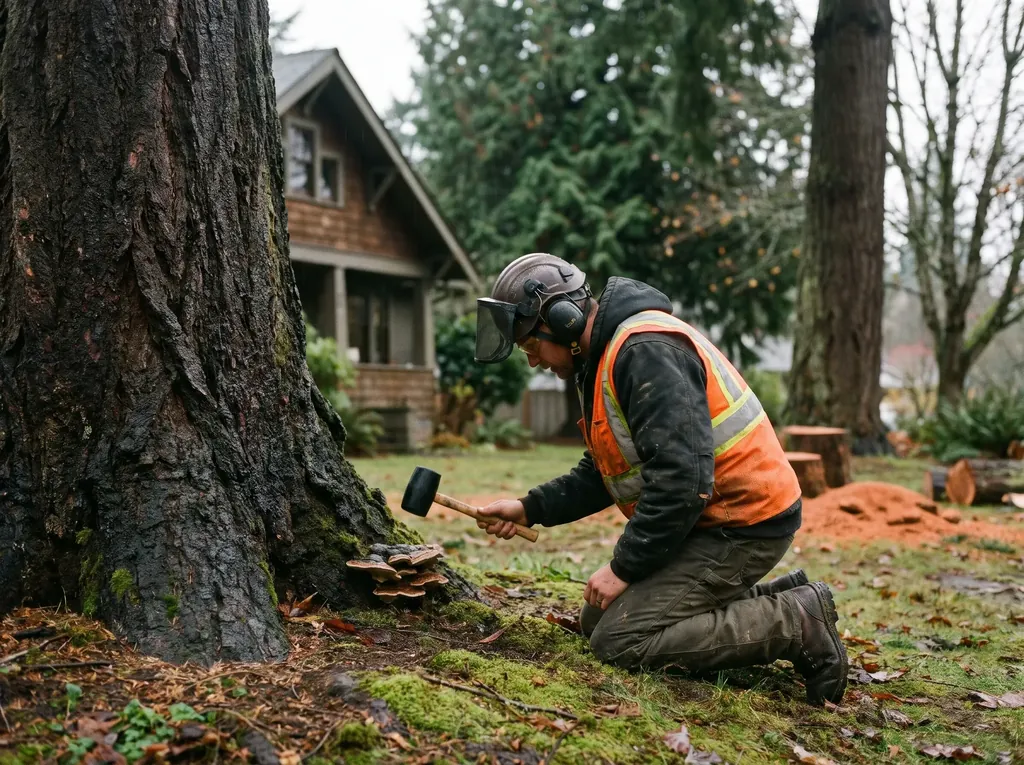
A straight answer on whether a tree is sound, needs work or needs to come down, before you spend money on it.
Tell us where you are, what the tree is lying on, and attach photos. For anything on a house right now, call (360) 555-0119 rather than waiting on the form.
We will call or text to set a time to look at the tree. If it is urgent, call (360) 555-0119.
Nothing was sent. Please call (360) 555-0119 and we will set up a time to look at the tree.