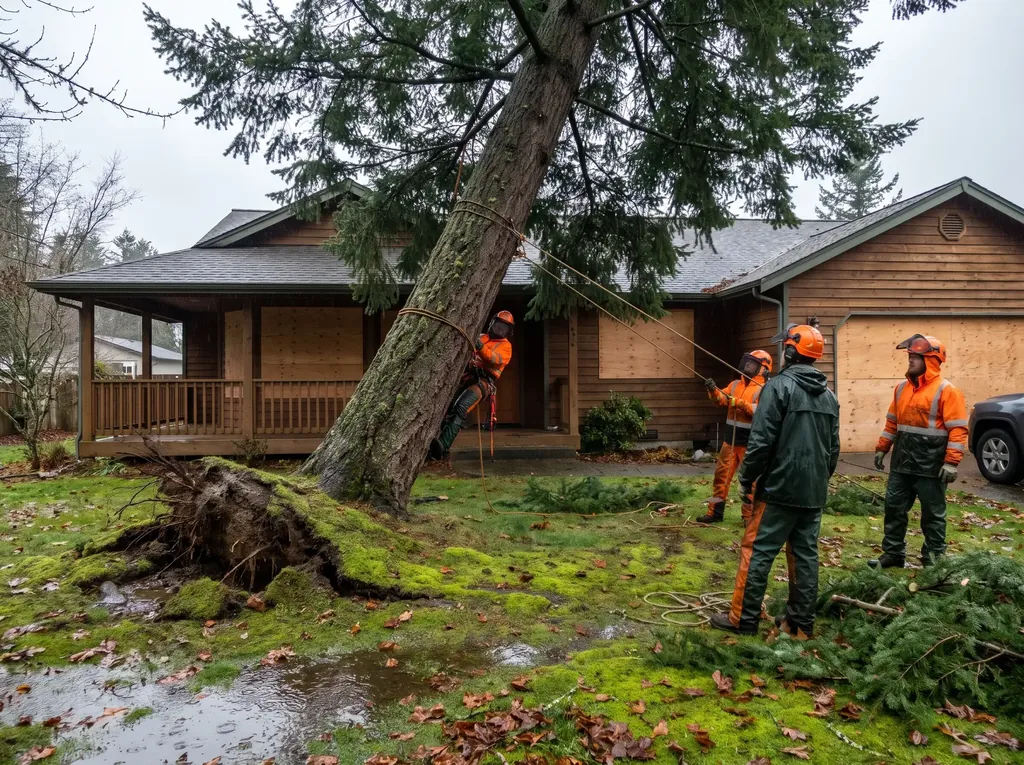
Hazard tree removal
for cottonwood and alder leaning over houses, outbuildings and driveways on wet ground.
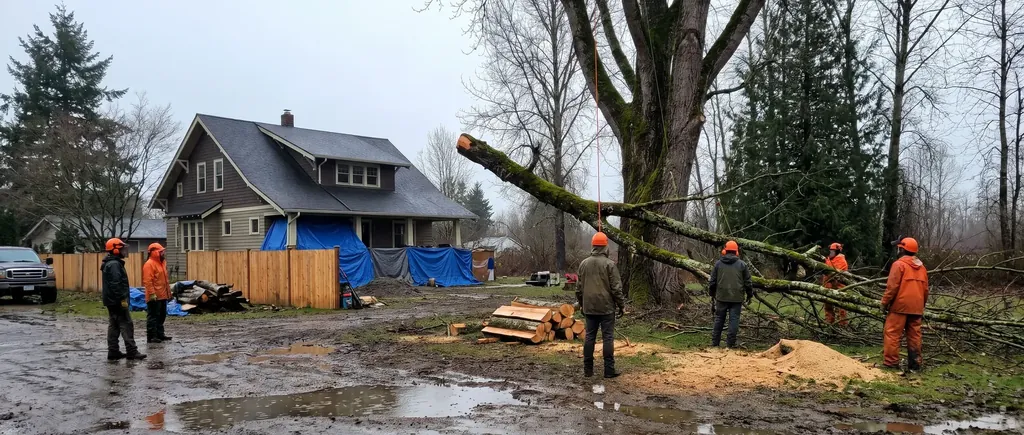
Cottonwood, alder and big conifers on wet Nooksack ground, taken down before the next winter storm pushes them over.
Ferndale sits on the Nooksack River, and a lot of the town and the ground around it is low, flat and slow to drain. From November into spring the soil stays saturated. That matters for trees more than most people realise, because a waterlogged root zone does not hold. Black cottonwood and red alder on river ground tend to root shallow and wide, and when the soil around them is soft, a hard gust can lever the whole root plate out of the ground. A tree that looked solid in summer can go over in one piece in January.
The wind makes it worse. Ferndale is open to the north, and when cold northeast outflow comes down the Fraser Valley it crosses a lot of flat farmland before it reaches town. Tall trees standing alone, or left at the edge of a new clearing, take the full force of it.
The properties split two ways. Out along Mountain View Road and the rural edges of town there are older lots with big alder, cottonwood and the odd huge Douglas fir or cedar, often with a long drive and room to work. In the newer subdivisions, houses were built into stands of second-growth timber, and a row of fir that was sheltered by the forest is now standing on its own at the back fence. Near the Main Street area and around Pioneer Park the lots are smaller and older, with mature yard trees close to the house.
for cottonwood and alder leaning over houses, outbuildings and driveways on wet ground.
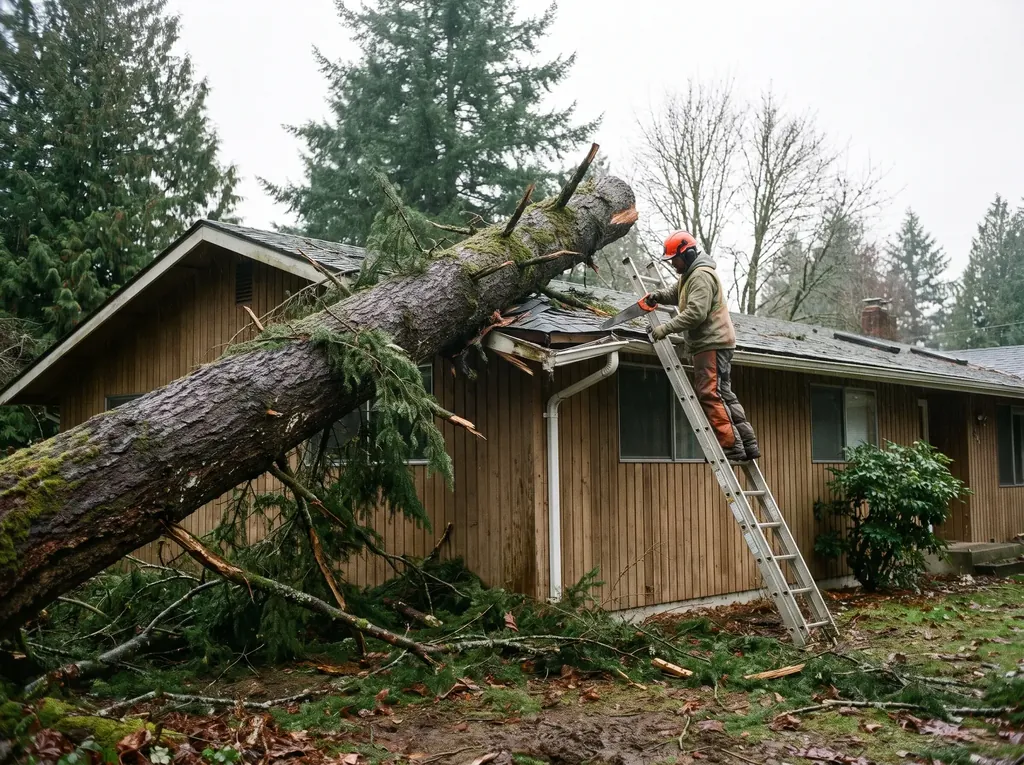
after outflow wind events, when trees come down across fences, roads and roofs.
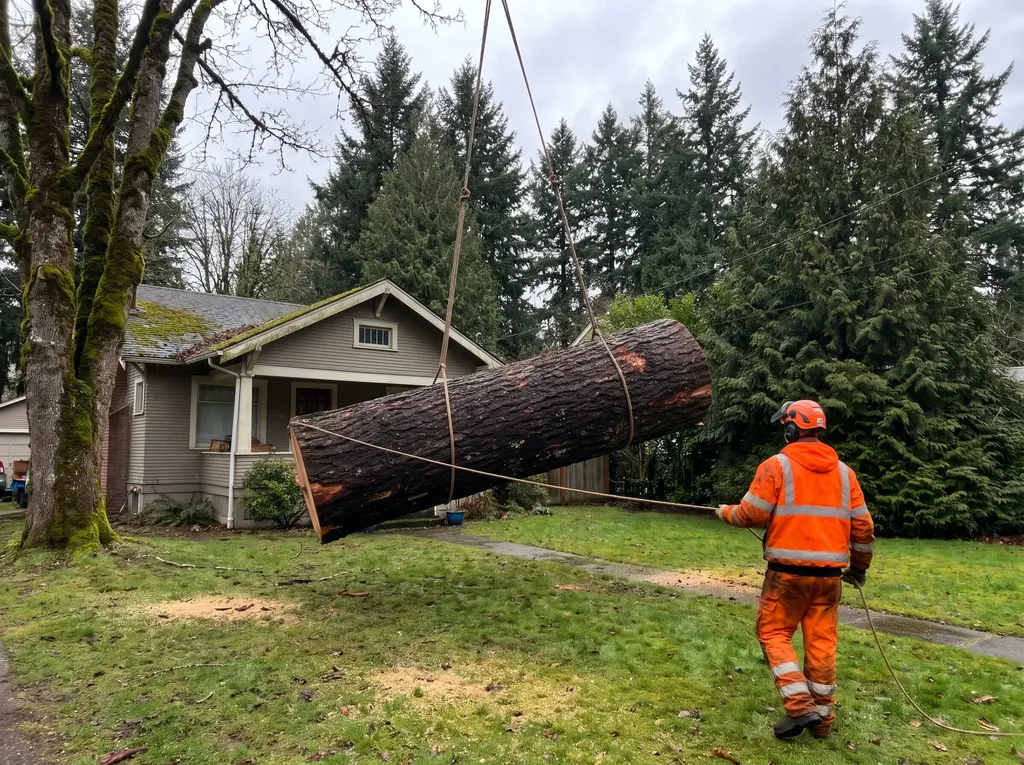
of large fir and cedar on both rural lots and tight subdivision yards.
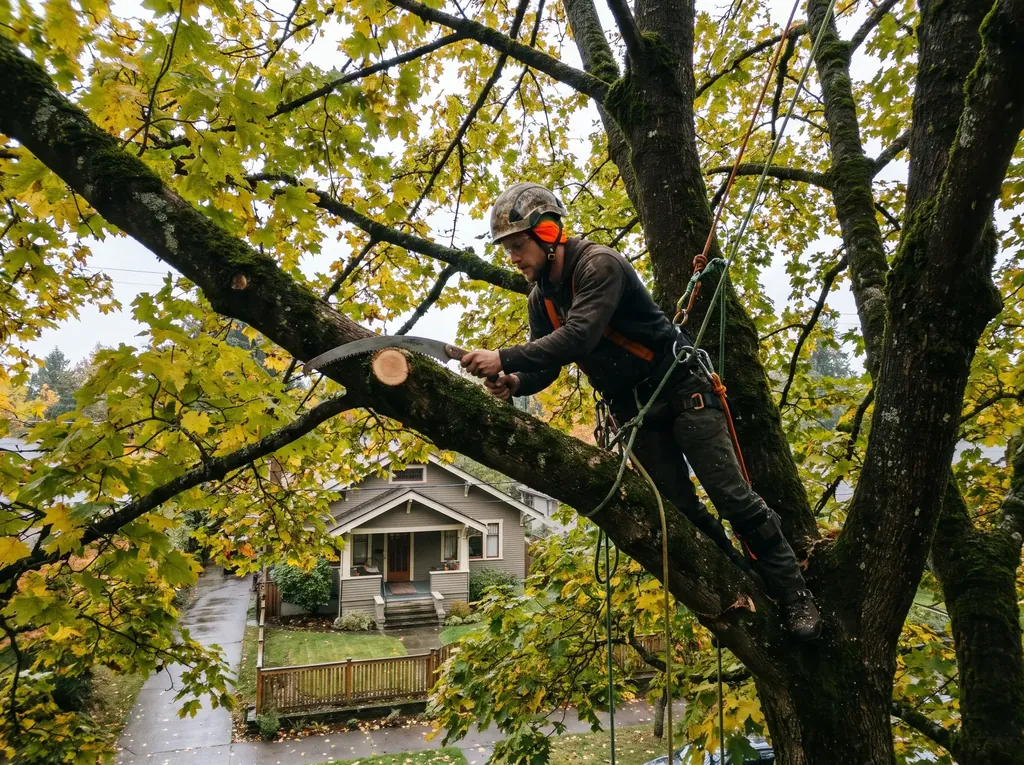
to shorten heavy limbs and take out dead and broken limbs.
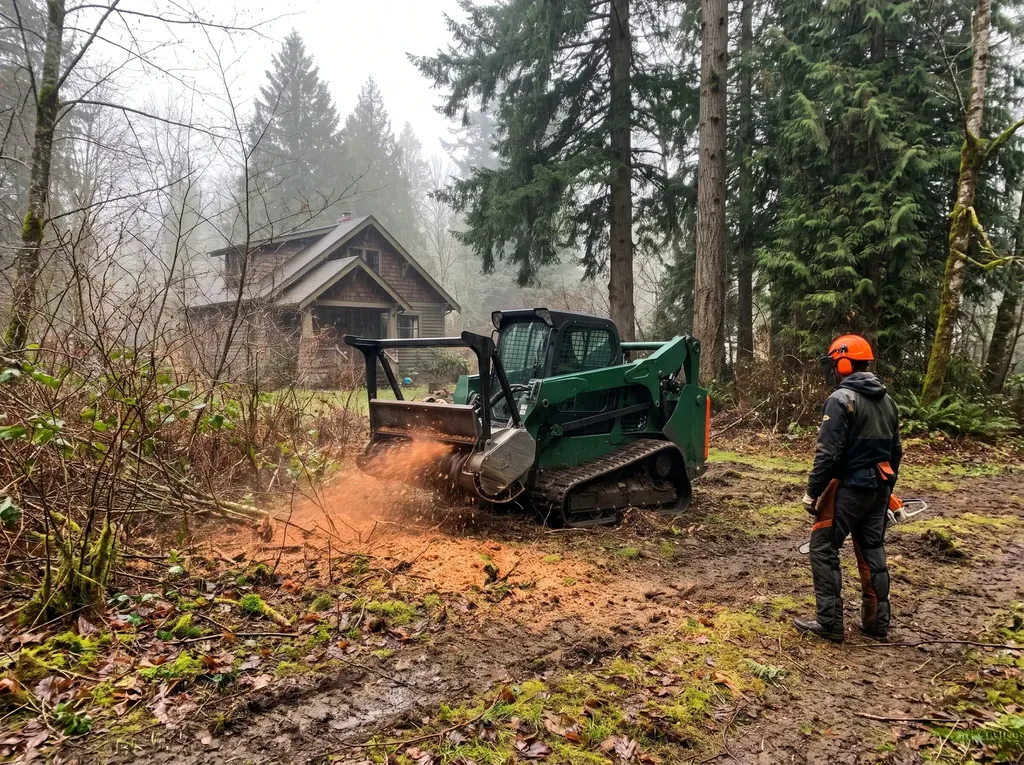
on rural acreage gone over to alder and brush.
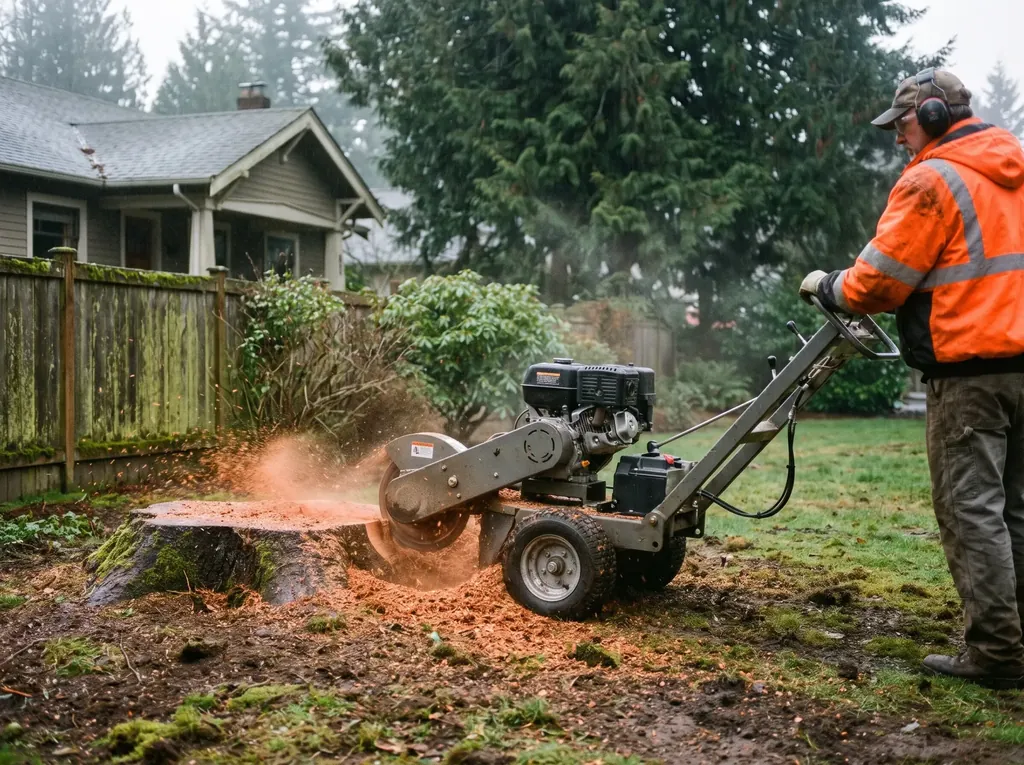
after removals, including big cottonwood stumps that will otherwise sucker back.
If the soil around the base of a tall tree is soft, cracked or lifting on one side, the root plate is moving. On Ferndale ground, that is the most common way a tree fails. Call before the next storm, not after.
Black cottonwood grows fast, gets very big, and drops heavy limbs without much warning. Next to a house or a shop, it usually needs to be managed or removed rather than left.
Wet lawns and fields do not take heavy machinery well. We plan access to keep ruts out of your yard, and on the softest ground we work from the drive with ropes and a longer reach.
If a neighbouring lot was cleared recently, the trees left standing along your line have lost the shelter they grew up in. Those are worth assessing before winter.
Keep the wood for firewood instead of paying to haul it, leave the stump if it is not in the way, give the crew clear access, and bundle several trees into one visit. On rural Ferndale lots with room to fell, a tree that can be dropped in one piece costs far less than one that has to be climbed and rigged, so it is worth asking which yours is.
Generally the owner of the tree is responsible for keeping it safe, and a neighbour may trim branches that hang over their side of the line, as long as they do not damage or kill the tree.
If a shared tree is a problem, talk to the neighbour first.
A common rule of thumb is to remove no more than about a quarter of the living crown in one season, and less on an older or stressed tree. Topping a tree, or stripping it up to a tuft at the top, does far more damage than the amount of wood suggests. If a tree needs more taken off than that to be safe, removal is often the better answer.
A fair price reflects the height, the trunk size, how close the tree is to the house or lines, whether it can be felled or has to be rigged down, and what happens to the wood and stump. A written estimate that spells those out is the best way to compare.
We also work in Bellingham, Lynden and Blaine, plus Custer, Everson, Birch Bay, Sudden Valley, Sumas and Deming.
Every area we coverTell us the address and what the tree is doing. A photo helps. If a tree is on the house or across a line, call instead.
We will call or text to set a time to look at the tree. If it is urgent, call (360) 555-0119.
Nothing was sent. Please call (360) 555-0119 and we will set up a time to look at the tree.