Single stumps in lawns and beds
The leftover stump from an old removal, or the one the last crew did not touch. Ground out, backfilled and ready for grass or planting.
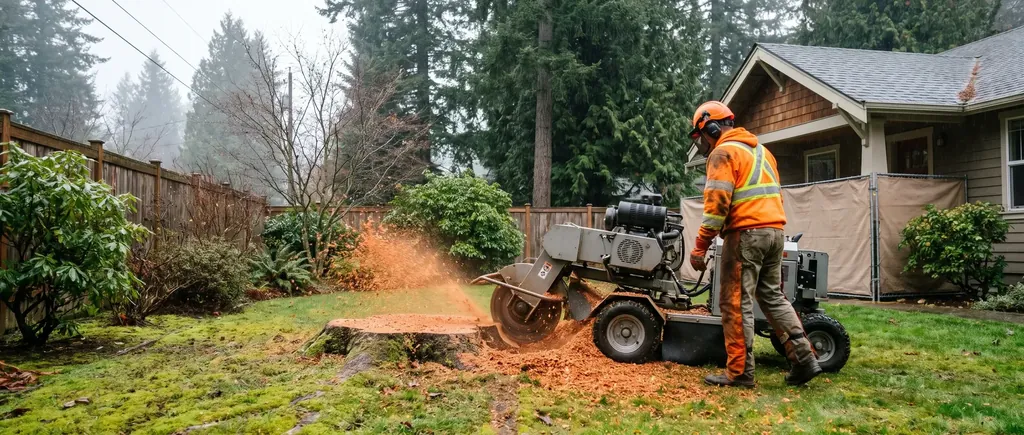
Old fir stumps in the lawn, maple stumps throwing up shoots, cedar stumps that will outlast the house. Ground below grade with the chips cleaned up, or pulled out where you are building.
People leave stumps expecting them to rot. In our climate that depends heavily on the species. Red alder and black cottonwood break down within some years. Douglas fir takes much longer, and a big fir stump can sit in a lawn for a generation. Western red cedar is the stubborn one: the same natural rot-resisting compounds that make cedar fence posts last make a cedar stump last for decades.
Meanwhile the stump is a trip hazard, a mowing obstacle, and in some cases a food source. Decaying stumps attract carpenter ants, and in Bellingham those ants do not always stay in the stump. Big-leaf maple has its own problem. Cut one down and leave the stump, and it throws up a ring of fast shoots that turn back into a multi-stemmed tree within a few years.
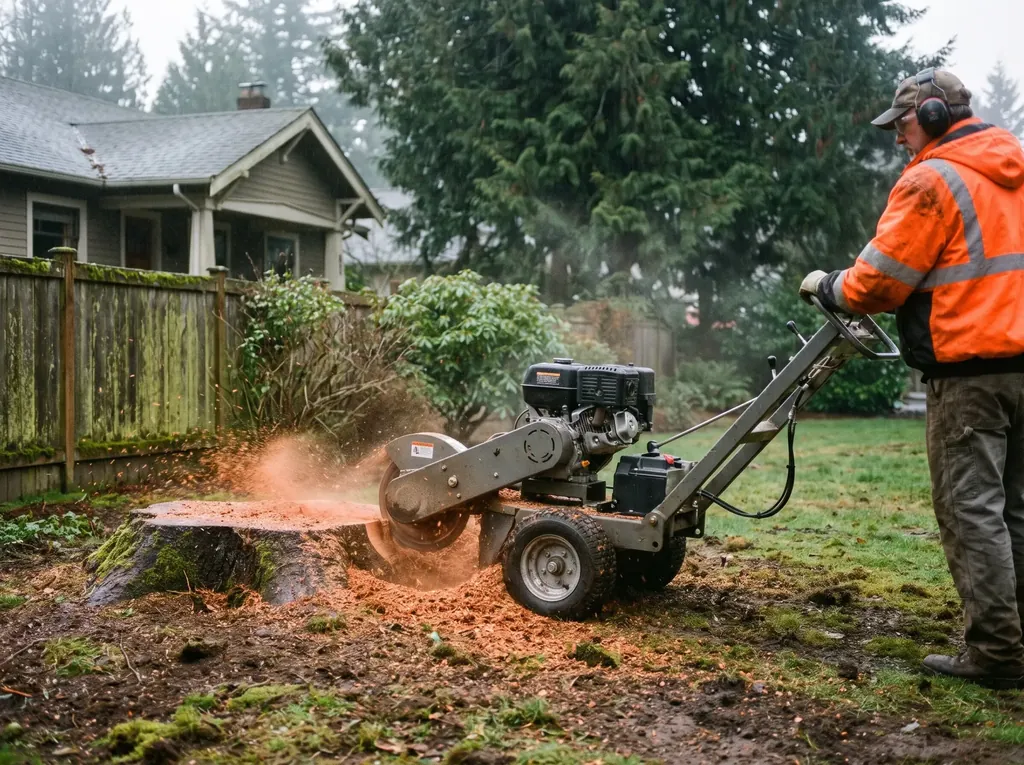
Grinding solves most of that in one visit. A grinder chews the stump into chips down below the surface, the surface roots get chased out across the lawn, and the hole is backfilled with the chips or with soil so you can plant over it. Full removal, where the whole root ball comes out, is a different job for a different situation, usually a house addition, a driveway or a foundation going in where the tree used to be.
The leftover stump from an old removal, or the one the last crew did not touch. Ground out, backfilled and ready for grass or planting.
Wide Douglas fir and cedar stumps, including the ones that are mostly root flare above ground. These take time and the right size of machine, and we bring both.
Stumps tight to a house, a retaining wall, a fence or a buried line, ground carefully with the machine positioned so nothing else is damaged.
Before we grind, we request locates for buried power, gas, water and communication lines, and ask you about septic lines, irrigation and anything private the locate service does not mark.
Ground down below the surface so grass or planting can go over it. Deeper where you plan to lay a patio or plant a new tree in the same spot.
The big roots running across the lawn from the stump are ground out along their length, not just cut off at the edge of the hole.
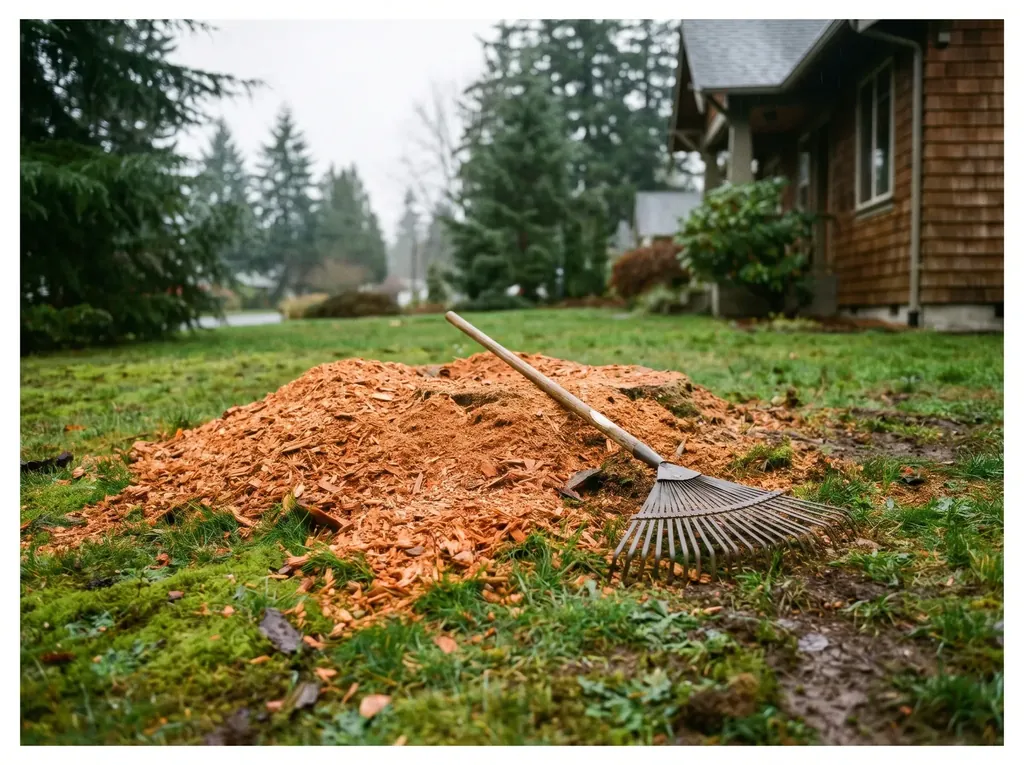
Chips raked back into the hole and mounded to settle, spread as mulch in your beds, or hauled away and the hole topped with soil. Your choice.
A photo of each stump with something for scale, plus a photo of the route from the street or driveway. Gate width matters, so measure it if you can.
Most stump jobs can be priced from good photos. Where access or buried lines are unclear, we come and look first.
Utility locates are requested ahead of the job, and we ask you about private lines, irrigation and the septic layout.
The grinder is walked in on tracks with ground protection where needed, and screens placed to keep chips off windows, cars and siding.
Stump ground below grade, then the surface roots followed out across the lawn.
Chips raked back in, spread or hauled, debris blown off paths and patios, and the area left level.
We go below grade. A stump ground to the surface is a stump you will mow around and trip over for years while the remains rot unevenly. We grind it far enough down that you can plant over it.
We chase the roots. Surface roots running across the lawn are often the real annoyance, and grinding the stump without them is half a job.
We ask about what is underground. Rural Whatcom County properties are full of things the public locate service does not mark: private water lines from a well, irrigation, septic lines and drain fields. A few questions before we start saves a broken line.
We will tell you if grinding is the wrong job. If a new foundation, addition or driveway is going where the stump is, a ground-out stump is not enough. The stump and main roots need to come out, and we will either pull it where the machine and the ground allow or work alongside your excavation contractor.
Send a photo of the stump and the way in. Most stump jobs can be priced without a visit.
The deep roots stay in the ground and rot slowly, so the spot can settle a little over the next few years and need topping up. The fresh chips are not ideal as soil for grass straight away and are often better spread on beds. And grinding is not enough if you are building on the spot, because the remaining roots will decay under the structure. Our guide to stump grinding or stump removal compares the two in more detail.
Price depends on the diameter of the stump, the species (cedar and fir are harder going than alder), how far below grade you want it ground, access for the machine, how many stumps are on the job, and what happens to the chips. Several stumps on one visit cost less each than one at a time.
In a lawn, a garden or anywhere near the house, grinding is almost always better. A stump left in place is a trip hazard and a home for ants, and a maple stump will try to grow back into a tree. Out in the woods at the back of an acreage, leaving it to rot is perfectly reasonable and good for wildlife.
Leaving it and waiting is free but slow, particularly with cedar and fir. Of the paid options, grinding is usually the least expensive way to get rid of a stump completely, and much cheaper than digging out the whole root ball unless you need the ground clear for building.
Stumps near a house can attract carpenter ants and other wood-boring insects as they rot. They can sprout, especially big-leaf maple, cottonwood and young alder. They get in the way of mowing, they are easy to trip over in long grass, and they make the yard harder to replant or regrade.
It depends on the species, the size and how wet the ground is. Alder and cottonwood go relatively quickly. A large Douglas fir stump can take decades, and western red cedar resists rot so well that its stumps can last longer still. Grinding skips the wait.
Drilling holes and keeping them moist or adding nitrogen does speed decay a little by letting water and fungi in. On a small alder stump it can help. On a big fir or cedar stump it shortens a very long wait to a slightly shorter long wait.
We grind and remove stumps across Bellingham, Ferndale, Lynden, Blaine, Everson, Sudden Valley, Birch Bay, Sumas, Deming and Custer, including leftover stumps from removals done years ago by somebody else.
Every area we cover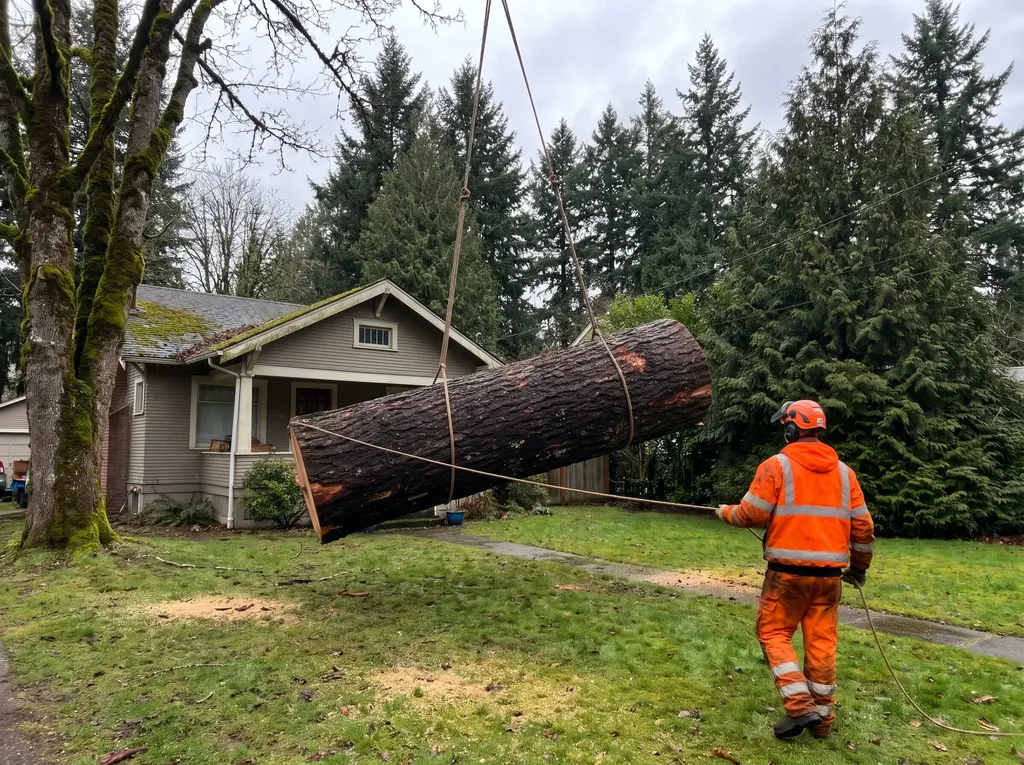
Full removal of trees of any size, including large conifers close to houses, taken down in pieces where there is no room to drop them.
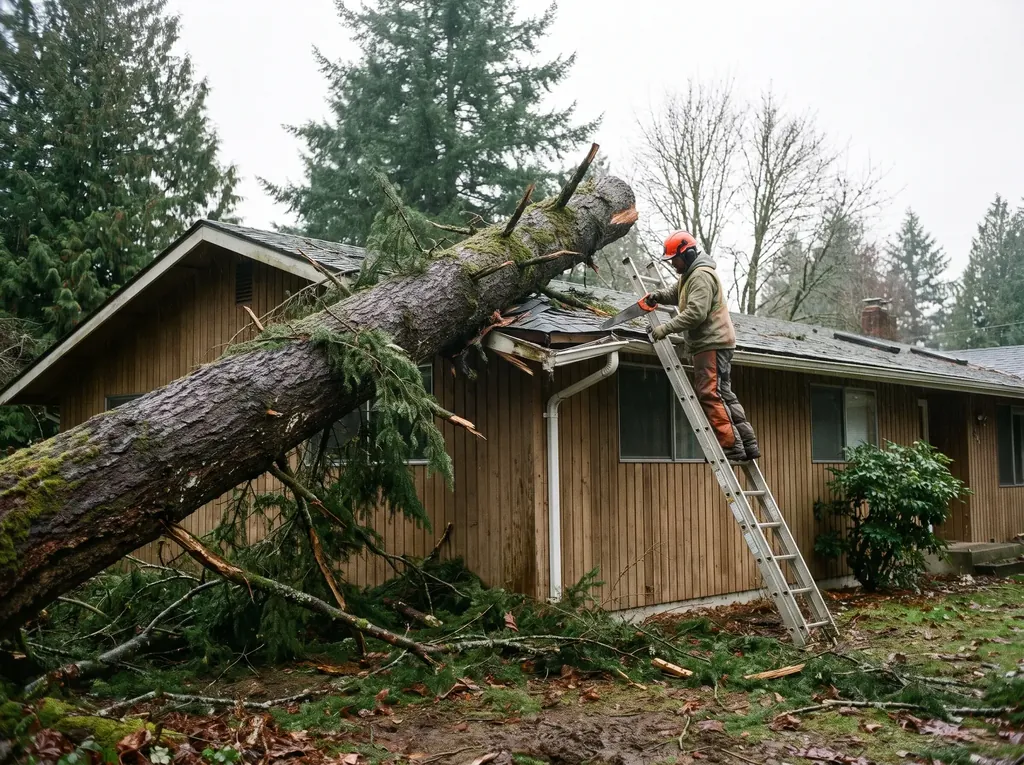
Trees on roofs, cars, driveways and fences after a windstorm, made safe first and cleared after.
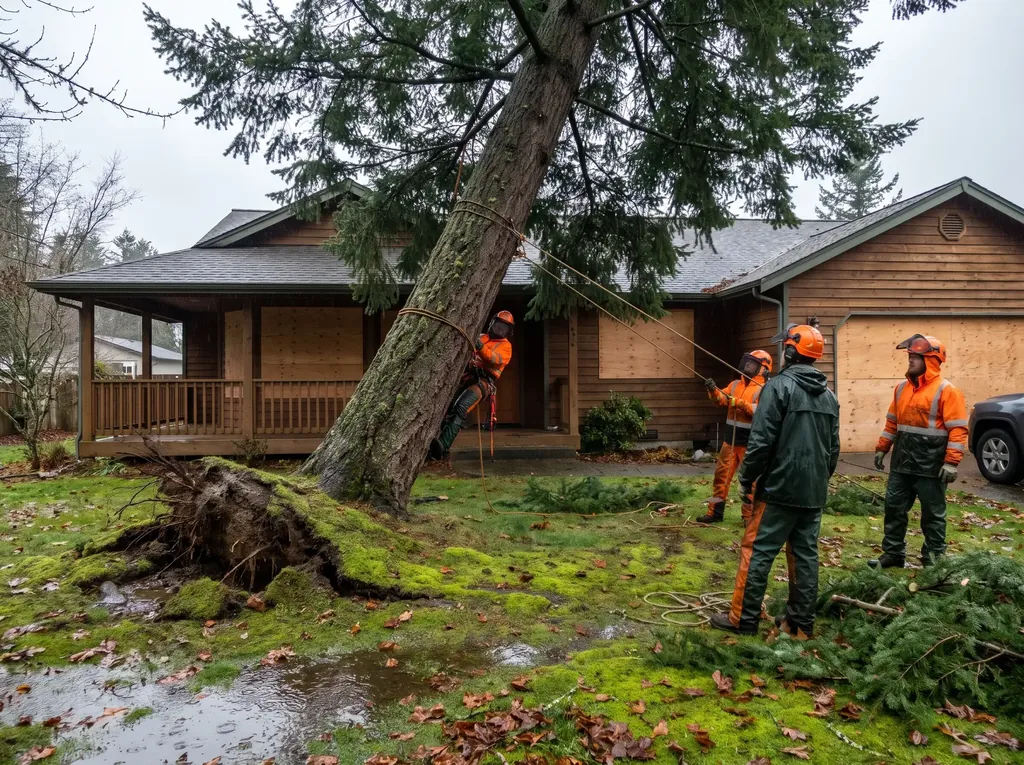
Leaning, cracked, rotting or root-lifted trees taken down before the next storm decides for you.
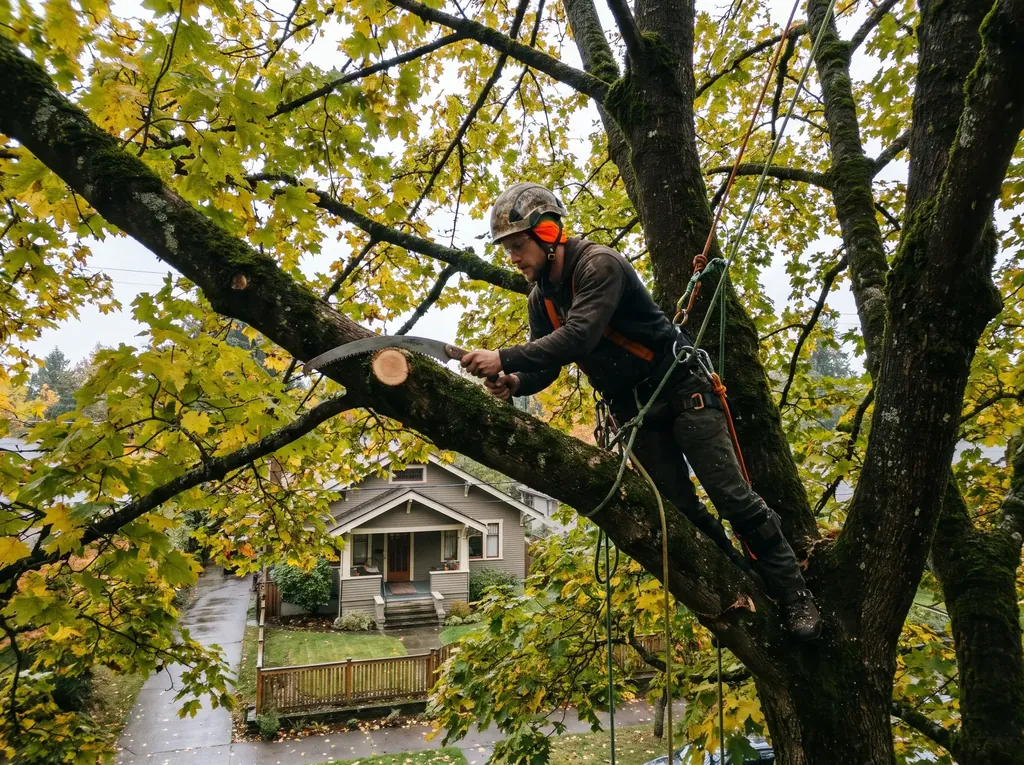
Deadwood removal, crown thinning, crown reduction and clearance from roofs and lines, done for the health of the tree.
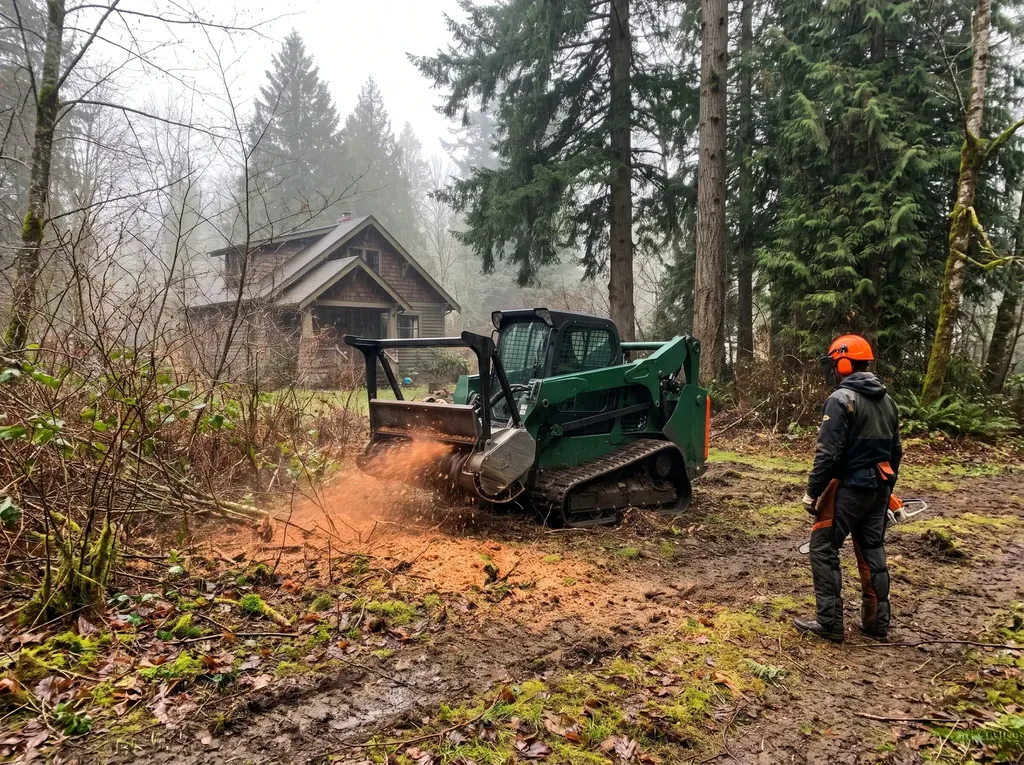
Overgrown lots and acreage cleared for building, views, fire safety or pasture, including forestry mulching and brush clearing.
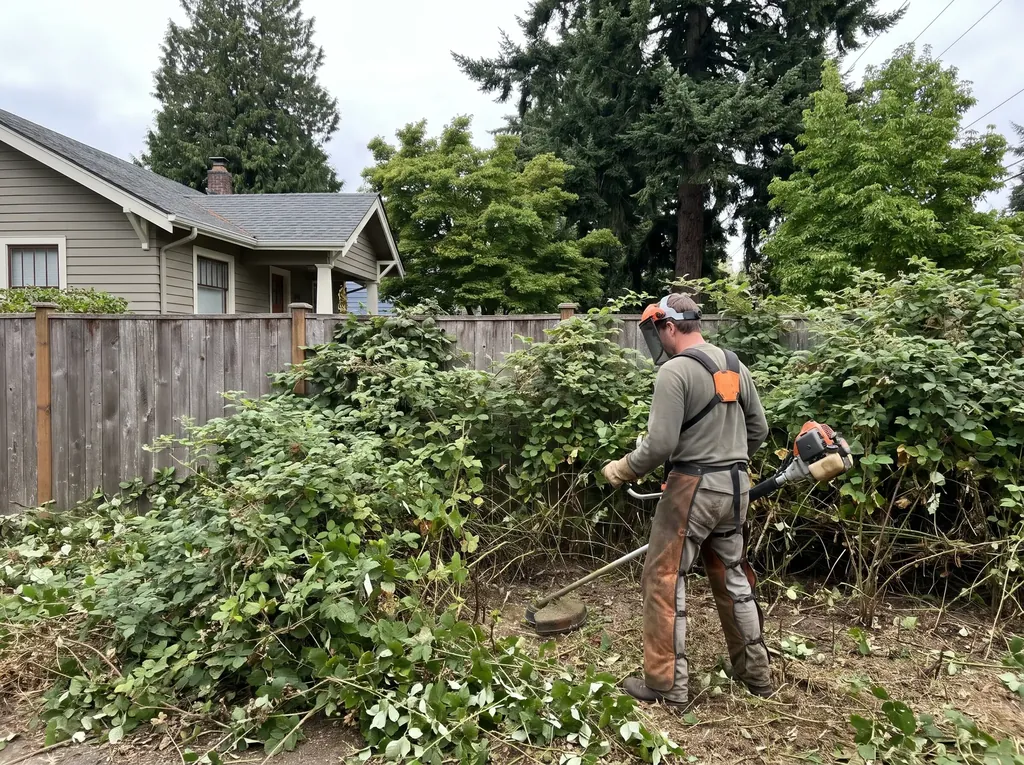
Himalayan blackberry, Scotch broom and invasive brush cut back, cleared and dealt with at the root.
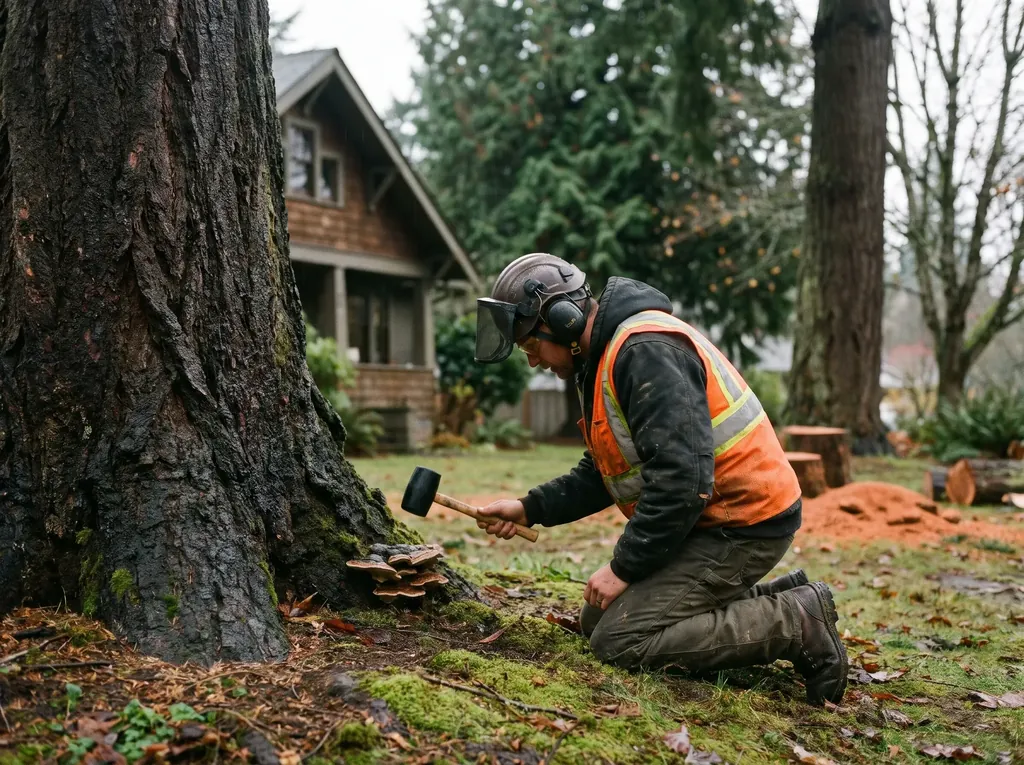
A straight answer on whether a tree is sound, needs work or needs to come down, before you spend money on it.
Tell us how many stumps, roughly how wide, and how we get to them. Photos with a shoe or a tape measure next to the stump are perfect.
We will call or text to set a time to look at the tree. If it is urgent, call (360) 555-0119.
Nothing was sent. Please call (360) 555-0119 and we will set up a time to look at the tree.