"Is this tree safe?"
One tree, one worry. A lean, a crack, mushrooms at the base, a dead top, or limbs dropping more than they used to. We look and give you a straight answer.
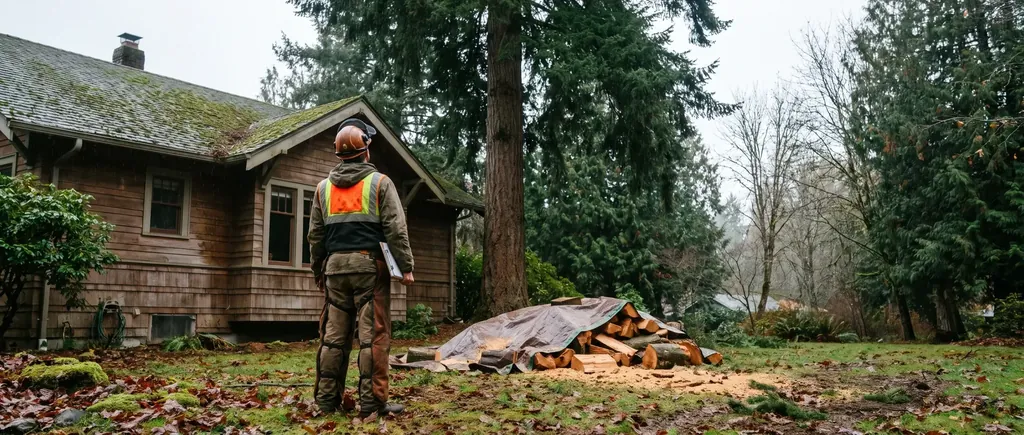
Is it safe, does it need work, or does it need to come down? A straight answer about a tree before you spend money on it, from a crew with no interest in selling you a removal you do not need.
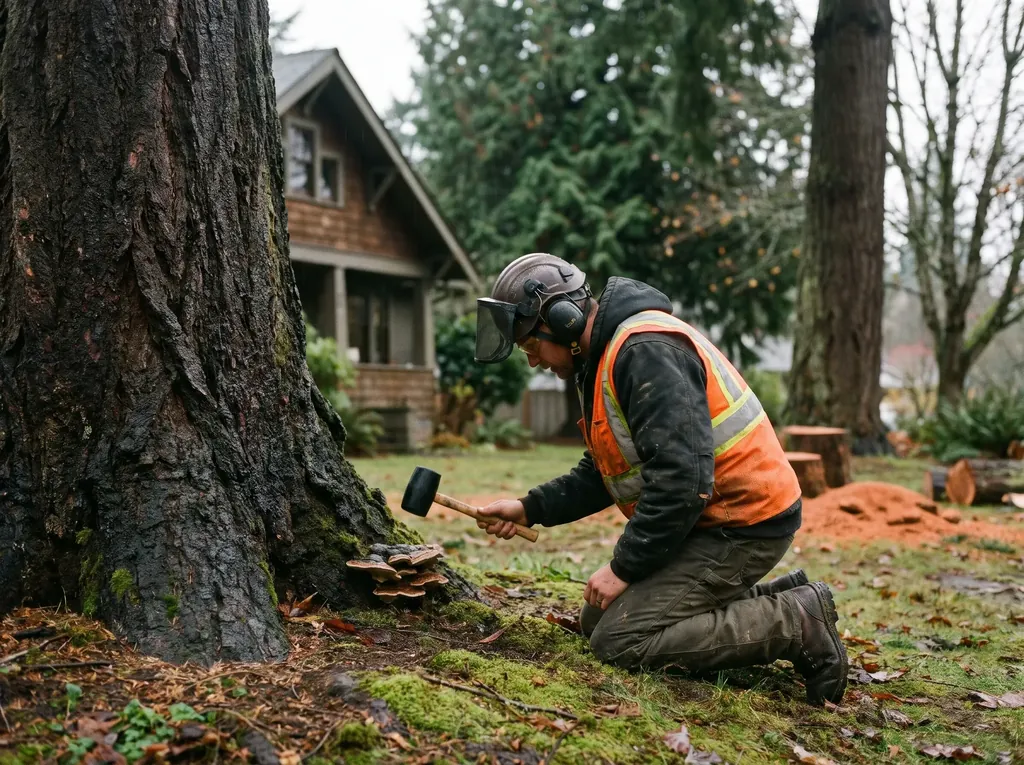
Most people who ask us to look at a tree have been watching it for a while. The fir that sways more than the others in a southwesterly. The cedar that browned at the top last August. The maple with the crack that seems longer this year. They do not want to pay to take down a healthy tree, and they do not want to find out the hard way that it was not.
An assessment is how you get past guessing. We look at the whole tree, from the soil around the base to the top of the crown, and at what it would hit if it failed. Then we tell you plainly what we found and what we would do in your position.
Whatcom County trees have their own set of usual suspects. Laminated root rot in Douglas fir works underground for years before the crown shows anything. Western red cedars have been dying back from the top after recent hot, dry summers. Big-leaf maples develop heavy, spreading limbs with weak unions and decay where old branches broke. And the wind matters as much as the tree: a fir that has stood safely in a grove for decades can be at real risk once the trees around it are cleared and it takes the full force of a winter storm on its own.
Sometimes the answer is "leave it alone". Sometimes it is a trim, a cable, or a check again next year. Sometimes it is "this needs to come down before winter". All of those are good outcomes, because you are deciding with facts.
Ask us about the cost of an assessment when you call.
One tree, one worry. A lean, a crack, mushrooms at the base, a dead top, or limbs dropping more than they used to. We look and give you a straight answer.
Big trees near a house you are buying, trees you need to plan around for an addition, or a yard full of conifers you want to understand before you commit.
Trees that came through a windstorm looking fine, or edge trees newly exposed after a neighbouring lot was logged or cleared. Exposure changes risk, and it is worth a second look.
The base of the tree and the ground around it: buried root flare, heaving or cracking soil, fungal growth, root damage from trenching or paving, and how wet the ground stays.
Lean and whether it is new, cracks and seams, cavities, decay, co-dominant stems with bark trapped in the fork, and old wounds from topping or storm breaks.
Dieback, thinning, dead limbs, heavy end weight, and how the tree compares to healthy trees of the same species nearby.
What the tree would hit if it or a large limb failed, and how exposed it is to the prevailing storm winds and the winter outflow from the northeast.
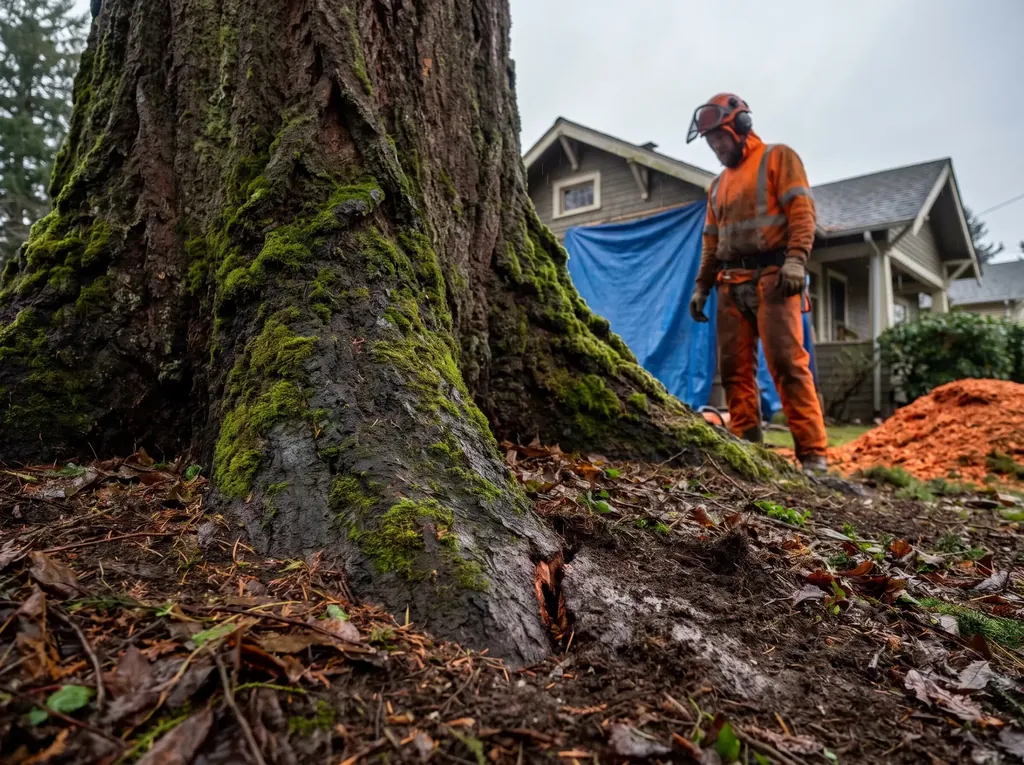
What kind of tree, where it is, what worries you, and how long you have noticed it. Photos help us decide what to bring.
We start by looking at the whole tree from several angles, checking lean, crown shape and how it stands relative to the house and its neighbours.
Root flare and soil checked, the lower trunk sounded with a mallet for hollow areas, and any fungal growth identified.
Cracks, unions, cavities and deadwood checked from the ground, with binoculars for the upper crown.
We explain what we found on site, in plain language, and what the realistic options are.
A short written summary of the findings and options, with a separate price for any work if you want one.
We do not need every tree to come down. A crew that only makes money on removals has an obvious conflict when it looks at your tree. We do removals, trimming, cabling and monitoring advice, and we are happy to tell you the tree is fine.
We explain what we see. You get to look at the crack, the fungus or the heaved soil with us and hear what it means. You should understand the reasoning, not just the verdict.
We know the local trees. Root rot in fir, cedar dieback, weak maple unions, alder nearing the end of its short life: the problems here are specific, and the trees here are big enough that getting it wrong matters.
If you need a formal written report for the city, a lender, an insurer or a property sale, tell us at the start so we can confirm whether we are the right people to provide it.
Tell us which tree and what is bothering you about it. We will come and look, and you will get a straight answer.
The native trees you see most are Douglas fir, western red cedar, western hemlock, big-leaf maple, red alder and black cottonwood, with vine maple, Pacific madrone and shore pine in some spots. Yards add planted ornamentals like Japanese maple, birch, cherry and sweetgum. Each has its own typical problems, which is why species is the first thing we note.
It is a planting guideline used in urban forestry: no more than 10 percent of trees from one species, 20 percent from one genus and 30 percent from one family. The idea is that a single pest or disease cannot wipe out a whole neighbourhood's canopy. On a single property it is a useful reminder not to plant a whole windbreak of one tree.
For the right tree, yes. Cabling makes sense for a tree worth keeping that has a specific structural weakness, such as two large stems joined at a weak fork. It is not a fix for root rot, a failing root plate or a trunk full of decay. An assessment is how you find out which one you have.
Cabling installs a steel or synthetic cable high between two stems or limbs, usually about two thirds of the way from the weak fork to the tips, to limit how far they can move apart in the wind. Bracing uses threaded steel rods through a weak union lower down. Both reduce movement and the chance of a split, and both are used on trees that are otherwise healthy.
It depends on the system, the tree and how fast the tree grows around the hardware. Any cable needs checking regularly, because a slack or worn cable does nothing and a tree can outgrow its fittings. Synthetic systems should be replaced on the manufacturer's schedule.
We would not recommend it. Cables go high in the crown, have to be placed at the right height and tension, and the wrong installation can concentrate stress and make a split more likely. It is work at height in a tree that already has a weakness.
We look at trees across Bellingham, Ferndale, Lynden, Blaine, Everson, Sudden Valley, Birch Bay, Sumas, Deming and Custer, from a single backyard fir to a property full of mature timber.
Every area we cover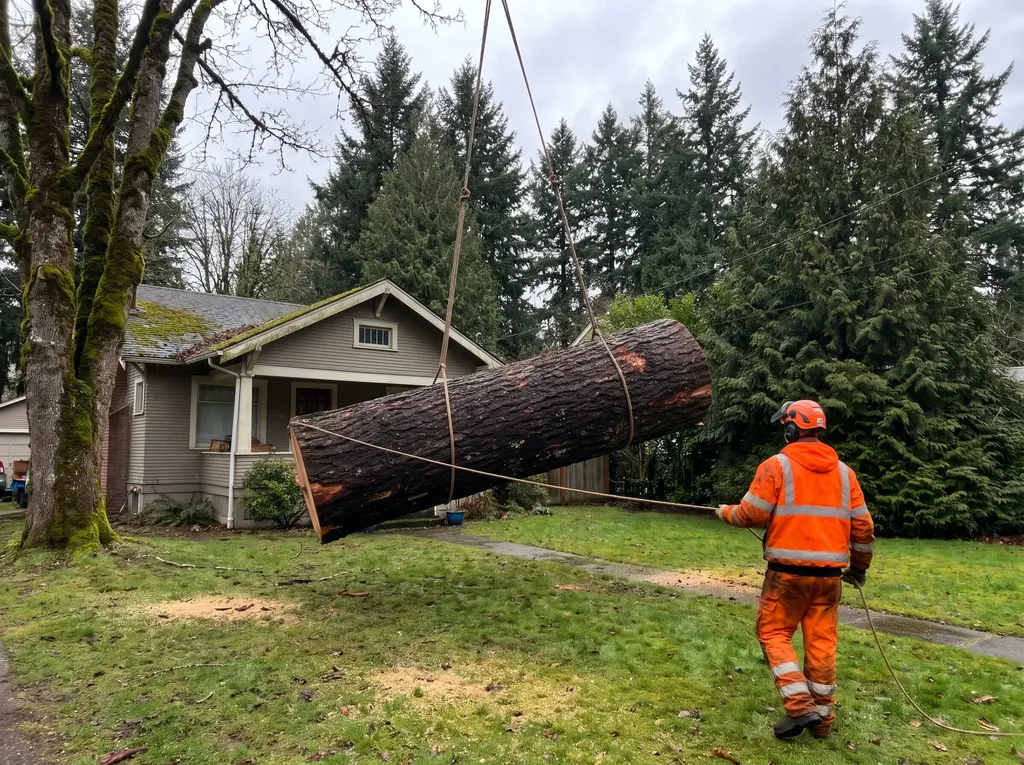
Full removal of trees of any size, including large conifers close to houses, taken down in pieces where there is no room to drop them.
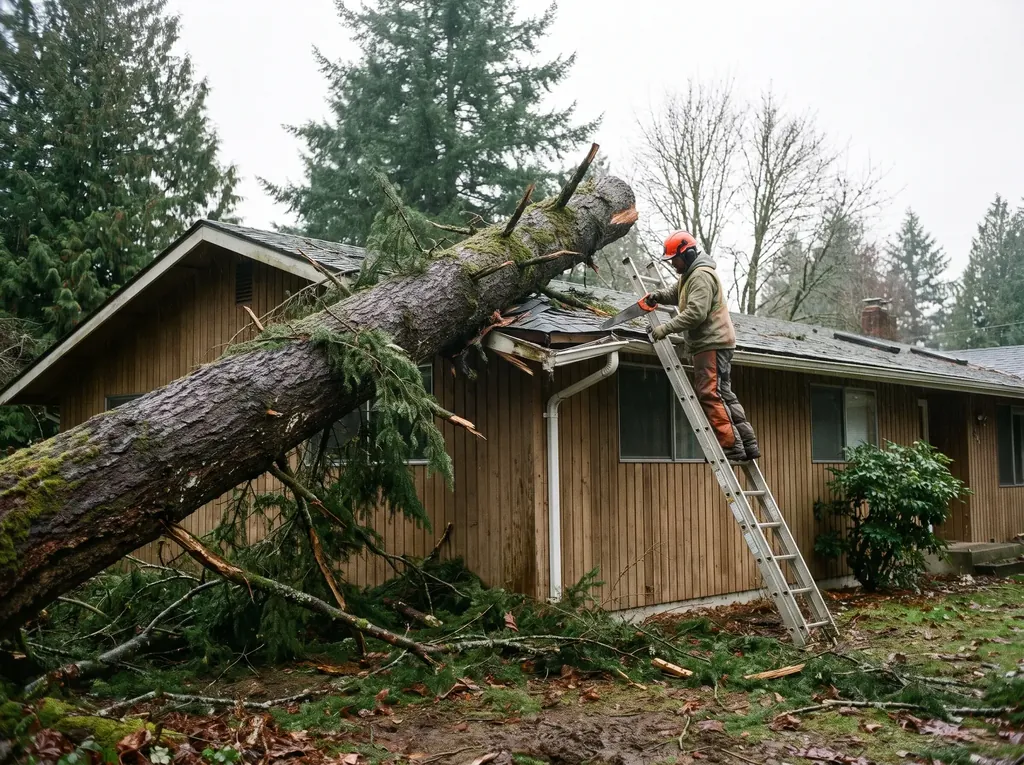
Trees on roofs, cars, driveways and fences after a windstorm, made safe first and cleared after.
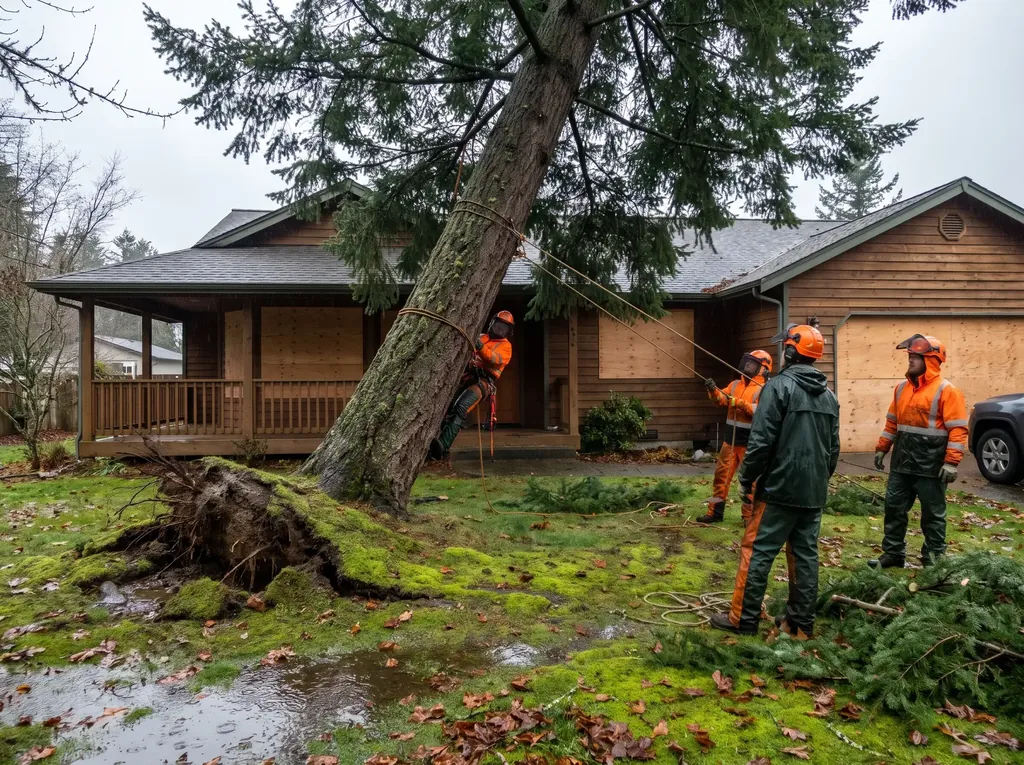
Leaning, cracked, rotting or root-lifted trees taken down before the next storm decides for you.
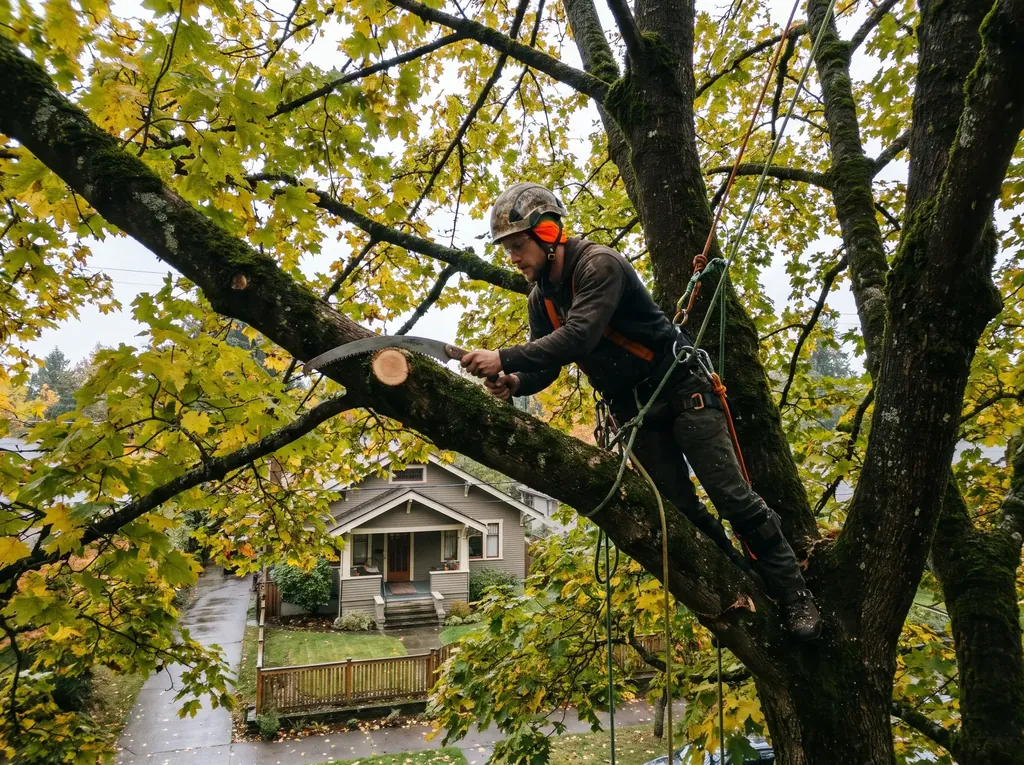
Deadwood removal, crown thinning, crown reduction and clearance from roofs and lines, done for the health of the tree.
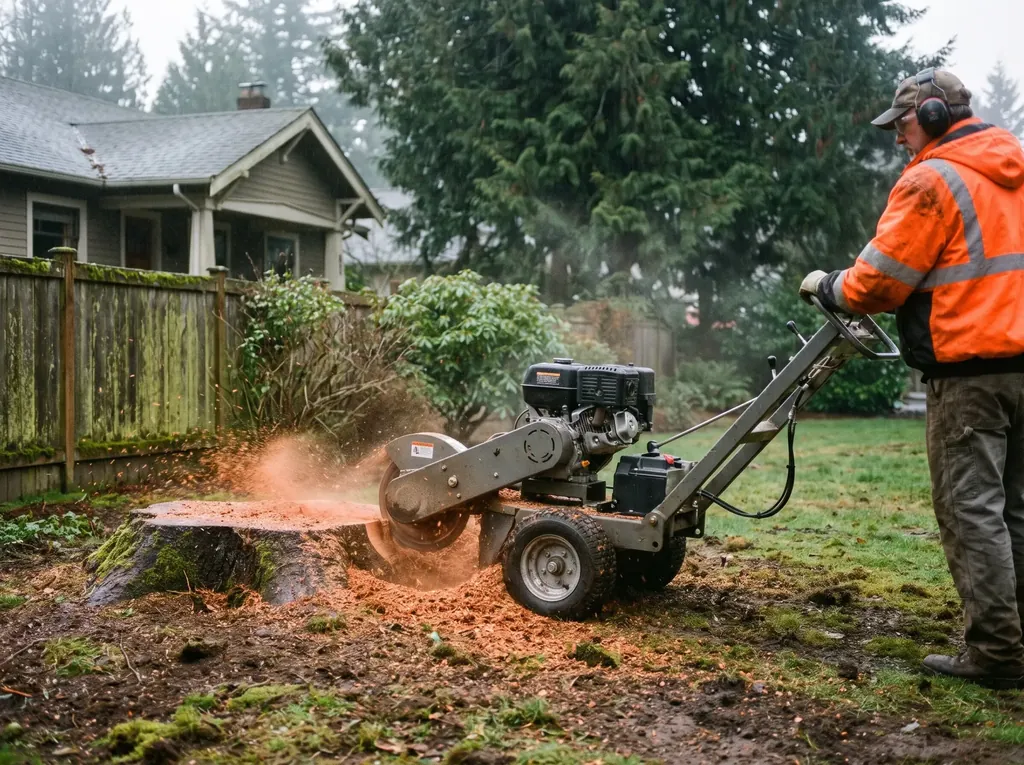
Stumps ground below grade with the chips cleaned up or left as mulch, or pulled out entirely where you are building.
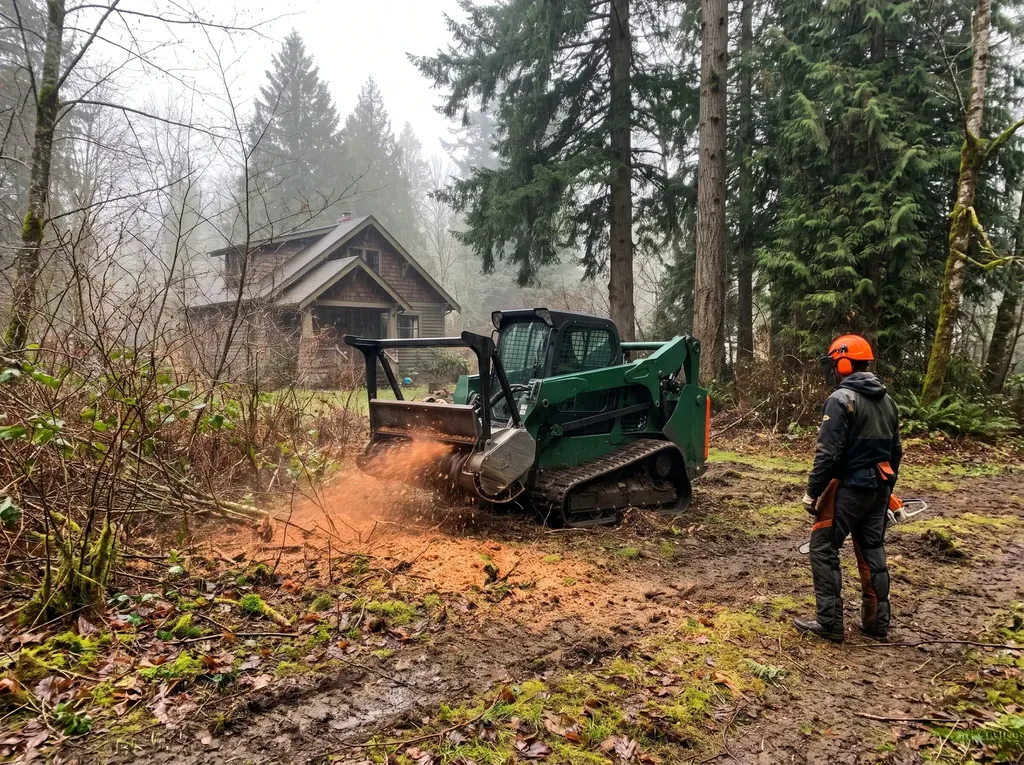
Overgrown lots and acreage cleared for building, views, fire safety or pasture, including forestry mulching and brush clearing.
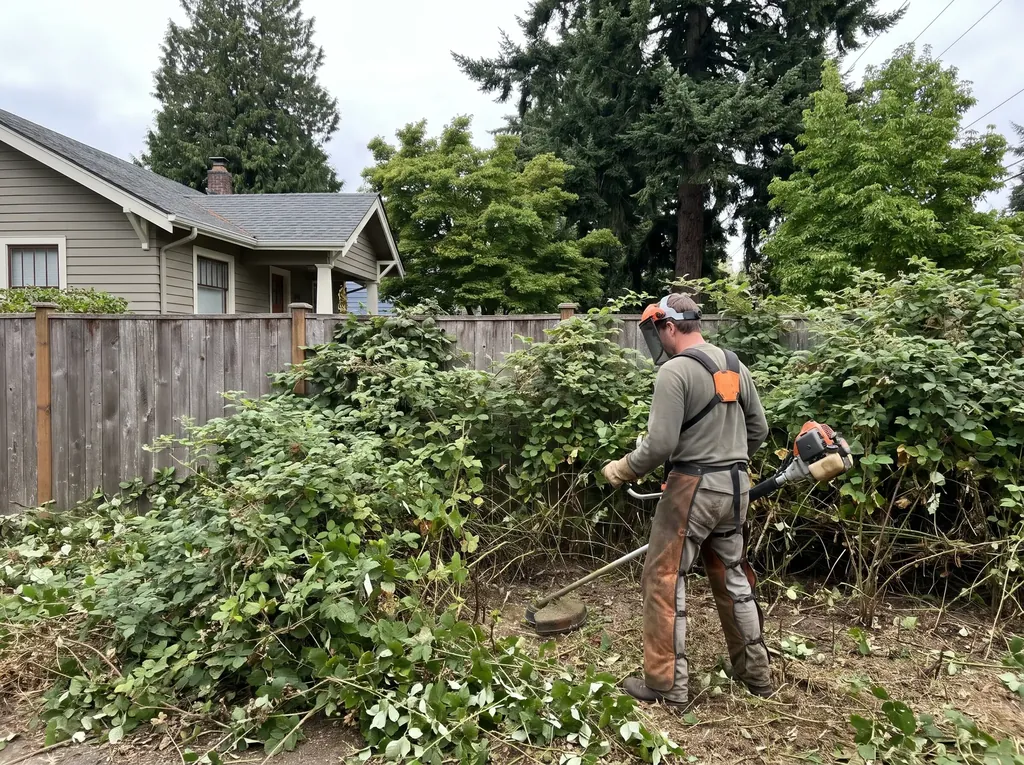
Himalayan blackberry, Scotch broom and invasive brush cut back, cleared and dealt with at the root.
Tell us which tree, where it is, and what made you start worrying about it. A photo of the whole tree and one of the base helps.
We will call or text to set a time to look at the tree. If it is urgent, call (360) 555-0119.
Nothing was sent. Please call (360) 555-0119 and we will set up a time to look at the tree.